


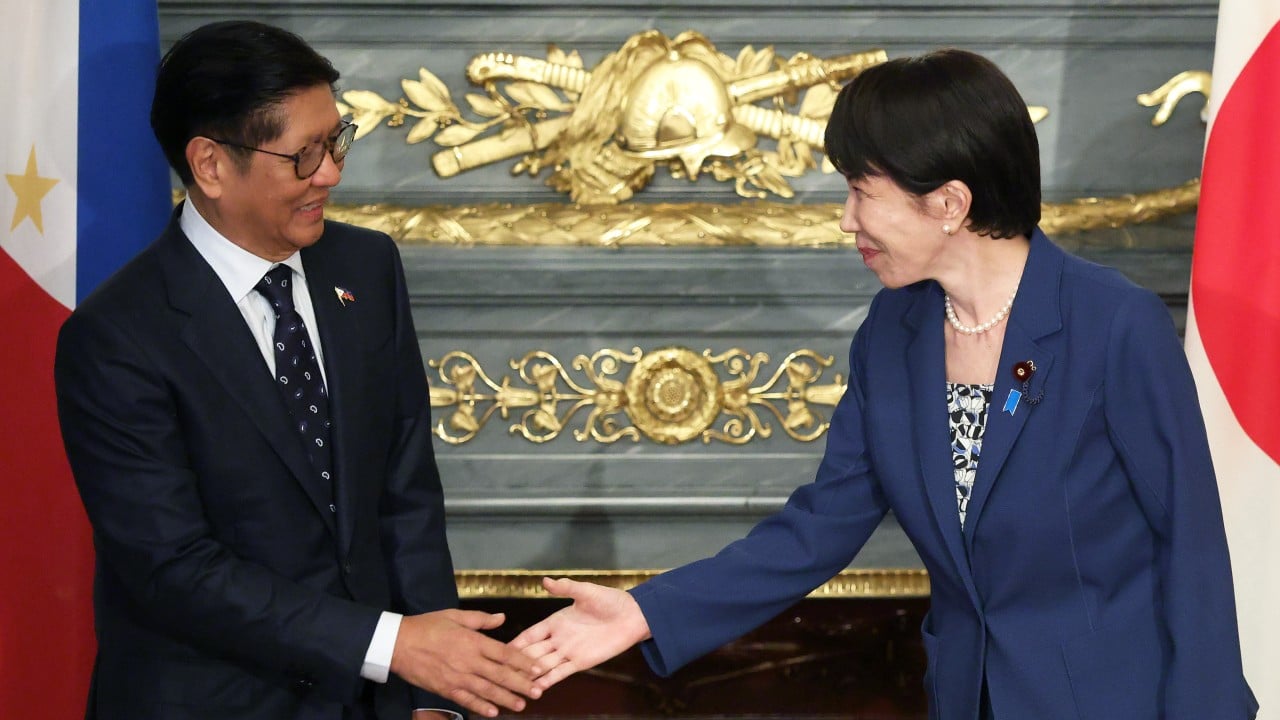
How Beijing could use its military and trade to hit back at Tokyo-Manila ties
Summarized and contextualized by DistantNews.
At a glance
News
Named sources
Context piece
- Chinese experts suggest Beijing could respond to deepening Tokyo-Manila defense ties with military operations, enhanced electronic warfare, and trade sanctions.
- The Philippines and Japan are negotiating maritime boundaries and an intelligence-sharing agreement, which Beijing deems illegal.
- Experts believe this cooperation forms a
Chinese experts warn that Beijing could retaliate against the growing defense cooperation between Tokyo and Manila. They suggest potential responses include military operations, bolstering electronic warfare capabilities, and imposing trade sanctions.
completely illegal and invalid
Last week, the Philippines and Japan announced they would begin negotiations on their exclusive economic zones and continental shelves around Taiwan. Beijing has condemned this move as "completely illegal and invalid."
A report by the Beijing Lande Information Technology think tank described the alliance as a "quasi-military alliance." The report suggested that this cooperation could restrict the Chinese navy's access to the western Pacific. It also noted Japan's increasing role in the U.S. Indo-Pacific strategy, aligning with the Philippines to strengthen its position in regional security.
quasi-military alliance
Beyond potential negotiations on an intelligence-sharing agreement, Tokyo and Manila are also advancing the transfer of Abukuma-class destroyers to the Philippines, signaling a deepening military partnership.
With the US’ global strategic focus constrained, Japan … has chosen to strengthen its irreplaceable role in the Indo-Pacific security architecture by actively aligning itself with the Philippines.
DistantNews Editorial
Originally published by South China Morning Post. Summarized and contextualized by our editorial team with added local perspective. Read our editorial standards.
More Stories

From Our Blog

Countries Without a Free Press: What You Need to Know

What Press Freedom Means for the News You Read

What Gets Lost (and Found) When News Is Translated

The Critical Role of Diaspora Media in Global News

What Travellers Should Know About Countries with Restricted Press
