


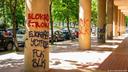
How students in Serbia became 'Ustashas' again - a graffiti war in Belgrade
Translated from Croatian, summarized and contextualized by DistantNews.
TLDR
- Graffiti containing hateful messages targeting students and university officials have appeared on buildings in Belgrade and other Serbian cities.
- These messages emerged after students began an initiative to place "Students are winning" stickers, prompting a counter-campaign by pro-government supporters.
- The incidents have led to verbal and physical altercations, with reports of a student being beaten and abducted.
A disturbing wave of hate graffiti has swept across Serbia, targeting students involved in protests and the Rector of the University of Belgrade, Vladan Đokić. This escalation of aggressive rhetoric and intimidation tactics paints a grim picture of the current political climate, particularly as Serbia approaches potential elections.
The graffiti, including phrases like "Blockaders are Ustashas," "blockaders terrorists," and "Rector Đokić killer," "rector thief," appeared on numerous buildings following a student initiative to distribute "Students are winning" stickers. This was met with a counter-campaign by government supporters, who plastered "Serbia is winning" stickers and a barrage of hateful messages. The sheer density and widespread nature of these pro-government, vulgar, and hateful inscriptions have been noted by local activists as unprecedented.
I think we haven't seen that amount and density over such a wide area of these pro-regime and vulgar and disgusting inscriptions until now.
Beyond the graffiti, the situation has devolved into physical confrontations. Reports indicate that members of a student group were attacked, with one young man reportedly beaten and abducted in Resnik. While the Ministry of Internal Affairs has yet to comment on this specific incident, similar instances of alleged police intimidation and abduction of citizens have been reported in the past, raising concerns about the potential misuse of state institutions against political opponents.
From a Serbian perspective, this conflict is deeply concerning. It reflects a polarization of society where political discourse has descended into personal attacks and intimidation. Organizations like KROKODIL, which have a history of removing hateful murals and graffiti, are now working to clean these messages off buildings. However, the underlying issue remains: the use of such tactics to silence dissent and create an atmosphere of fear. The international community may view this as a sign of democratic backsliding, but for many Serbs, it's a visceral manifestation of a political culture that struggles to tolerate opposing viewpoints and resorts to aggressive, often state-sanctioned, methods to maintain control.
Perhaps it seemed like an exaggeration at first when it was said to be a type of abduction, because they were mostly plainclothes police officers.
DistantNews Editorial
Originally published by Večernji List in Croatian. Translated, summarized, and contextualized by our editorial team with added local perspective. Read our editorial standards.
More Stories



From Our Blog

What Gets Lost (and Found) When News Is Translated

The Critical Role of Diaspora Media in Global News

What Travellers Should Know About Countries with Restricted Press

A Digital Nomad's Guide to Following Local News

How the Same Story Looks Different in Different Countries
