

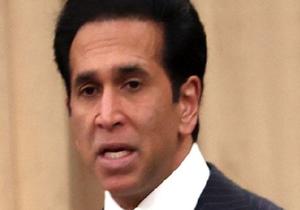
Howai: We hear public frustration over bank fees
Translated from English, summarized and contextualized by DistantNews.
TLDR
- The Central Bank of Trinidad and Tobago is engaging Republic Bank directly regarding recent fee increases.
- Governor Larry Howai acknowledged public frustration and stated the bank's commitment to advocating for citizens' interests.
- The Central Bank's regulatory authority on fees is limited, but it is working to influence decisions through guidelines and a forthcoming report on bank practices.
The Central Bank of Trinidad and Tobago has stepped in to address the growing public outcry over Republic Bank's recent fee increases. Central Bank Governor Larry Howai publicly acknowledged the frustration felt by citizens, assuring them that their concerns are being taken seriously. This intervention signals the Central Bank's active role in ensuring a financial system that serves the public's interest, moving beyond a purely passive regulatory stance.
We understand why citizens are frustrated, and we do not take this sentiment lightly. Over the years, we have closely monitored fees and charges of commercial banks, and the data on this remains publicly available on our website.
While the Central Bank's legal authority to directly regulate general service fees like ATM charges or account maintenance fees is limited by the Central Bank Act, it is employing other mechanisms. The bank has issued Market Conduct Guidelines that set standards for transparency and fair treatment of customers, which licensed financial institutions are expected to adhere to. This approach allows the Central Bank to exert influence and encourage responsible fee structures without overstepping its legislative boundaries.
While our role as Regulator is defined by law, it is not a passive one. Citizens deserve a financial system that works in their interest, and the Central Bank will continue to advocate for that.
To gain a deeper understanding of banking practices and fee philosophies, the Central Bank recently conducted a survey of six commercial banks. The findings of this survey, along with recommendations for future action, are being compiled into a report. This report will be shared with the industry for consultation, aiming to foster a more collaborative approach to fee setting. The Central Bank also highlighted the availability of Basic Banking Accounts, designed to ensure access to essential banking services for low-income individuals and micro-enterprises at reduced costs.
This provision does not extend to general service fees such as deposit account fees, in-branch transaction charges or ATM fees. The Central Bank’s authority in respect of those fees is exercised through its Market Conduct Guideline for Institutions Licensed under the Financial Institutions Act (2018), which establishes standards for transparency, disclosure and the fair treatment of customers. Banks are expected to comply with the Guideline.
This situation underscores a recurring tension in our financial sector: the balance between commercial banks' profitability and the affordability of essential services for the public. As a nation, we rely on robust financial institutions, but it is crucial that their operations do not unduly burden ordinary citizens and small businesses. The Central Bank's proactive engagement, even within its regulatory constraints, demonstrates a commitment to safeguarding consumer interests and promoting a fairer financial landscape for all Trinidadians.
As part of its efforts to influence decision making in relation to fees and charges, the Bank recently surveyed six commercial banks to obtain a comprehensive understanding of the philosophy and practices, including governance and controls, surrounding banks’ fees and charges.
DistantNews Editorial
Originally published by Trinidad Express in English. Translated, summarized, and contextualized by our editorial team with added local perspective. Read our editorial standards.
More Stories



From Our Blog

What Gets Lost (and Found) When News Is Translated

The Critical Role of Diaspora Media in Global News

What Travellers Should Know About Countries with Restricted Press

A Digital Nomad's Guide to Following Local News

How the Same Story Looks Different in Different Countries
