


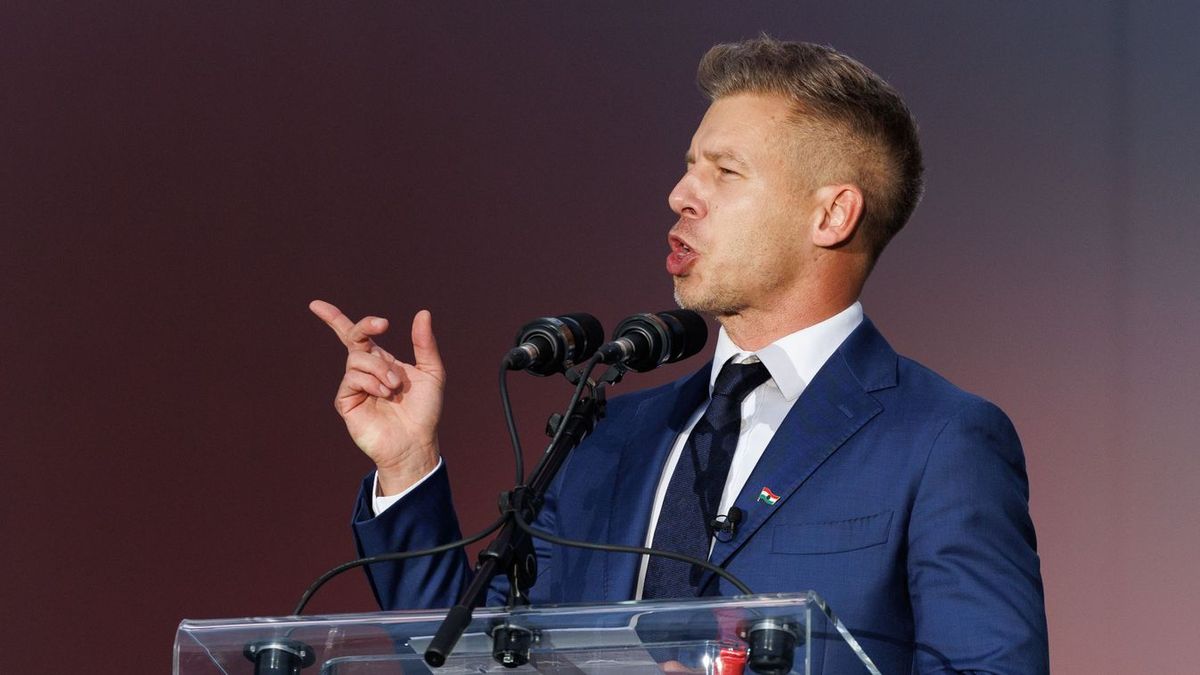
Hungarian legal experts question Magyar's demands, warn of constitutional violations
Translated from Hungarian, summarized and contextualized by DistantNews.
TLDR
- Hungarian legal experts are questioning the legitimacy of Peter Magyar's calls for resignations from top judicial and state officials following his party's election victory.
- Constitutional lawyers argue that Magyar's actions, particularly directly demanding the resignation of the President, may constitute a constitutional violation.
- Concerns are raised that Magyar's political maneuvers could lead to a
The recent election victory of the Tisza Party, led by Peter Magyar, has been met with a wave of demands for resignations from key figures in Hungary's judicial and state institutions. While Magyar frames these demands as necessary steps towards reform and accountability, prominent legal scholars are raising serious concerns about the constitutionality and potential implications of his actions. The Tisza Party secured a significant mandate, but the extent of its popular support is being debated, with some arguing that the electoral system, which heavily favors the winning party, distorts the true level of public backing. This has led to questions about whether Magyar's aggressive approach is truly representative of the will of the people or a power grab facilitated by a favorable electoral law.
Every citizen is concerned about social peace, so legal solutions must be found that do not endanger public tranquility.
Constitutional lawyers, including former constitutional judge Zoltán Lomnici Jr. and legal sociologist Zoltán Fleck, have voiced strong opinions on the matter. Lomnici argues that directly demanding the resignation of the President, especially outside of established legal procedures, constitutes a constitutional violation. He points out that while public criticism of the President is permissible, a direct demand for resignation, particularly from a party leader, crosses a legal line. Fleck, while acknowledging the potential for legal arguments to remove figures like the head of the Curia, highlights the greater difficulty in removing the President. He also controversially suggested that a winning party like Tisza might resort to coercion or political purges to consolidate power, even questioning the public's genuine interest in upholding the rule of law.
Magyar Péter committed a constitutional violation even before taking office.
These legal debates are unfolding against a backdrop of broader political shifts in Hungary. The article suggests that the focus may be shifting away from the rule of law towards political expediency. Fleck's observation that neither Tisza nor the opposition are campaigning on restoring the rule of law is particularly telling. It implies a public sentiment where political outcomes and power dynamics overshadow legal principles. From a Hungarian perspective, this is not just a legal dispute but a reflection of the ongoing tension between established institutions and a new political force seeking to reshape the country's governance. The narrative is less about abstract legalities and more about the practical exercise of power and the potential for significant political upheaval, a story that resonates deeply within Hungary's current political climate.
Nobody cares about the rule of law. If you observe, the Tisza Party, the opposition is not campaigning on restoring the rule of law. Nobody cares about the rule of law.
DistantNews Editorial
Originally published by Magyar Nemzet in Hungarian. Translated, summarized, and contextualized by our editorial team with added local perspective. Read our editorial standards.
More Stories

From Our Blog

Countries Without a Free Press: What You Need to Know

What Press Freedom Means for the News You Read

What Gets Lost (and Found) When News Is Translated

The Critical Role of Diaspora Media in Global News

What Travellers Should Know About Countries with Restricted Press
