

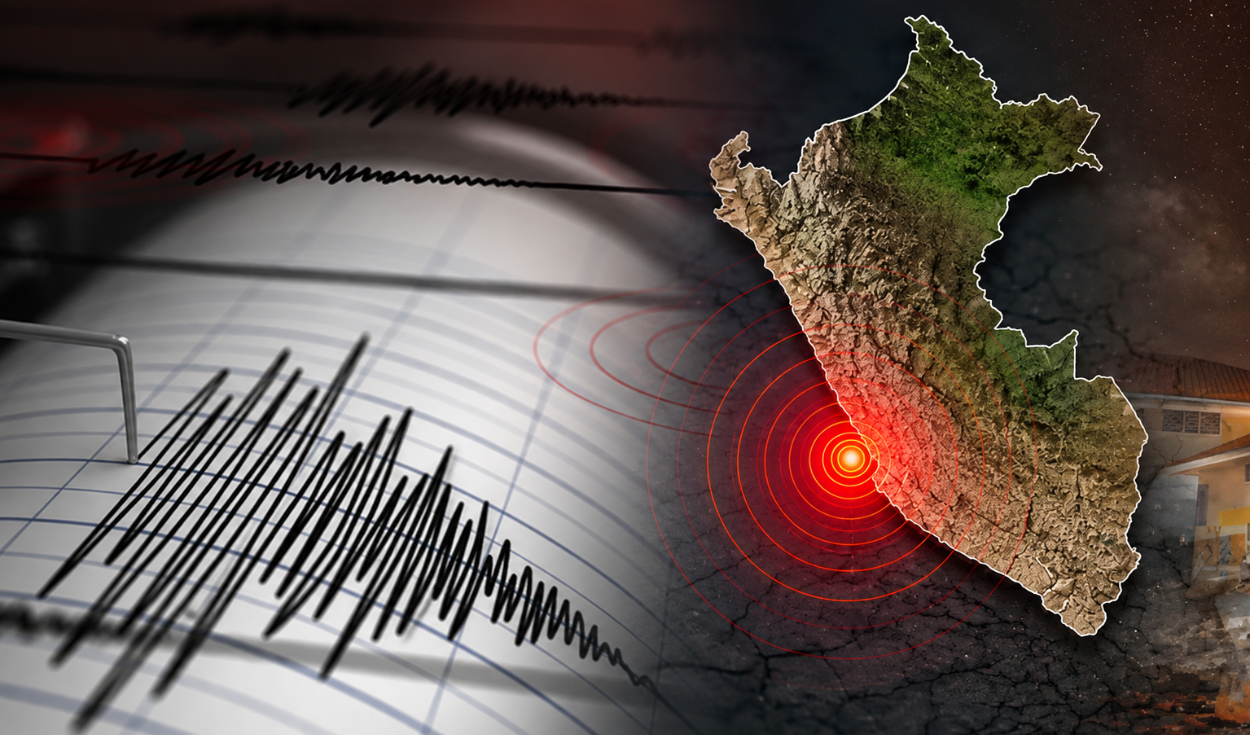

IGP Chief Explains Loud Noise Before Lima Earthquake: 'There Are Two Wave Trains'
Translated from Spanish, summarized and contextualized by DistantNews.
At a glance
News
Sources not specified
Outcome reported
- A magnitude 4.8 earthquake struck Lima, Peru, with its epicenter near Lurín, causing a noticeable tremor and a loud noise seconds before.
- The head of Peru's Geophysical Institute (IGP) explained the sound was due to the P-waves of the seismic event arriving before the more intense S-waves.
- IGP urged residents to remain prepared for future seismic activity, emphasizing that Peru is a naturally earthquake-prone country.
A magnitude 4.8 earthquake shook Lima, Peru, on Wednesday morning, with its epicenter located 42 kilometers southwest of Lurín at a depth of 42 kilometers. While the tremor itself registered a moderate intensity, it was the distinct loud noise heard seconds before the shaking that captured the attention of many residents.
Hernando Tavera, the head of the Geophysical Institute of Peru (IGP), clarified the phenomenon during an interview. He explained that seismic events generate two types of waves: P-waves and S-waves. The P-waves, which travel faster, arrive first and can be perceived as a sharp sound or a sudden jolt. Subsequently, the S-waves arrive, causing the more significant ground shaking. Tavera noted that the specific depth and proximity of this earthquake's epicenter to Lima contributed to the audible P-wave phenomenon being noticeable to the capital's inhabitants.
We are a seismic country, we have been repeating this many times, and we must always be prepared.
Tavera took the opportunity to remind the public of Peru's inherent seismic vulnerability. "We are a seismic country, we have been repeating this many times, and we must always be prepared," he stated. He emphasized that earthquakes are a natural part of the country's geological dynamics and that preparedness is essential.
Addressing recent seismic activity in neighboring Venezuela and Colombia, Tavera stated that current scientific data does not indicate an anomalous increase in seismic activity or predict a larger event. However, he reiterated that the possibility of a stronger earthquake cannot be ruled out, underscoring the ongoing importance of public preparedness measures.
Simply put, the earthquakes are happening where they have always had to happen. There is nothing strange about that.
DistantNews Editorial
Originally published by La República in Spanish. Translated, summarized, and contextualized by our editorial team with added local perspective. Read our editorial standards.
More Stories
From Our Blog

What Gets Lost (and Found) When News Is Translated

The Critical Role of Diaspora Media in Global News

What Travellers Should Know About Countries with Restricted Press

A Digital Nomad's Guide to Following Local News

How the Same Story Looks Different in Different Countries
