

Indigenous people navigated two days to demand full land titling at the TC: they have inhabited it for 1,500 years in Loreto
Translated from Spanish, summarized and contextualized by DistantNews.
At a glance
News
Named sources
In the courts
- An indigenous Secoya delegation traveled for two days to the Constitutional Court in Iquitos, Peru, demanding full land titling for their ancestral territory.
- They have inhabited the 165,000-hectare area in Loreto for 1,500 years and seek to eliminate the 'cession for use' status imposed by the state.
- The Secoya argue this status restricts their ownership to only 20% of their land and threatens their legal security and cultural survival.
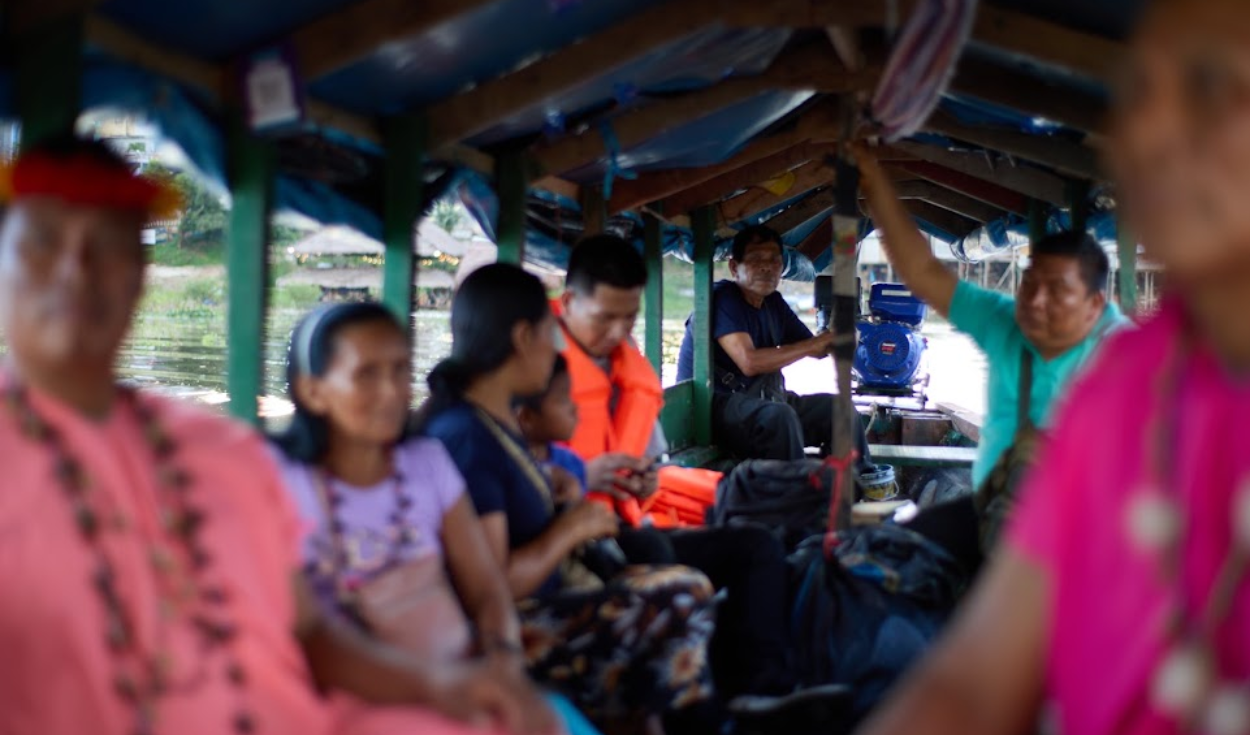
A delegation of 20 indigenous Secoya leaders navigated for two days to reach the Constitutional Court in Iquitos, Peru. They are demanding full titling of the territory they have inhabited for 1,500 years in the Loreto region.
The group traveled from their native communities along the Napo and Putumayo rivers to present their case to the magistrates. They are requesting official property titles for their ancestral Amazonian territory, spanning over 165,000 hectares. Crucially, they seek the elimination of the 'cession for use' designation, a state-imposed mechanism that restricts their ownership to just 20% of the land.
For the Secoya people, this designation represents a form of dispossession that jeopardizes their legal security and cultural continuity. They have been contesting this status, which stems from a 2015 Forest Law, since 2021. The law allows the state to temporarily lend lands deemed suitable for forestry, a concept the Secoya find incompatible with their deep spiritual and historical connection to the territory.
The category of ‘cession for use’ is something like ‘a little loan,’ and that does not align with the relationship that (the Secoya) have with their territory… a spiritual and historical-cultural bond
Edinson Cabrera Sandoval, president of the Indigenous Organization Secoya of Peru (OISPE), warned of the severe consequences if this mechanism remains. "The 'cession for use' does not guarantee that our people, our generation, nor my children and grandchildren, can live in the territory because in fifty years the State can grant concessions," he stated. He emphasized that without guaranteed rights to their land, their culture is at risk of disappearing.
The Secoya's legal battle for full territorial recognition began in 2021. While a first-instance court recognized their claim, the Loreto Regional Court later denied it. International regulations, such as Convention 169 of the International Labour Organization concerning the rights of indigenous peoples, support their demands.
The ‘cession for use’ does not guarantee that our people, our generation, nor my children and grandchildren, can live in the territory because in fifty years the State can grant concessions, and the same can happen to other communities. We are not many nationally; if we don’t have the guarantee of how to live, then we will lose our culture.
DistantNews Editorial
Originally published by La República in Spanish. Translated, summarized, and contextualized by our editorial team with added local perspective. Read our editorial standards.
More Stories


From Our Blog

What Gets Lost (and Found) When News Is Translated

The Critical Role of Diaspora Media in Global News

What Travellers Should Know About Countries with Restricted Press

A Digital Nomad's Guide to Following Local News

How the Same Story Looks Different in Different Countries
