


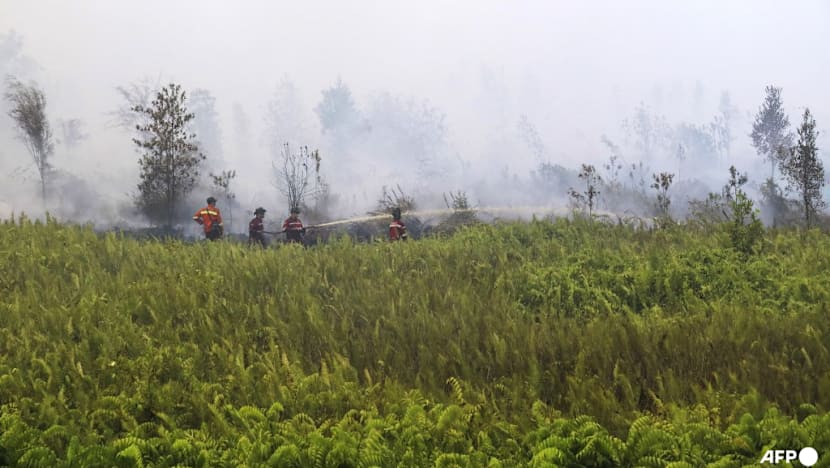
Indonesia chases clouds to fight El Nino-fueled fires
Translated from English, summarized and contextualized by DistantNews.
At a glance
News
Sources not specified
Context piece
- Indonesia is employing cloud seeding, a technique involving sprinkling particles into clouds to induce rain, to combat severe wildfires exacerbated by El Nino.
- Over 100,000 hectares have burned in the first half of the year, with independent analysis suggesting the figure is much higher.
- While cloud seeding is rarely used globally for wildfires, Indonesia has significantly increased its operations, though experts question its effectiveness during the dry season due to a lack of clouds.
Indonesia is turning to the skies for a solution to its escalating wildfire crisis, deploying cloud seeding technology to combat blazes intensified by a strong El Nino. The nation is hoping to trigger rainfall by sprinkling silver iodide, salts, or other particles into clouds, a method rarely employed globally to tackle wildfires.
Weather modification does not create clouds: we optimise clouds that have the potential to produce rains.
The urgency is palpable, with the Indonesian government reporting over 100,000 hectares consumed by fire in the first six months of the year. Independent analysis from Nusantara Atlas paints an even grimmer picture, estimating the burned area through July exceeded 285,000 hectares – more than four times the size of Jakarta.
This intensified effort marks a significant ramp-up in Indonesia's use of weather modification. Between 2021 and August this year, the country conducted 252 cloud-seeding operations, a stark contrast to the 85 operations in the preceding decade, according to the BMKG weather agency. While many operations aimed to divert rain from flood-prone areas, a substantial number focused on dousing wildfires or moistening flammable peatlands.
Weather modification will only be effective if the conditions are right.
Safillah Anggie Wahyuni, a meteorologist involved in the operations, explained that weather modification optimizes existing clouds for rain, emphasizing its effectiveness is contingent on suitable conditions. Despite the technological push, ground-based firefighting remains the bulk of the effort, with nearly 50,000 firefighters deployed. Experts like I Putu Santikayasa, a hydroclimatology lecturer, express skepticism about cloud seeding's efficacy during the dry season, citing the scarcity of clouds as a major limitation.
We are on alert to changes in weather, even the slightest, which could result in rain clouds.
Budi Harsoyo, director of weather modification at BMKG, acknowledged that cloud seeding is a mitigation effort, not a definitive solution, and stated there is no evidence of harm from its widespread use, including that of silver iodide. The technique, first used in Indonesia in 1977, is supported by dozens of helicopters and planes on standby nationwide, ready to act on even the slightest weather changes that might yield rain clouds.
Its effectiveness will be very low because of the lack of clouds.
DistantNews Editorial
Originally published by CNA in English. Translated, summarized, and contextualized by our editorial team with added local perspective. Read our editorial standards.
More Stories

From Our Blog

What Gets Lost (and Found) When News Is Translated

The Critical Role of Diaspora Media in Global News

What Travellers Should Know About Countries with Restricted Press

A Digital Nomad's Guide to Following Local News

How the Same Story Looks Different in Different Countries
