


Indonesia pushes asset forfeiture bill to boost poverty alleviation
Translated from Indonesian and summarized by DistantNews. Read the original for the full story.
At a glance
News
Sources not specified
New plan
- Protesters gathered at the Indonesian Parliament demanding the swift passage of the Asset Forfeiture Bill and harsher penalties for corrupt individuals.
- The government has agreed to deliberate the bill, setting a deadline of December 15, 2026, for its ratification.
- The Head of the Poverty Alleviation Acceleration Agency stated that passing the bill is crucial for increasing state funds available for poverty reduction programs by closing budget leaks.
A crowd of demonstrators gathered outside the Indonesian Parliament in Jakarta, urging lawmakers to pass the Asset Forfeiture Bill and impose severe punishments on corrupt officials. The protest, which occurred on Thursday, August 27, 2026, was described as largely orderly.
In response to the public's demands, the Indonesian Parliament has opened a channel for dialogue and committed to finalizing the Asset Forfeiture Bill by December 15, 2026. This legislative push is seen as a critical step in the government's strategy to combat poverty.
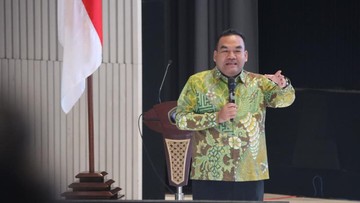
Budiman Sudjatmiko, Head of the Poverty Alleviation Acceleration Agency (BP Taskin), emphasized that the bill's passage extends beyond mere law enforcement. He views it as a fundamental calculation of the state's capacity to fund poverty alleviation initiatives. President Prabowo Subianto is fully committed to eliminating budget leakage, Sudjatmiko added.
Sudjatmiko explained that corruption creates two primary problems: leakage and crime. By eliminating the leakage of criminal proceeds through asset forfeiture, the government can redirect more funds directly to poverty alleviation programs. He further noted that corruption results in a double loss for the state: the loss of public funds and the erosion of the state's capacity to provide services and development. Therefore, asset forfeiture serves as a tool to restore the state's fiscal capacity, enabling more effective execution of programs directly benefiting the poor.
About this summary
Originally published by Republika in Indonesian. Translated, summarized, and contextualized automatically by DistantNews, with a note on how the source frames the story. Not individually reviewed before publishing. How this works.
More Stories


From Our Blog

What Gets Lost (and Found) When News Is Translated

The Critical Role of Diaspora Media in Global News

What Travellers Should Know About Countries with Restricted Press

A Digital Nomad's Guide to Following Local News

How the Same Story Looks Different in Different Countries
