


Indonesia's 'Economy of Fire': Unraveling the complex causes of forest and land fires
Translated from Indonesian and summarized by DistantNews. Read the original for the full story.
At a glance
Analysis
Sources not specified
Ongoing story
- Indonesia is facing severe forest and land fires (karhutla), particularly in Kalimantan and Sumatra, with thousands of hotspots detected in August 2026.
- The fires, exacerbated by El Niño, are a recurring issue causing significant health, economic, and regional diplomatic losses.
- The article argues that karhutla is a structural crisis resulting from climate anomalies, degraded peatlands, and the economic incentives for burning, rather than a single cause.
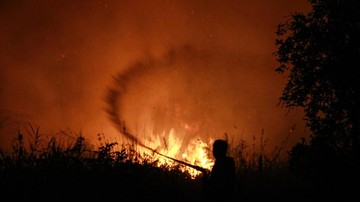
The skies over Kalimantan and Sumatra have once again turned hazy as Indonesia confronts a familiar crisis: widespread forest and land fires. By late August 2026, the National Disaster Management Agency (BNPB) reported a staggering 1,842 hotspots across five Kalimantan provinces, with Central Kalimantan leading the grim tally. Sumatra is also heavily affected, with the Meteorology, Climatology, and Geophysics Agency (BMKG) detecting 1,104 hotspots, half of which are concentrated in South Sumatra. This ecological disaster has become a devastatingly routine occurrence, inflicting heavy tolls on health, the economy, and regional diplomacy for at least three decades.
The haze has already crossed national borders, choking Sarawak in Malaysia and pushing air quality indexes to unhealthy levels. Domestically, six provinces are on high alert as the nation braces for the peak of the dry season, intensified by the El Niño phenomenon. This recurring catastrophe raises a critical question: why do trillions of rupiah spent on fire suppression, recovery, and legal sanctions seem insufficient to extinguish the flames?
Drawing on academic literature from 1995 to 2026, the author, an ESG and productivity consultant, argues that the public debate has been trapped in a misleading dichotomy. For years, the discussion has oscillated between blaming natural disasters due to extreme drought (El Niño) and pointing fingers at the palm oil industry or smallholder farmers. However, scientific evidence suggests this is an oversimplification.
Forest and land fires (karhutla) are not phenomena with a single cause. Instead, they represent a structural crisis born from the intricate interaction of three interlocking layers: climate anomalies, the vulnerability of peatland ecosystems due to past land management practices, and the pragmatic "economy of fire" operating at the local level. While El Niño significantly increases the risk of devastating fires, amplifying the potential for massive biomass emissions, human-induced land-use changes since the 1960s have been the primary driver of the current scale of the problem. The draining of peatlands, essential for creating vast plantations of palm oil and acacia, has transformed these naturally water-logged, fire-resistant ecosystems into colossal fuel reserves. Dried peat is highly susceptible to burning, fires can smolder undetected beneath the surface for months, and are 4.5 times more likely to ignite than in natural landscapes.
About this summary
Originally published by Republika in Indonesian. Translated, summarized, and contextualized automatically by DistantNews, with a note on how the source frames the story. Not individually reviewed before publishing. How this works.
More Stories


From Our Blog

What Gets Lost (and Found) When News Is Translated

The Critical Role of Diaspora Media in Global News

What Travellers Should Know About Countries with Restricted Press

A Digital Nomad's Guide to Following Local News

How the Same Story Looks Different in Different Countries
