


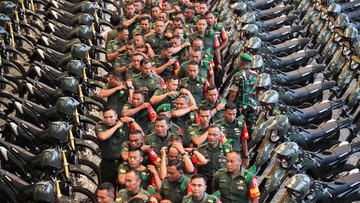
Indonesian Civil Society Coalition Condemns Military Involvement in Taxpayer Oversight
Translated from Indonesian, summarized and contextualized by DistantNews.
At a glance
News
Named sources
New plan
- A civil society coalition in Indonesia has strongly condemned the Directorate General of Taxes' plan to involve the Indonesian National Armed Forces (TNI) in monitoring taxpayer compliance.
- The coalition argues this policy blurs the lines between civilian and military authority, expands state surveillance without adequate legal basis, and risks intimidating citizens.
- They contend that involving TNI personnel, specifically village guidance non-commissioned officers (Babinsa), shifts the tax compliance approach from voluntary to security-based and reflects a "political manifestation of fear" by the state.
A coalition of Indonesian civil society organizations has voiced strong opposition to a recent policy by the Directorate General of Taxes (DJP) that would involve the Indonesian National Armed Forces (TNI) in overseeing taxpayer compliance. The policy, outlined in SE-8/PJ/2026, permits the involvement of TNI's Babinsa (village guidance non-commissioned officers) and Polri's Bhabinkamtibmas (community security and order guidance officers) in monitoring tax compliance, extending information gathering down to the village level.
This policy [involving TNI] is dangerous because it blurs the boundaries between civilian and military authority, expands state surveillance over citizens without adequate legal basis, and has the potential to create intimidation in the relationship between the public and tax authorities.
The coalition, comprising prominent groups such as YLBHI, Amnesty International Indonesia, KontraS, and ICW, issued a joint statement Tuesday, July 21, 2026, labeling the policy as "dangerous." They argue it dangerously blurs the boundaries between civilian and military roles, expands state surveillance over citizens without a sufficient legal foundation, and carries a significant potential for intimidation in the relationship between the public and tax authorities.
Involving Babinsa in the tax information collection chain shifts the approach from voluntary compliance to a security-based approach.
In the context of a self-assessment tax system, the coalition acknowledges the state's authority to provide guidance, supervision, examination, and law enforcement. However, they stress that these functions must be executed by tax authorities and civil law enforcement officials who possess clear mandates, measurable procedures, avenues for appeal, and external oversight. "Involving Babinsa in the tax information collection chain shifts the approach from voluntary compliance to a security-based approach," the statement read.
In the village level, the presence of Babinsa in tax matters is a manifestation of political fear built by the state towards the people, especially directed at vulnerable groups, small businesses, farmers, fishermen, informal workers.
The coalition further interprets the involvement of TNI personnel as a "political manifestation of fear" by the state, particularly towards vulnerable groups, small businesses, farmers, fishermen, and informal workers. They believe this creates an environment where citizens feel monitored as security objects rather than taxpayers with rights. This, they argue, contradicts the agenda of TNI reform, the principle of civilian supremacy, and efforts to build public trust in tax administration. The policy also risks violating taxpayer confidentiality and privacy rights, as sensitive financial information could be accessed and used beyond legitimate tax purposes.
In such a context, citizens may feel monitored not as taxpayers with rights, but as objects of security surveillance.
DistantNews Editorial
Originally published by CNN Indonesia in Indonesian. Translated, summarized, and contextualized by our editorial team with added local perspective. Read our editorial standards.
More Stories



From Our Blog

What Gets Lost (and Found) When News Is Translated

The Critical Role of Diaspora Media in Global News

What Travellers Should Know About Countries with Restricted Press

A Digital Nomad's Guide to Following Local News

How the Same Story Looks Different in Different Countries
