


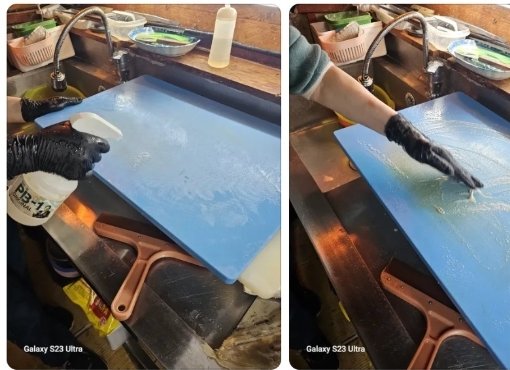
“Industrial Detergent with Skull Mark?!” Restaurant Owner Criticized for Washing Cutting Boards with PB-1
Translated from Korean, summarized and contextualized by DistantNews.
TLDR
- A Seoul restaurant owner is facing backlash for using an industrial cleaner, PB-1, to wash cutting boards.
- Critics argue that PB-1, a strong alkaline industrial cleaner with skull markings, is unsuitable for food contact surfaces.
- The owner defended the practice, claiming it effectively removes fish oil and odors, but netizens have reported the incident to authorities.
A shocking incident has surfaced in Seoul, South Korea, where the owner of a raw fish restaurant has drawn widespread criticism for using an industrial-grade cleaner, PB-1, on their cutting boards. The owner brazenly shared their cleaning method on social media platform Threads, claiming it was the only effective way to remove stubborn fish oil and odors from the boards.
Is it okay to use industrial detergent with a skull mark to wash cutting boards?
However, this practice has ignited outrage among netizens and other business owners. PB-1 is known to be a highly alkaline industrial detergent, often marked with skull symbols, indicating its hazardous nature. Critics rightly point out that such a product, designed for cleaning tiles and industrial grease, should never come into contact with food preparation surfaces. The potential health risks associated with ingesting residues of such a chemical are severe, leading to immediate concerns about public safety.
PB1 is absorbed into the body through skin contact and the respiratory tract.
This incident highlights a disturbing lack of basic hygiene knowledge or a reckless disregard for safety protocols within some segments of the food service industry. While the restaurant owner may have believed they were simply finding an efficient cleaning solution, their actions demonstrate a profound misunderstanding of food safety regulations and consumer trust. The swift public condemnation and potential reporting to the Ministry of Food and Drug Safety underscore the high standards expected in South Korea's food sector, where maintaining customer health and safety is paramount. This case serves as a stark reminder that cutting corners in hygiene can have severe repercussions, both reputationally and legally.
It seems like a report has been filed with the Ministry of Food and Drug Safety.
DistantNews Editorial
Originally published by Dong-A Ilbo in Korean. Translated, summarized, and contextualized by our editorial team with added local perspective. Read our editorial standards.
More Stories


From Our Blog

What Gets Lost (and Found) When News Is Translated

The Critical Role of Diaspora Media in Global News

What Travellers Should Know About Countries with Restricted Press

A Digital Nomad's Guide to Following Local News

How the Same Story Looks Different in Different Countries
