


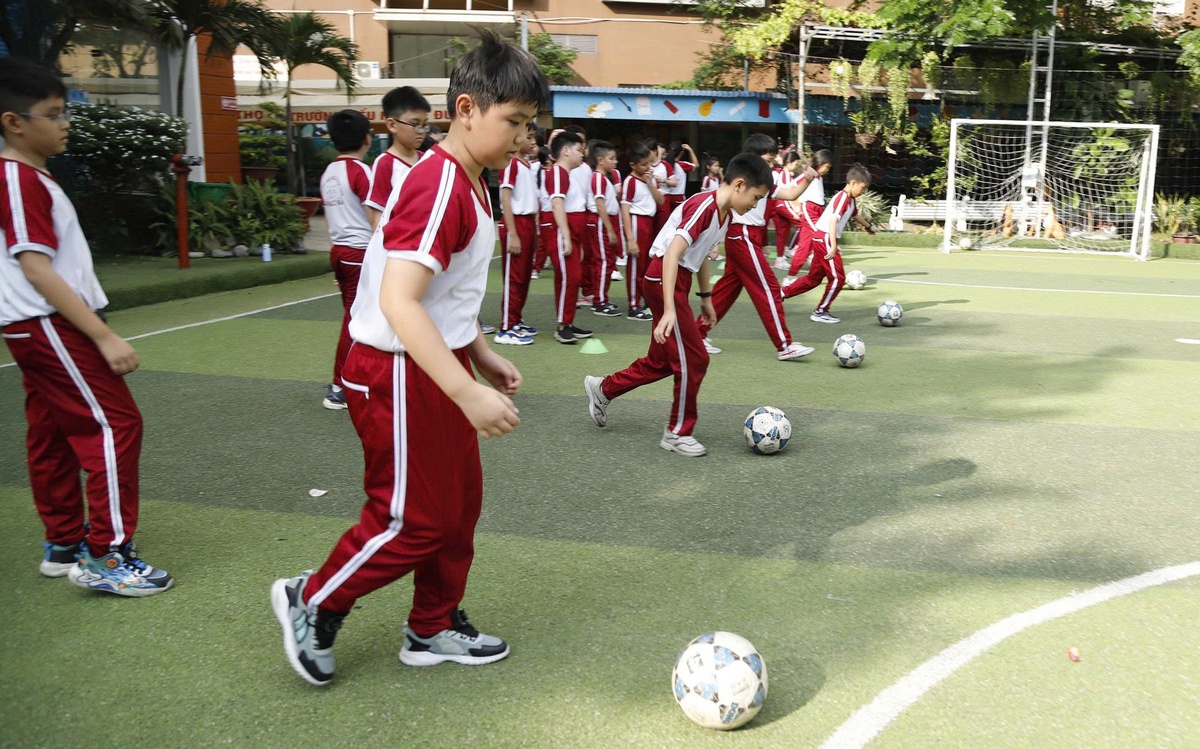
Innovating Physical Education: Building Character and Skills in Vietnamese Schools
Translated from Vietnamese, summarized and contextualized by DistantNews.
TLDR
- Vietnamese schools are innovating physical education to foster holistic development, moving beyond mandatory exercise to build character and life skills.
- Schools like Le Duc Tho Elementary leverage their advanced, internationally integrated model, including swimming pools, to offer diverse sports and certifications.
- Educators advocate for specific policies and greater social investment to enhance school sports, citing challenges in securing corporate partnerships and adequate resources for specialized equipment and facilities.
In Vietnam, the emphasis on physical education (PE) is undergoing a significant transformation, shifting from a mere compulsory subject to a cornerstone of holistic student development. As highlighted by Tuoi Tre, schools are increasingly recognizing PE's role in cultivating not just physical health, but also character, resilience, and essential life skills. This evolution is particularly evident in advanced, internationally integrated schools like Le Duc Tho Elementary, which boasts facilities such as a swimming pool, allowing students to earn swimming certifications by third grade.
We must not view physical education solely as a mandatory class for physical training, but as an important component of comprehensive education, contributing to the formation of personality, health, courage, and life skills for students.
However, the path to enhancing school sports is fraught with challenges. School leaders, like Ms. Nguyen Ngoc Phuong, principal of Le Duc Tho Elementary, express a strong desire for dedicated policies from the city to support school sports. While their integrated model allows for tuition fees that can fund elective courses, including PE, Phuong notes that the funds are spread thin across various activities. She points out the difficulty in attracting corporate investment for sports, as the returns are often minimal compared to the substantial investment required. The attempt to introduce golf, for instance, was met with corporate refusal, underscoring the need for systemic support.
Compared to regular schools, our school is more advantageous in sports activities because the international integration model allows us to collect no more than 1,725,000 VND per student to organize elective subjects, including physical training. However, I still hope the city will have its own mechanism for school sports.
Mr. Do Dinh Dao, Principal of Nguyen Huu Tho High School, echoes the call for a paradigm shift in how PE is approached. He stresses the need for modern, engaging teaching methods that resonate with students, moving away from repetitive, traditional content. Dao advocates for diversifying the curriculum to include popular modern sports like aerobics, dance sport, basketball, badminton, pickleball, martial arts, and table tennis. Crucially, he proposes a transition from simply teaching physical education to fostering a 'school sports culture,' integrating physical activity into the daily fabric of school life through clubs, tournaments, and inter-class competitions. This vision aims to make sports an intrinsic part of the student experience, aligning with global trends in education and well-being.
If we partner, businesses are less enthusiastic because the investment is large and the profit is small. For example, two years ago, I researched school golf and was rejected by businesses.
DistantNews Editorial
Originally published by Tuổi Trẻ in Vietnamese. Translated, summarized, and contextualized by our editorial team with added local perspective. Read our editorial standards.
More Stories


From Our Blog

What Gets Lost (and Found) When News Is Translated

The Critical Role of Diaspora Media in Global News

What Travellers Should Know About Countries with Restricted Press

A Digital Nomad's Guide to Following Local News

How the Same Story Looks Different in Different Countries
