


Iran President: US Must Change Stance for Diplomacy to Open
Translated from Korean, summarized and contextualized by DistantNews.
TLDR
- Iranian President Ebrahim Raisi told Japanese Prime Minister Sanae Takaichi that diplomatic progress hinges on the United States changing its stance.
- The leaders discussed current issues, including the US-Israel-Iran conflict, during a phone call.
- Takaichi also requested assurances for safe navigation in the Strait of Hormuz, noting recent safe passage for Japanese-related vessels.
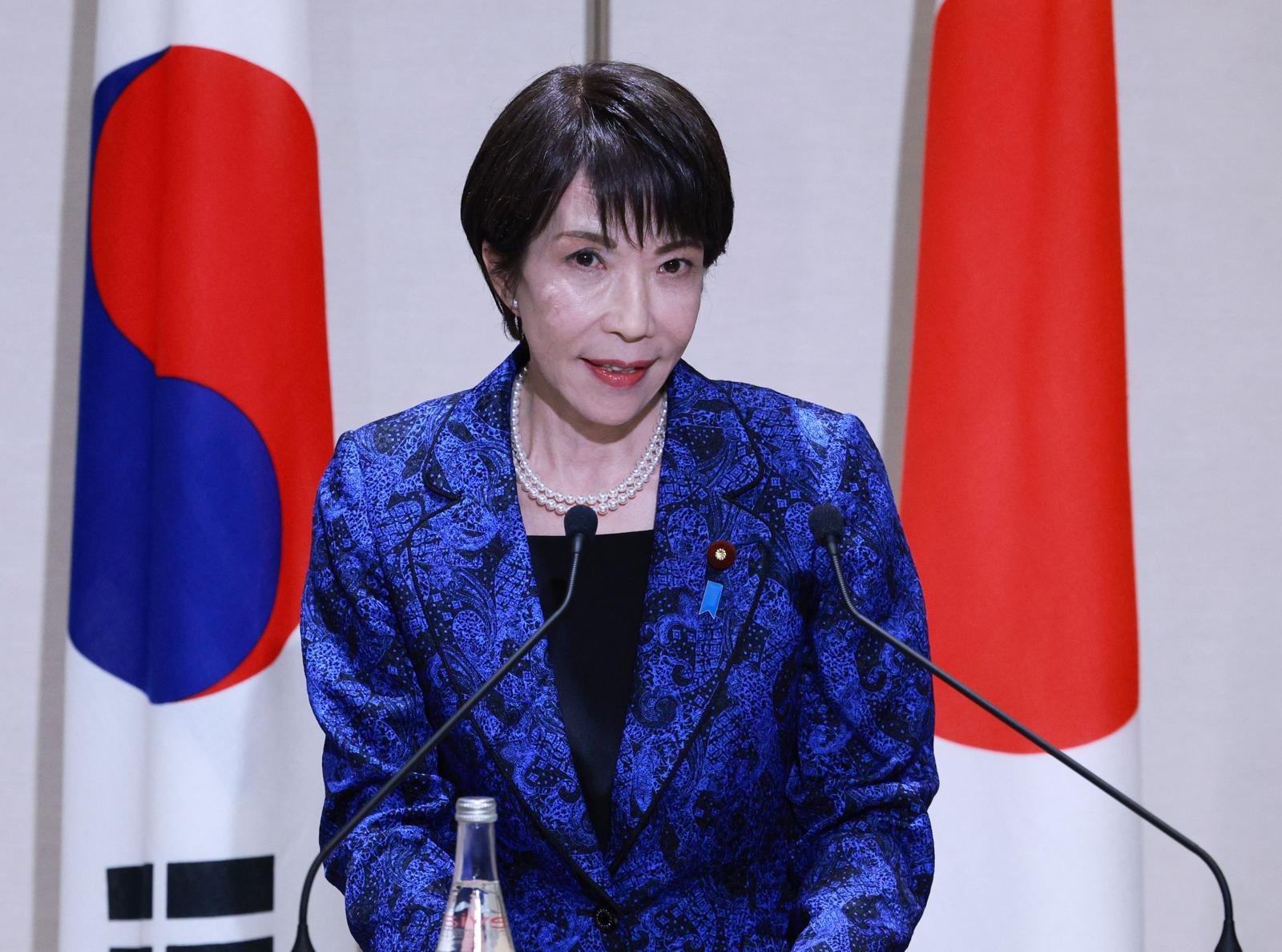
In a significant diplomatic exchange, Iranian President Ebrahim Raisi has articulated a clear condition for advancing diplomatic solutions to regional tensions: a fundamental shift in the United States' approach. Speaking with Japanese Prime Minister Sanae Takaichi, President Raisi emphasized that the path to diplomacy remains contingent upon Washington altering its current posture, a statement that underscores Iran's perspective on the geopolitical dynamics at play.
The path to diplomacy will open if the US government changes its attitude.
The phone conversation between the two leaders, occurring amidst heightened regional instability, focused on pressing issues including the ongoing conflict involving the US, Israel, and Iran. Prime Minister Takaichi conveyed Japan's strong desire for a swift resumption of negotiations and the attainment of a final agreement. President Raisi's response, placing the onus on the US for the stalled progress, highlights Iran's view that external factors, particularly American policy, are the primary obstacles to de-escalation and resolution.
Beyond the immediate geopolitical conflicts, Prime Minister Takaichi also raised the critical issue of maritime security in the Strait of Hormuz. He noted with appreciation the recent safe passage of Japanese-related vessels and the return of Japanese sailors, while reiterating Japan's firm request for the guarantee of free and safe navigation for all ships, including those from Japan and other Asian nations. This highlights Japan's significant economic interests in the region and its vulnerability to disruptions in vital shipping lanes.
I strongly hope that negotiations with the United States will resume quickly and reach a final agreement.
From the perspective of Hankyoreh, this dialogue offers a crucial insight into the complex diplomatic landscape. President Raisi's remarks, as reported, suggest an Iranian position that is open to diplomacy but unwilling to compromise on its perceived sovereignty or yield to external pressure without reciprocal concessions, particularly from the US. The Japanese mediation efforts, seeking stability in both the broader conflict and maritime trade, reflect a nation attempting to navigate a delicate balance between its alliance with the US and its economic ties with the region. This story is uniquely interesting from a Korean perspective as it mirrors the regional security concerns that directly impact the Korean peninsula and East Asia, emphasizing the interconnectedness of global stability and the critical role of major powers in shaping outcomes.
We repeatedly and strongly requested the securing of free and safe navigation for all ships, including Japanese and other Asian countries, in the Strait of Hormuz.
DistantNews Editorial
Originally published by Hankyoreh in Korean. Translated, summarized, and contextualized by our editorial team with added local perspective. Read our editorial standards.
More Stories


From Our Blog

What Gets Lost (and Found) When News Is Translated

The Critical Role of Diaspora Media in Global News

What Travellers Should Know About Countries with Restricted Press

A Digital Nomad's Guide to Following Local News

How the Same Story Looks Different in Different Countries
