


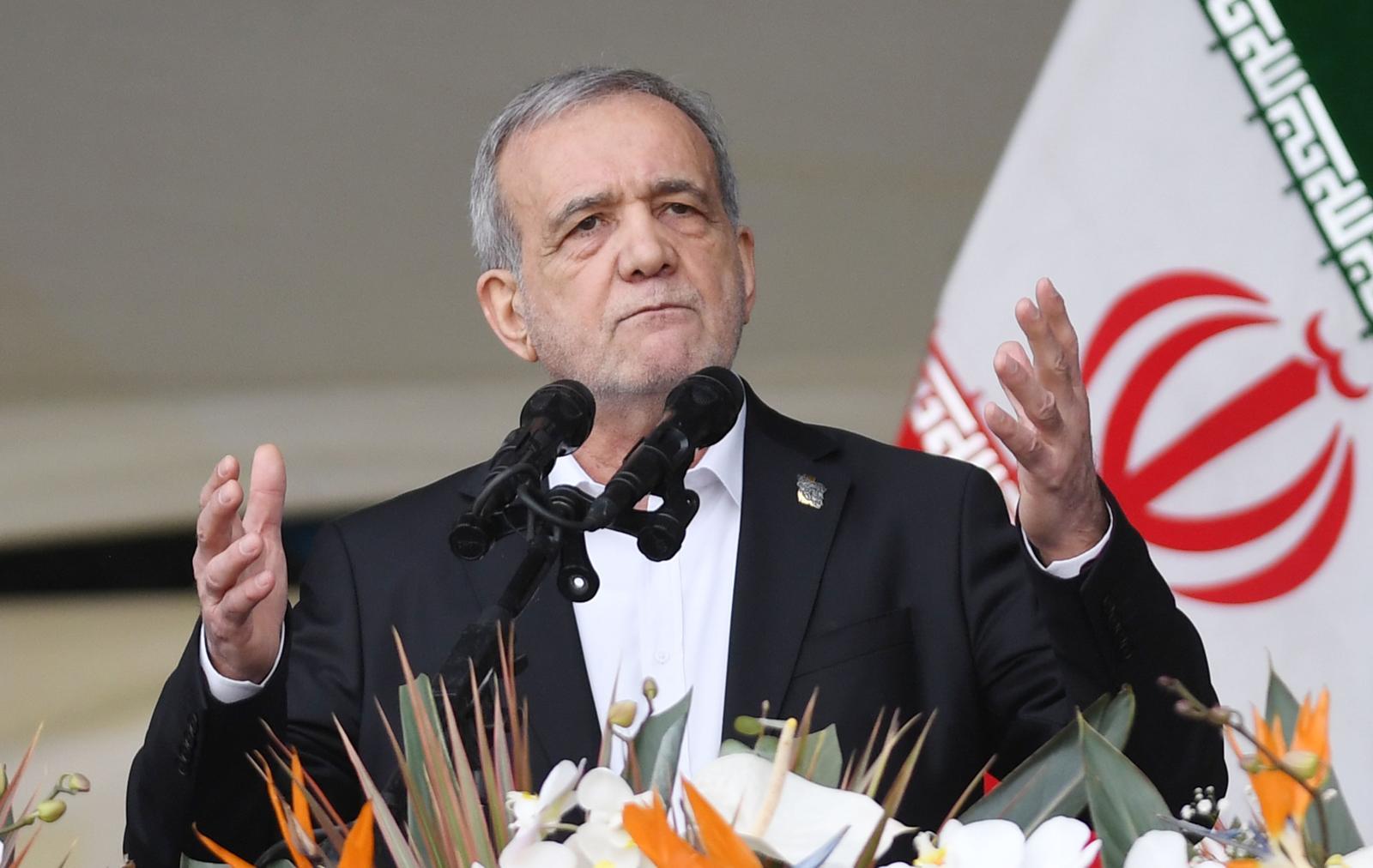
Iran's President Expresses Readiness for Diplomacy to End War, Cites Deep Distrust of US
Translated from Korean, summarized and contextualized by DistantNews.
TLDR
- Iranian President Masoud Pezeshkian expressed readiness for diplomatic efforts to end the war in a phone call with French President Emmanuel Macron.
- Pezeshkian reiterated Iran's stance on not compromising its national rights and expressed deep distrust towards the US due to alleged attacks during negotiations.
- Macron urged all parties to lift the blockade of the Strait of Hormuz and emphasized the role of European countries in de-escalation.
As a reporter for Dong-A Ilbo, I observe Iran's complex diplomatic dance on the international stage. President Masoud Pezeshkian's recent conversation with French President Emmanuel Macron reveals a dual approach: a willingness to engage in diplomacy for peace while firmly protecting national interests. Pezeshkian's assertion that Iran is prepared to pursue diplomatic paths to end the war, provided its rights are guaranteed, underscores a core principle of Iranian foreign policy. This stance, however, is juxtaposed with a strong expression of distrust towards the United States, which Iran accuses of undermining negotiations through military actions.
We are prepared to pursue diplomatic channels to end the war within the framework of international law.
The discussion also touched upon the critical issue of the Strait of Hormuz. Macron's call for an immediate and unconditional lifting of the blockade and a return to pre-conflict navigation freedom highlights the international community's concerns about regional stability. France's proposed multinational fleet aims to restore confidence among shipowners and insurers, signaling a broader European engagement in resolving the conflict. This emphasis on European involvement is significant, as France has maintained diplomatic channels with Iran throughout the conflict.
The realization of the rights of the Iranian people must be guaranteed.
From our perspective at Dong-A Ilbo, Iran's position reflects a strategic calculation. While seeking to de-escalate tensions and potentially benefit from sanctions relief, Tehran is unwilling to concede on fundamental issues of sovereignty and national security. The deep-seated mistrust of the US, rooted in past experiences, continues to shape Iran's foreign policy calculus. The emphasis on international law and the rights of the Iranian people serves as both a justification for its actions and a condition for any potential resolution. This delicate balancing act between engagement and assertiveness is characteristic of Iran's approach to foreign relations, particularly in a region fraught with geopolitical complexities.
The two attacks by the United States during the negotiations were like stabbing us in the back.
DistantNews Editorial
Originally published by Dong-A Ilbo in Korean. Translated, summarized, and contextualized by our editorial team with added local perspective. Read our editorial standards.
More Stories


From Our Blog

What Gets Lost (and Found) When News Is Translated

The Critical Role of Diaspora Media in Global News

What Travellers Should Know About Countries with Restricted Press

A Digital Nomad's Guide to Following Local News

How the Same Story Looks Different in Different Countries
