


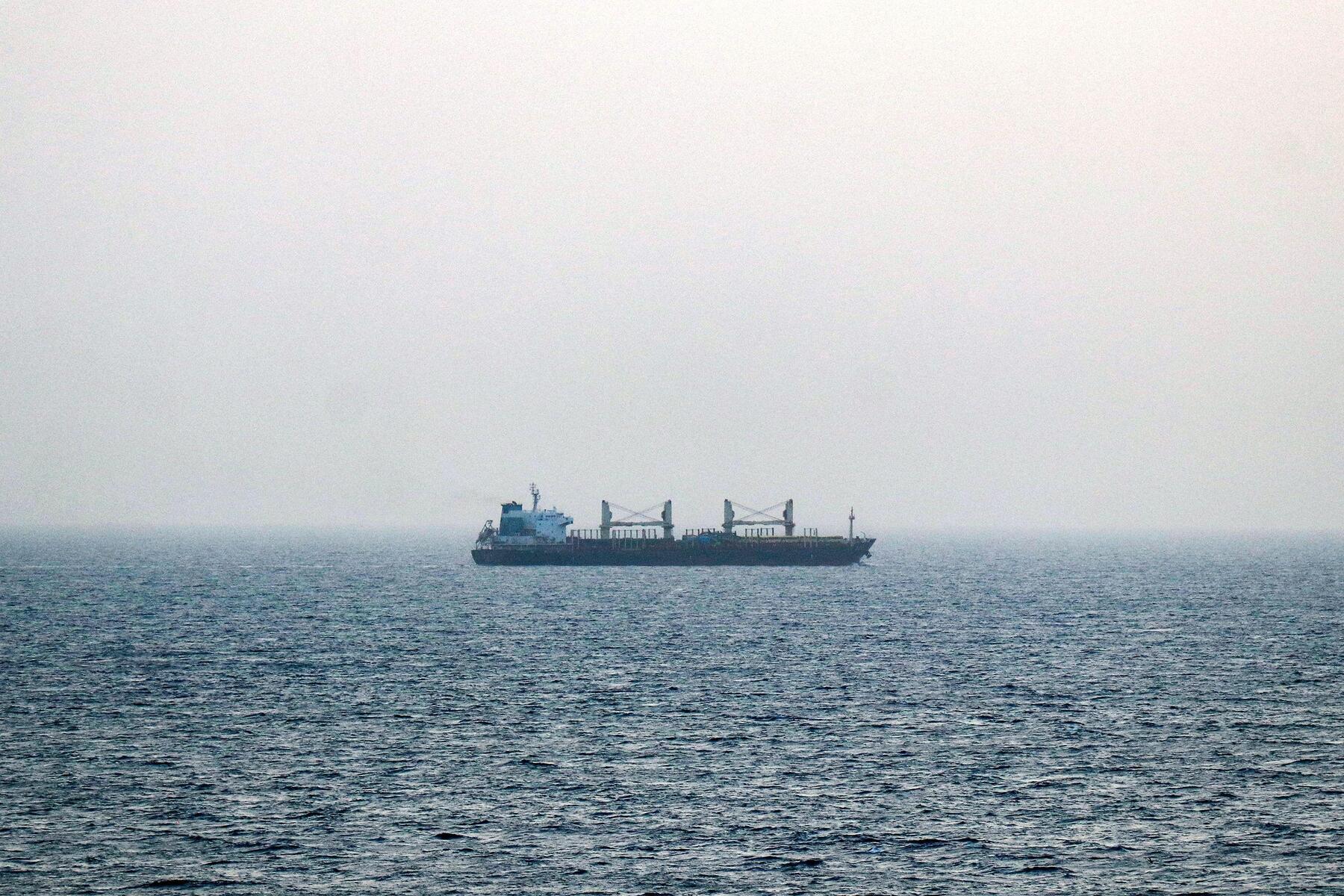
Iran's Revolutionary Guards stop six ships in Strait of Hormuz
Translated from German, summarized and contextualized by DistantNews.
At a glance
News
From a news agency
Ongoing story
- Iran's Revolutionary Guards have stopped six commercial ships in the Strait of Hormuz.
- The Guards claim control over a 240,000 sq km area in the Persian Gulf and the strait.
- They stated no ship can pass without adhering to Iranian regulations.
Iran's Islamic Revolutionary Guard Corps (IRGC) announced it has stopped six commercial vessels attempting to transit the strategic Strait of Hormuz. The IRGC, through its affiliated Tasnim news agency, asserted its enforcement of control over a vast 240,000 square kilometer area encompassing the Persian Gulf and the vital waterway.
No ship can pass without adhering to Iranian regulations.
According to the IRGC's statement, passage through this area is contingent upon compliance with Iranian regulations. The forces warned that any attempts by the U.S. military to alter the course of ships would be met with a "determined response and warning shots," forcing vessels to turn back.
Despite the IRGC's actions, Iranian Foreign Ministry spokesperson Ismail Baghai stated that there has been no change in the traffic situation in the Strait of Hormuz. He referenced ongoing bilateral discussions with Oman, whose territorial waters are part of the international shipping route.
Attempts by the U.S. military to alter the course of ships would be met with a determined response and warning shots.
These developments occur amidst heightened tensions between Iran and the United States concerning maritime traffic. The IRGC's move follows a recent incident where U.S. forces reportedly fired upon a tanker in the Strait of Hormuz that was attempting to breach an Iranian blockade of ports. The IRGC had previously announced stopping four ships on Saturday.
there is no change in the traffic situation in the Strait of Hormuz.
DistantNews Editorial
Originally published by Die Presse in German. Translated, summarized, and contextualized by our editorial team with added local perspective. Read our editorial standards.
More Stories


From Our Blog

What Gets Lost (and Found) When News Is Translated

The Critical Role of Diaspora Media in Global News

What Travellers Should Know About Countries with Restricted Press

A Digital Nomad's Guide to Following Local News

How the Same Story Looks Different in Different Countries
