


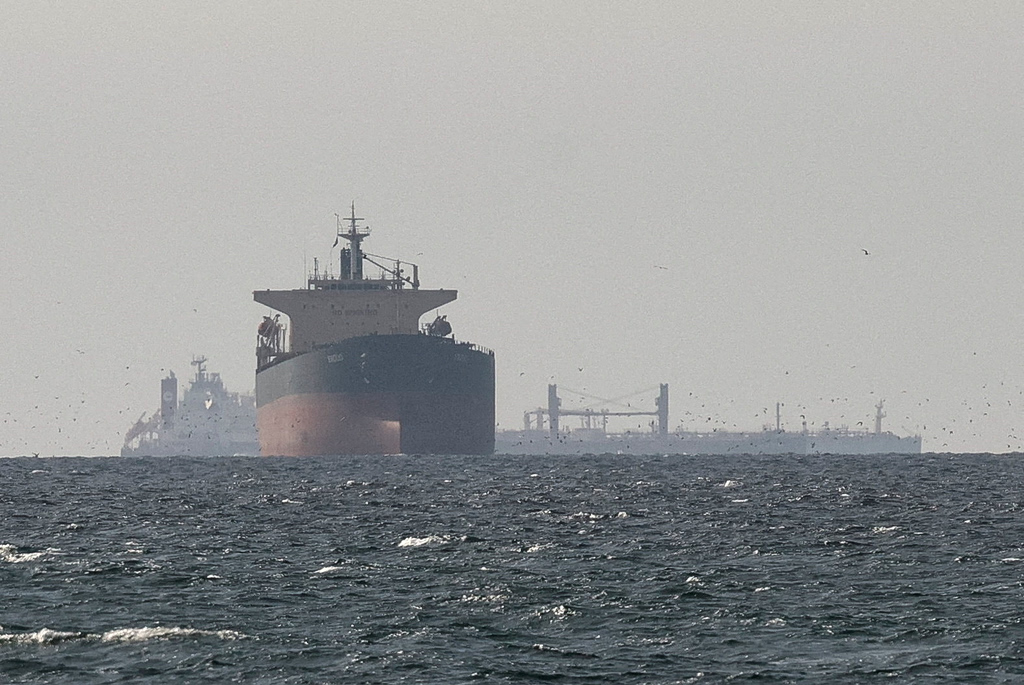
Iran: Strait of Hormuz Will Close If US Does Not Lift Blockade on Iranian Ports
Translated from Greek, summarized and contextualized by DistantNews.
TLDR
- Iran has threatened to close the Strait of Hormuz if the US does not lift its blockade on Iranian ports.
- Iranian Parliament Speaker Mohammad Bagher Ghalibaf criticized US President Trump's statements as false and ineffective in negotiations.
- Ghalibaf asserted that passage through the strait will only be permitted on designated routes and with Iran's permission, emphasizing that the regime of the Strait of Hormuz is not determined by social media posts.
From the perspective of Ta Nea, a Greek newspaper, the escalating tensions surrounding the Strait of Hormuz, with Iran issuing threats of closure and the US maintaining its blockade, represent a critical flashpoint with potentially severe global repercussions.
The US President made seven claims in an hour, and all seven were false.
The article conveys Iran's stern warning: the Strait of Hormuz will be closed if the US fails to lift its blockade on Iranian ports. This statement, attributed to Iranian Parliament Speaker Mohammad Bagher Ghalibaf, directly challenges US policy and highlights Iran's willingness to use its strategic position to exert pressure. Ghalibaf's dismissal of President Trump's claims as 'false' and his assertion that they will achieve nothing in negotiations underscore the deep-seated animosity and lack of trust between the two nations.
They did not win the war with these lies and certainly will not achieve anything in negotiations.
Ghalibaf's emphasis on designated routes and Iran's permission for passage through the Strait of Hormuz signifies a clear assertion of sovereignty and control over this vital waterway. His rejection of social media pronouncements as a means of determining the strait's regime further emphasizes Iran's formal diplomatic channels and its stance against what it perceives as US attempts to manipulate public opinion. This framing positions Iran as a resolute actor defending its interests against perceived American aggression.
With the continuation of the blockade of Iranian ports by the US armed forces, the Strait of Hormuz will not remain open.
For Greece, a nation with a significant maritime trade presence and a vested interest in global stability, the potential closure of the Strait of Hormuz is a deeply concerning prospect. Such an event could disrupt international shipping, impact energy supplies, and exacerbate geopolitical instability. Ta Nea would likely report this with a sense of urgency, highlighting the potential economic fallout and the need for de-escalation. The article's focus on the direct confrontation between Iranian and US policies serves as a stark reminder of how regional conflicts can have far-reaching consequences, demanding careful monitoring and diplomatic engagement from the international community.
Passage through the Strait of Hormuz will only occur on a 'designated route' and 'with Iran's permission.'
DistantNews Editorial
Originally published by Ta Nea in Greek. Translated, summarized, and contextualized by our editorial team with added local perspective. Read our editorial standards.
More Stories


From Our Blog

What Gets Lost (and Found) When News Is Translated

The Critical Role of Diaspora Media in Global News

What Travellers Should Know About Countries with Restricted Press

A Digital Nomad's Guide to Following Local News

How the Same Story Looks Different in Different Countries
