

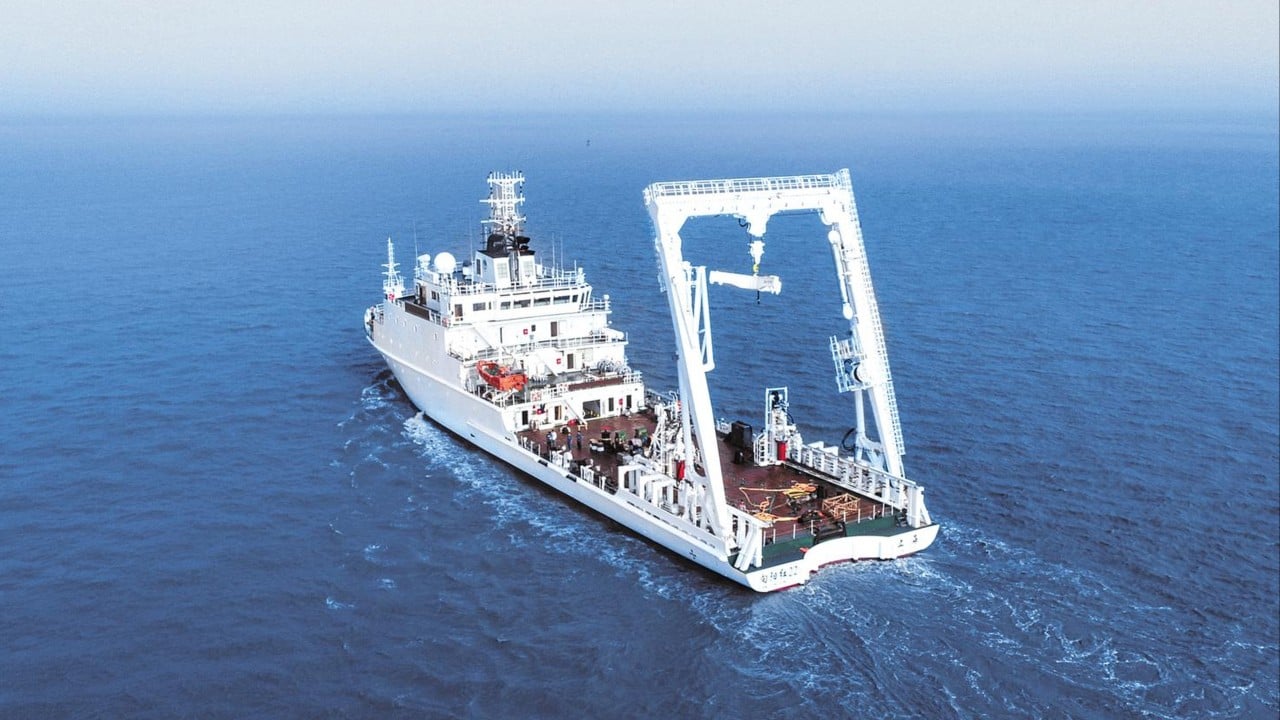
Is Beijing preparing for submarine action with maritime survey east of Taiwan?
Summarized and contextualized by DistantNews.
At a glance
News
Named sources
Context piece
- A Chinese research vessel conducted a three-day oceanographic survey east of Taiwan in the Philippine Sea.
- While state media framed the mission as civilian maritime governance, experts suggest dual military applications for the data.
- The gathered information on water conditions could enhance submarine and anti-submarine warfare models, as well as undersea infrastructure planning.
A Chinese research vessel, the Xiang Yang Hong 22, spent three days in mid-June conducting an oceanographic survey in the Philippine Sea, east of Taiwan. State media presented the mission as an extension of Beijing's civilian maritime governance, but experts warn of its potential military applications.
Oceanographic surveys typically collect data on seawater temperature, salinity, currents, and seabed topography, essential for marine science. However, experts highlight that this same data is invaluable for military purposes. Specifically, it can significantly improve underwater acoustic models crucial for submarine operations, anti-submarine warfare, and the planning of undersea infrastructure like cables and pipelines.
James Holmes, a maritime strategist at the U.S. Naval War College, emphasizes the inherently dual-use nature of such missions. He noted that similar surveys conducted by the United States in the past have led to friction with Chinese vessels in the South China Sea. "Water is a complex medium for submarine and anti-submarine operations," Holmes explained. "Variations in pressure, temperature and salinity tend to refract sound and layers can form beneath which submarines can hide."
Water is a complex medium for submarine and anti-submarine operations. Variations in pressure, temperature and salinity tend to refract sound and layers can form beneath which submarines can hide.
DistantNews Editorial
Originally published by South China Morning Post. Summarized and contextualized by our editorial team with added local perspective. Read our editorial standards.
More Stories
From Our Blog

Countries Without a Free Press: What You Need to Know

What Press Freedom Means for the News You Read

What Gets Lost (and Found) When News Is Translated

The Critical Role of Diaspora Media in Global News

What Travellers Should Know About Countries with Restricted Press
