


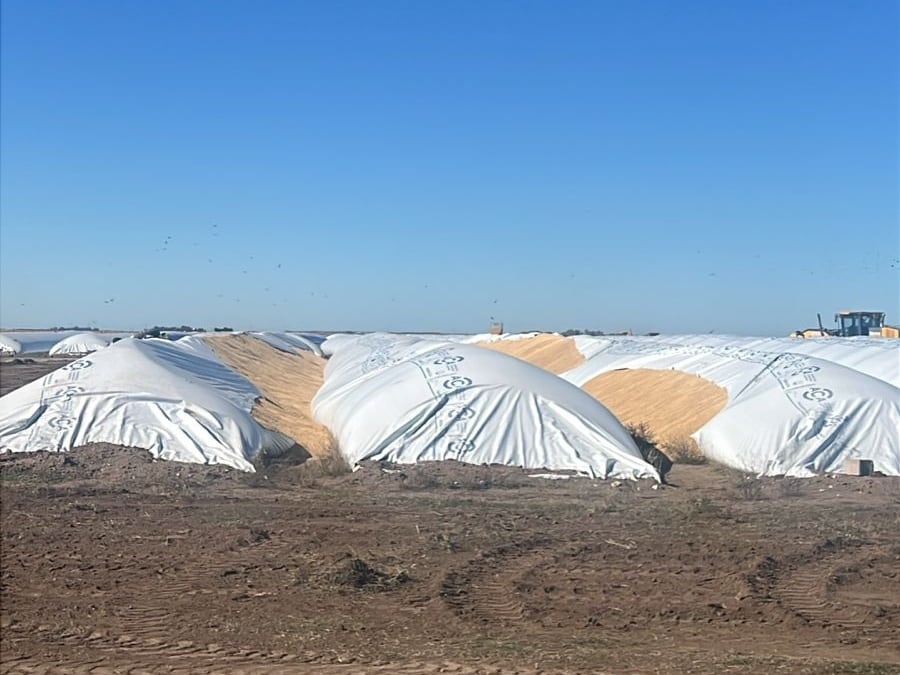
'It was a bucket of cold water': Mysterious attack on silobolsas amid worrying conflict in the agro-industry
Translated from Spanish, summarized and contextualized by DistantNews.
TLDR
- Five "silobolsas" (grain bags) containing approximately 1,000 tons of forage barley were vandalized at a cooperative in Bahía Blanca, Argentina.
- The incident occurred overnight at the Cooperativa Productores Rurales del Sud, located on a key agro-industrial route, during a grain transporters' strike.
- The damage exposes the grain to weather conditions, necessitating urgent work to mitigate losses, and marks an unprecedented event for the 76-year-old cooperative.
A disturbing act of vandalism has struck the agricultural heartland of Bahía Blanca, Argentina, with unknown perpetrators slashing five large grain bags, known as "silobolsas," at the Cooperativa Productores Rurales del Sud. This brazen attack, which occurred between Tuesday night and Wednesday morning, resulted in the loss of approximately 1,000 tons of forage barley, a significant blow to the cooperative and the region's agricultural output.
Today morning we found that five forage barley silobolsas had been slashed. That's approximately 1,000 tons.
The incident is particularly concerning given its timing, coinciding with a strike by grain transporters in the area who are demanding updated tariffs due to rising fuel costs. While the cooperative has refrained from directly linking the vandalism to the ongoing conflict, the proximity and context are undeniable. The damaged silobolsas, located on a strategically important route connecting major highways, have spilled their contents, leaving the valuable grain exposed to the elements and the threat of further spoilage.
Now we have to work to try to lose the fewest kilos possible. We are transferring the grain while watching the forecast, because rain is predicted for this weekend.
Nahuel Mélida, the administrative manager, described the discovery as a "bucket of cold water," emphasizing that the cooperative, with 76 years of history, has never experienced anything of this magnitude. The immediate challenge is to salvage as much of the grain as possible before adverse weather, with rain forecast for the weekend. This requires significant logistical effort, including the use of new bags, fuel, machinery, and personnel, adding substantial unforeseen costs.
It happens right in the framework of the conflict over tariffs and diesel, but I am not going to point fingers because we have no indication of who could have been responsible.
From an Argentine perspective, this act of sabotage is deeply troubling. It not only represents a direct economic loss but also undermines the stability and trust essential for the agricultural sector, which is a cornerstone of the national economy. The conflict with transporters, while legitimate in its demands, should not devolve into such destructive actions. This incident highlights the fragility of supply chains and the potential for conflict to spill over into direct damage, impacting producers and potentially consumers alike. The cooperative's plea for evidence before assigning blame is a call for responsible investigation, but the underlying tension and the vulnerability of such storage methods are laid bare.
We have never experienced something of this magnitude. It was a bucket of cold water.
DistantNews Editorial
Originally published by La Nación in Spanish. Translated, summarized, and contextualized by our editorial team with added local perspective. Read our editorial standards.
More Stories

From Our Blog

What Gets Lost (and Found) When News Is Translated

The Critical Role of Diaspora Media in Global News

What Travellers Should Know About Countries with Restricted Press

A Digital Nomad's Guide to Following Local News

How the Same Story Looks Different in Different Countries
