


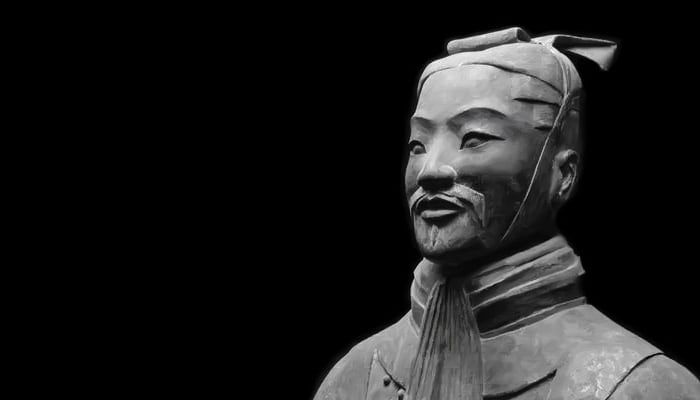
Sun Tzu: 'Move fast like the wind and compact like the forest, attack like the fire and remain immobile like the mountain'
Translated from Spanish, summarized and contextualized by DistantNews.
TLDR
- The ancient Chinese military strategy "Wind, Forest, Fire, Mountain" from Sun Tzu's "The Art of War" emphasizes rapid movement, compactness, aggressive attack, and steadfast defense.
- This principle, adapted by historical figures and modern leaders, guides principles of mobility, discipline, offensive intensity, and defensive stability.
- The strategy's influence extends beyond military applications, serving as a paradigm in modern business management for market expansion and crisis response.
Sun Tzu's timeless wisdom continues to resonate across millennia, offering profound insights into strategy and leadership. The enduring principle of "Wind, Forest, Fire, Mountain," derived from his seminal work "The Art of War," remains a cornerstone of strategic thought, not just in China but globally. This maxim, which encapsulates the essence of swift action, disciplined formation, decisive offense, and unyielding defense, has been a guiding force for countless leaders throughout history.
Move fast like the wind and compact like the forest, attack like the fire and remain immobile like the mountain.
From the battlefields of ancient China to the boardrooms of modern corporations, the adaptability of Sun Tzu's teachings is remarkable. Figures like Takeda Shingen in feudal Japan and contemporary business leaders such as Akio Toyoda of Toyota have drawn upon these principles to navigate complex challenges. The strategy's elegant duality—balancing agility with stability, and dynamism with control—provides a framework for effective decision-making in any high-stakes environment.
The message central invites to move with speed to avoid counterattacks while maintaining a compact formation that guarantees defense.
While Western interpretations often focus on the tactical application, from a Chinese perspective, this philosophy is deeply embedded in a holistic worldview that values balance and adaptability. The concept is not merely about winning battles but about understanding the flow of conflict and achieving objectives with minimal disruption. The enduring relevance of "The Art of War" in China is a testament to its cultural significance, viewed not just as a military manual but as a guide to life itself, promoting foresight, discipline, and strategic patience.
The wind symbolizes mental agility and speed to react to opportunities, while the forest represents the impenetrable structure that prevents dynamism from degenerating into chaos.
Despite debates surrounding the historical authenticity of Sun Tzu himself, the impact of "The Art of War" is undeniable. Its influence on the unification of China under the Qin dynasty and its continued study underscore its profound cultural and strategic importance. For us in Argentina, understanding these ancient principles offers a valuable lens through which to analyze contemporary challenges, reminding us that true strategic mastery lies in the ability to adapt and respond with wisdom and precision.
Fire demands total concentration of resources at the critical point, and the mountain acts as the base of psychological stability that allows for strategic patience.
DistantNews Editorial
Originally published by La Nación in Spanish. Translated, summarized, and contextualized by our editorial team with added local perspective. Read our editorial standards.
More Stories



From Our Blog

What Gets Lost (and Found) When News Is Translated

The Critical Role of Diaspora Media in Global News

What Travellers Should Know About Countries with Restricted Press

A Digital Nomad's Guide to Following Local News

How the Same Story Looks Different in Different Countries
