

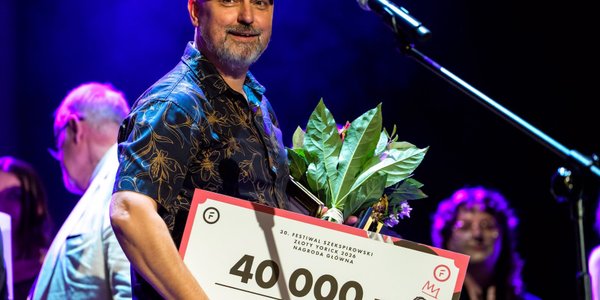
Jacek Jabrzyk: For the Season's Start in Kielce, We Will Perform 'The Return of Odysseus'
Translated from Polish, summarized and contextualized by DistantNews.
At a glance
Interview
Sources not specified
Context piece
- Director Jacek Jabrzyk discusses his contemporary approach to classic plays, focusing on the resonance between historical texts and current events.
- Jabrzyk explains how elements like AI and deep fakes are integrated into his production of "Hamlet" to reflect modern realities.
- He emphasizes that the emotional core of Shakespeare's works remains relevant, regardless of the setting.
Director Jacek Jabrzyk is bringing a modern sensibility to classic theater, aiming to bridge the gap between historical texts and contemporary life. His latest work, "Hamlet," is set in a near future incorporating elements like artificial intelligence and deep fakes, reflecting the complexities of today's world.
Working on a production, I don't think about participating in competitions; I avoid such calculations. I focus on working with the team, on following intuition.
Jabrzyk views classic plays not as static historical artifacts but as dynamic texts that can offer profound insights into the present. He believes that by "bumping" classical texts against current events, new and interesting interpretations can emerge. This approach allows audiences to connect with the enduring human emotions at the heart of these stories, even when presented in an unfamiliar context.
It seems to me that something interesting can emerge from such friction. An old text, in an unconventional way, can say a lot about us, our condition, and the times we live in.
His production of "Hamlet" specifically explores how technology, such as AI and virtual spaces, has reshaped human interaction. Jabrzyk notes that the anonymity and constructed identities found online mirror the potential for deception and hidden motives, drawing parallels to the themes of suspicion and revelation in Shakespeare's tragedy. He sees this as a natural evolution of how classic plays have always engaged with their contemporary settings.
When you read a text, contexts appear on their own; imagination suggests clues and ideas.
Jabrzyk also reflected on the collaborative process, particularly with dramaturg Tomasz Śpiewak. Initially cautious due to "Hamlet's" extensive existing interpretations, they found that delving into the text naturally brought forth new ideas. The exploration of virtual spaces and the nature of online encounters provided fertile ground for reimagining the play's iconic moments, such as the ghost's appearance.
The text we are talking about is not journalism, but a record of human emotions caused by some events embedded in some world.
DistantNews Editorial
Originally published by Rzeczpospolita in Polish. Translated, summarized, and contextualized by our editorial team with added local perspective. Read our editorial standards.
More Stories


From Our Blog

What Gets Lost (and Found) When News Is Translated

The Critical Role of Diaspora Media in Global News

What Travellers Should Know About Countries with Restricted Press

A Digital Nomad's Guide to Following Local News

How the Same Story Looks Different in Different Countries
