


Jakarta Aims for Rp500 Billion Waqf Fund to Boost Islamic Philanthropy
Translated from Indonesian, summarized and contextualized by DistantNews.
At a glance
News
Named sources
New plan
- The Ministry of Religious Affairs and the DKI Jakarta Provincial Government are preparing a "Money Waqf Movement" targeting Rp500 billion.
- This initiative is part of Jakarta's 500th-anniversary celebration in 2027 and aims to be a national model for productive waqf management.
- The movement will involve civil servants and aims to foster Islamic philanthropy and sustainable economic benefits.
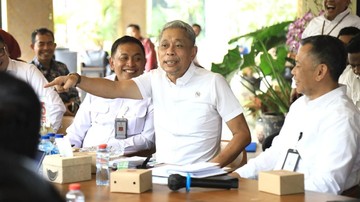
The Ministry of Religious Affairs (Kemenag), in collaboration with the DKI Jakarta Provincial Government, is preparing a "Money Waqf Movement" with a target of Rp500 billion. This initiative is set to be a key component of Jakarta's 500th-anniversary celebration in 2027 and is envisioned as a national model for the management of productive waqf.
Waryono Abdul Ghafur, Director of Zakat and Waqf Empowerment at Kemenag, stated in Jakarta on Wednesday (August 5, 2026) that "Jakarta's 500th anniversary must be a momentum for the awakening of waqf and zakat in Indonesia. We want Jakarta to not only be a modern city but also a center for global Islamic philanthropy."
Ghafur believes Jakarta possesses all the potential to become a hub for developing productive zakat and waqf in Indonesia. He highlighted the city's position as a center for government, business, and services, supported by millions of Muslim residents, thousands of mosques and prayer rooms, Islamic educational institutions, businesses, and civil servants who can drive Islamic philanthropy.
The movement will initially involve civil servants from the DKI Jakarta Provincial Government and the Ministry of Religious Affairs as pioneers. It will also receive support from various entities, including the DKI Jakarta Provincial Government, the DKI Jakarta Regional Office of the Ministry of Religious Affairs, Baznas DKI Jakarta, the Indonesian Waqf Board (BWI), Islamic Financial Institutions Receiving Money Waqf (LKSPWU), zakat institutions, Islamic organizations, the business community, universities, and the general public.
The funds collected will not only focus on increasing collection amounts but also on generating sustainable economic benefits. This will be achieved through the development of productive waqf, sharia-based financing for micro, small, and medium enterprises (UMKM), the construction of productive waqf areas, pesantren empowerment, strengthening education and health services, providing scholarships, empowering family economies, and various poverty alleviation programs.
Tatang, Head of the Mental Spiritual Section of the Regional Secretariat Bureau for Mental Spiritual Development of DKI Jakarta Province, expressed support for the initiative, emphasizing that cross-sector collaboration is crucial for making Jakarta a model for professional, modern, and impactful zakat and waqf management for the community. A technical team involving Kemenag, the DKI Jakarta Provincial Government, Baznas DKI Jakarta, BWI, and other relevant agencies will be formed to plan the implementation, concept, collection strategies, and supporting regulations before an audience with the Governor of DKI Jakarta.
DistantNews Editorial
Originally published by Republika in Indonesian. Translated, summarized, and contextualized by our editorial team with added local perspective. Read our editorial standards.
More Stories


From Our Blog

What Gets Lost (and Found) When News Is Translated

The Critical Role of Diaspora Media in Global News

What Travellers Should Know About Countries with Restricted Press

A Digital Nomad's Guide to Following Local News

How the Same Story Looks Different in Different Countries
