


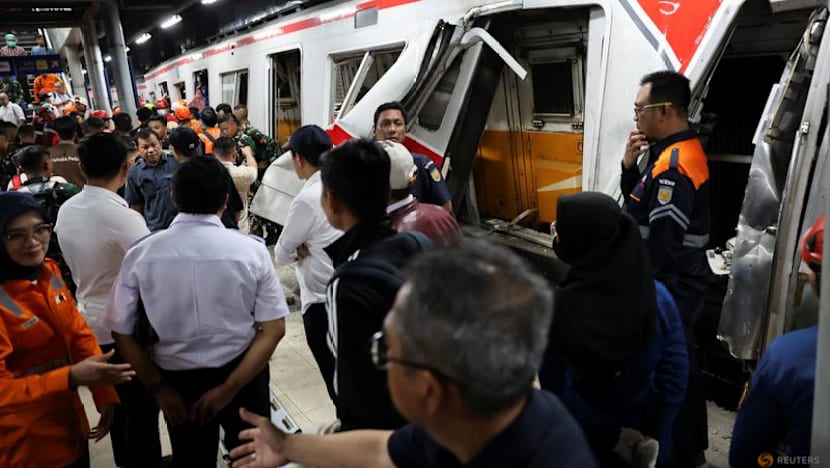
Jakarta train crash: Women-only carriage becomes death trap
Translated from English, summarized and contextualized by DistantNews.
TLDR
- A commuter train accident in Jakarta, involving a collision with a taxi at a rail crossing, killed 16 women traveling in a women-only carriage.
- The author, a former daily commuter, reflects on the personal safety concerns and practical reasons for using women-only carriages, which were often overcrowded.
- The tragedy highlights the ongoing issue of sexual harassment on public transport and raises urgent calls for improved safety protocols.
The horrific train accident on the outskirts of Jakarta, which claimed the lives of 16 women, is a stark reminder of the precariousness of daily life for many commuters in this bustling metropolis. For those of us who rely on the commuter train daily, the images of the women-only carriage, described as being crushed "as if it were made of cardboard," are deeply disturbing. It hits close to home, not just because of the loss of life, but because of the chilling realization that any one of us could have been in that carriage.
It could have happened to me
For years, the women-only carriages have been a sanctuary, albeit a cramped one, for female commuters. They were a response to the pervasive issue of sexual harassment on public transport, a problem that, despite efforts, remains alarmingly common. A 2022 survey found nearly half of women using public transport had experienced harassment. Beyond safety, these carriages offered a practical advantage: proximity to station exits, often shaving significant time off the commute home after a long day. The thought that choosing this perceived safer and more efficient option led to such a tragic end is a bitter irony that resonates deeply.
women-only compartments are where the fittest survive, because women commuters have a reputation for being more short-tempered and curt and would more fiercely force their way into an already packed carriage.
This accident is more than just a tragic incident; it is a wake-up call for the authorities. The immediate aftermath has seen an outpouring of grief and a unified demand from commuters for a thorough review and strengthening of safety protocols. The Women Empowerment Minister's proposed solutions, while perhaps well-intentioned, must translate into tangible, immediate action. We need assurances that the system's vulnerabilities, exposed so brutally by this accident, will be addressed comprehensively.
women-only carriages exist because of the prevalence of sexual harassment on commuter-line trains.
As reported by The Straits Times, the focus is on preventing such a catastrophe from ever happening again. For Jakarta's commuters, especially women, the women-only carriages were meant to be a haven. Their transformation into a site of mortal danger is a failure that demands accountability and swift, decisive action to restore faith in public transportation safety.
Many comments online have lamented the tragic irony of the accident – that a place meant to protect women became one that put them in mortal danger.
DistantNews Editorial
Originally published by The Straits Times in English. Translated, summarized, and contextualized by our editorial team with added local perspective. Read our editorial standards.
More Stories


From Our Blog

What Gets Lost (and Found) When News Is Translated

The Critical Role of Diaspora Media in Global News

What Travellers Should Know About Countries with Restricted Press

A Digital Nomad's Guide to Following Local News

How the Same Story Looks Different in Different Countries
