

Japan's Coral Defenders Race Against Time to Save Reefs from Heat
Translated from Spanish, summarized and contextualized by DistantNews.
At a glance
News
Named sources
Ongoing story
- Scientists and conservationists in Okinawa, Japan, are racing to revive coral reefs devastated by marine heatwaves.
- Record ocean temperatures and the predicted arrival of El Niño raise fears of another mass bleaching event in 2026.
- Efforts include using a "heatwave simulator" to study coral adaptation and advocating for reduced tourism and urban development.
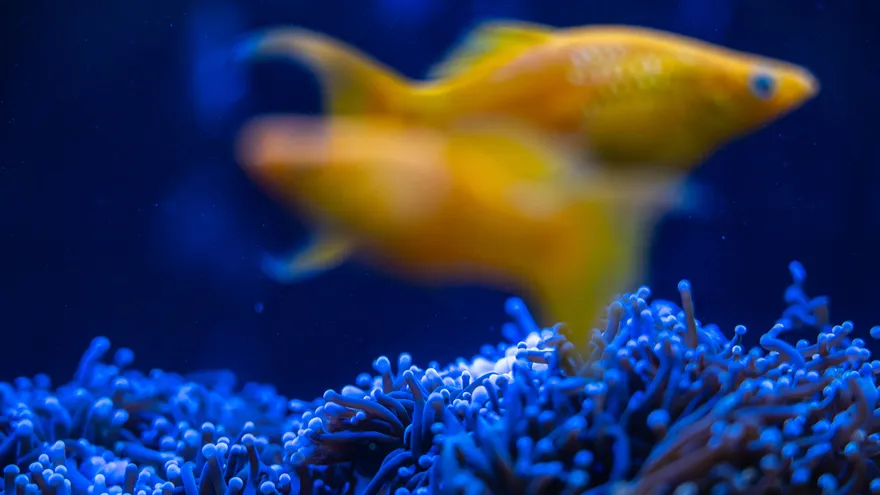
Scientists and conservationists in Japan's Okinawa island are in a critical race against time to revive coral reefs that were decimated two years ago by bleaching events caused by warming ocean waters. This subtropical island, known for its rich biodiversity and normally colorful coral reefs, experienced a severe marine heatwave in 2024, turning many reefs into ghostly white or sickly brown "cemeteries."
It is almost 100% certain that in Okinawa, around the world, we will soon have another mass bleaching event.
With global oceans recording record temperatures in June and the anticipated arrival of El Niño this year, experts fear that 2026 could bring even worse conditions for coral colonies and the diverse marine life they support. On land, Japan is grappling with an intense heatwave, hospitalizing thousands. "It is almost 100% certain that in Okinawa, around the world, we will soon have another mass bleaching event," said Timothy Ravasi, a professor at the Okinawa Institute of Science and Technology. He described the situation as "like a bomb that is about to explode."
This is like a bomb that is about to explode.
Ravasi's laboratory employs a "heatwave simulator," one of only two in the world, to study marine creatures like corals, giant clams, and fish in meticulously controlled environments. By manipulating water temperature and pH levels, scientists can simulate future heatwaves and induce coral bleaching to observe how marine life adapts. "If we do not understand what climate change, ocean warming, or acidification do to the coral ecosystem, we may lose it," Ravasi warned.
If we do not understand what climate change, ocean warming, or acidification do to the coral ecosystem, we may lose it.
The prefecture of Okinawa, a popular tourist destination, relies heavily on tourism, with 80% of its economy tied to the industry. However, the construction of hotels, coupled with overfishing and pollution, exacerbates the climate change threats to corals. Ravasi stressed the challenge of convincing stakeholders, the government, and politicians that climate change is real and requires immediate action. He suggested reducing tourism and urban development projects to protect the coral, acknowledging this is a "politically difficult issue" in Okinawa. "We have enough evidence that climate change is pushing this ecosystem to the limit," he asserted. Coral reefs, despite covering only 0.1% of the Earth's surface, support nearly a quarter of the world's marine fish species.
We have enough evidence that climate change is pushing this ecosystem to the limit.
DistantNews Editorial
Originally published by TVN Panamá in Spanish. Translated, summarized, and contextualized by our editorial team with added local perspective. Read our editorial standards.
More Stories
From Our Blog

What Gets Lost (and Found) When News Is Translated

The Critical Role of Diaspora Media in Global News

What Travellers Should Know About Countries with Restricted Press

A Digital Nomad's Guide to Following Local News

How the Same Story Looks Different in Different Countries
