

Japanese stealth fighters in Australia signal strategic pivot against China
Translated from English, summarized and contextualized by DistantNews.
At a glance
News
Named sources
Ongoing story
- Japanese F-35A stealth fighters are participating in Australia's Exercise Pitch Black for the first time.
- This exercise, alongside the recent Southern Cross drills, highlights a strategic pivot in allied air power in northern Australia.
- The drills and a new trilateral logistics arrangement aim to bolster US and allied resilience against China, particularly in a Taiwan contingency.
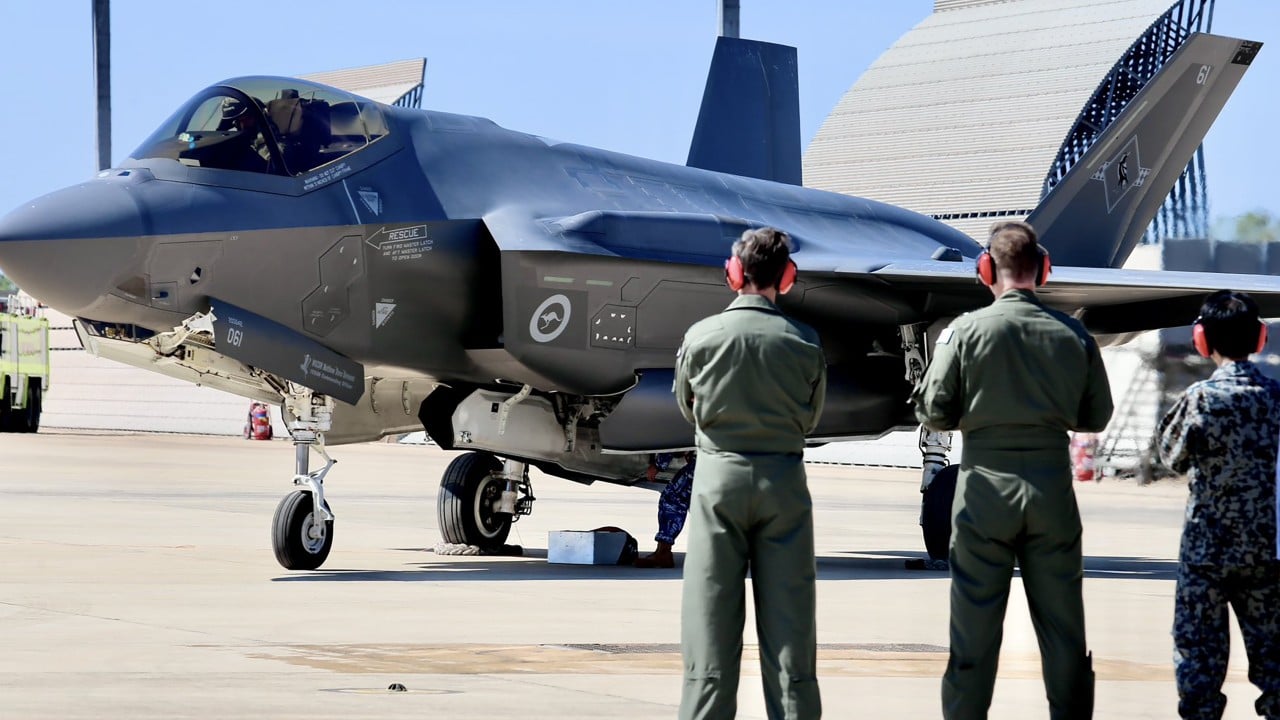
Japanese F-35A stealth fighters are training over Australia for the first time as part of Exercise Pitch Black, a significant development in regional defense cooperation. This multinational exercise, featuring approximately 100 aircraft, runs from July 20 to August 7 and underscores a broader strategic shift by Japan and its allies to counter China's growing military influence.
The participation of Japanese stealth fighters follows closely on the heels of the inaugural Southern Cross drills, where Japanese, US, and Australian F-35s trained together. A key outcome of Southern Cross was the establishment of a new trilateral logistics arrangement, enabling the sharing of fuel and equipment among the three air forces. This practical measure is designed to enhance the coalition's ability to sustain air operations far from their home bases.
Collectively, these back-to-back exercises and the logistics pact signal a strategic pivot, with northern Australia emerging as a crucial rear area for coalition air operations. This region is becoming a hub not only for joint training but also for sustaining operations, sharing resources, and building the industrial capacity necessary for prolonged conflict scenarios.
Experts suggest this enhanced interoperability and strategic positioning in northern Australia are vital for bolstering US and allied resilience against Beijing, especially in the context of a potential Taiwan contingency. Timothy Heath, head of defense research firm Perceptum, noted that such interoperability "can also improve the survivability of allied forces since they can relocate and operate from other bases more easily." The positioning allows coalition forces to operate effectively while remaining farther from potential conflict zones, mitigating risks associated with China's expanding missile capabilities.
can also improve the survivability of allied forces since they can relocate and operate from other bases more easily
DistantNews Editorial
Originally published by South China Morning Post in English. Translated, summarized, and contextualized by our editorial team with added local perspective. Read our editorial standards.
More Stories



From Our Blog

Countries Without a Free Press: What You Need to Know

What Press Freedom Means for the News You Read

What Gets Lost (and Found) When News Is Translated

The Critical Role of Diaspora Media in Global News

What Travellers Should Know About Countries with Restricted Press
