


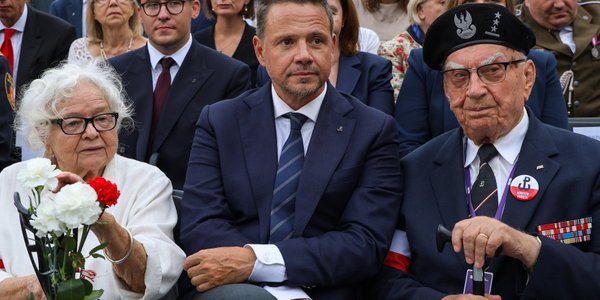
Jerzy Surdykowski: The World's Silence on the Bloody Sacrifice of the Warsaw Uprising
Translated from Polish, summarized and contextualized by DistantNews.
At a glance
Analysis
Named sources
Context piece
- The article reflects on the Warsaw Uprising of 1944, noting that only a free Poland has fully honored its survivors.
- It questions whether the uprising, despite its high cost, was ultimately in vain, given the lack of Allied support and Soviet proximity.
- The author suggests the sacrifice of the uprising may have paved the way for the eventual success of the Solidarity movement.
Jerzy Surdykowski reflects on the Warsaw Uprising of 1944, a pivotal event whose survivors have only received due recognition in a free Poland. He posits that even without the uprising, the widespread will to fight and hatred for both occupying powers would have inevitably led to Poland's bloodshed.
Seventy-eight years ago, the initial days of August brought a sense of triumph for the approximately two hundred Warsaw Uprising survivors, many of whom were children when they joined the fight. They believed they were finally striking back at the Germans, with Soviet forces on the Vistula's eastern bank and the promise of Allied airborne support. However, the reality was starkly different.
As the fighters embarked on their mission, it was clear to the command that the uprising was a desperate act with no realistic objective. This knowledge, gained from radio intelligence and a prior order from London via courier Jan Nowak-Jeziorański to refrain from initiating the revolt due to the Allies' inability to assist and the unreliability of the nearby Soviets, could not halt the mobilization or the burning desire for armed retribution against the occupiers. Hope, Surdykowski writes, is the last to die, perhaps fueling the belief that a bloody sacrifice would compel allies to act and respect the nation's will to resist Soviet-imposed rule.
The author laments that the fate of this generation was sealed by the cold calculations of politicians, resulting in an ancient tragedy of 200,000 Poles killed. He draws a parallel to the song "The world learned, said nothing," sung decades later about Janek Wiśniewski. Surdykowski suggests that perhaps this very sacrifice, this "lost generation," ultimately contributed to the successful, non-armed struggle that led to the rise of Solidarity, Poland's final victorious uprising.
The world learned, said nothing.
DistantNews Editorial
Originally published by Rzeczpospolita in Polish. Translated, summarized, and contextualized by our editorial team with added local perspective. Read our editorial standards.
More Stories


From Our Blog

What Gets Lost (and Found) When News Is Translated

The Critical Role of Diaspora Media in Global News

What Travellers Should Know About Countries with Restricted Press

A Digital Nomad's Guide to Following Local News

How the Same Story Looks Different in Different Countries
