


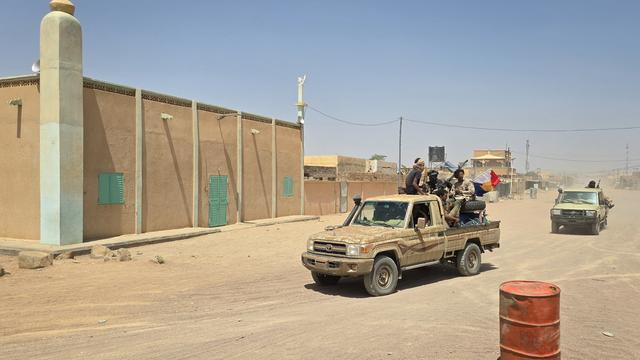
Jihadists in Mali: The Setback
Translated from German, summarized and contextualized by DistantNews.
TLDR
- Mali's Defense Minister Sadio Camara was killed in a car bombing, an act attributed to jihadist forces.
- The attack raises questions about the effectiveness of Mali's military government's strategy, particularly its cooperation with Russian mercenaries.
- This incident represents a significant defeat for Mali's military junta and its Russian allies.
The assassination of Mali's Defense Minister Sadio Camara in a brazen car bombing marks a devastating blow to the nation's military government and its ongoing struggle against jihadist insurgents. Camara, a key figure in Mali's security apparatus and a proponent of cooperation with Russian forces, was killed in an attack that underscores the escalating violence and the precarious security situation in the country.
The incident, which occurred in the capital, has sent shockwaves through the nation and beyond. The video circulating on social media, showing the aftermath of the attack on Camara's residence, paints a grim picture of the challenges facing Mali. This violent act not only claims the life of a high-ranking official but also casts serious doubt on the efficacy of the current government's counter-terrorism strategy, which heavily relies on the support of Russian mercenaries, notably the Africa Corps (formerly Wagner).
From the perspective of a Malian publication, this event is more than just a security setback; it is a profound crisis that questions the very foundation of the military junta's approach. The reliance on foreign forces, particularly those with a controversial track record, has been a subject of debate. The death of Minister Camara, who championed this partnership, forces a critical re-evaluation of whether this strategy is yielding the desired results or, as Die Zeit suggests, is leading Mali down the wrong path.
This development is particularly significant given Mali's complex geopolitical landscape. The nation has been grappling with a protracted conflict involving jihadist groups, Tuareg rebels, and internal political instability. The partnership with Russia was seen by the junta as a strategic move to counter these threats, especially after the withdrawal of French and other international forces. However, this attack suggests that the jihadists remain potent and capable of striking at the heart of the government, raising concerns about Mali's ability to achieve lasting stability and security on its own terms.
DistantNews Editorial
Originally published by Die Zeit in German. Translated, summarized, and contextualized by our editorial team with added local perspective. Read our editorial standards.
More Stories
From Our Blog

What Gets Lost (and Found) When News Is Translated

How the Same Story Looks Different in Different Countries

The Critical Role of Diaspora Media in Global News

What Travellers Should Know About Countries with Restricted Press

A Digital Nomad's Guide to Following Local News
