


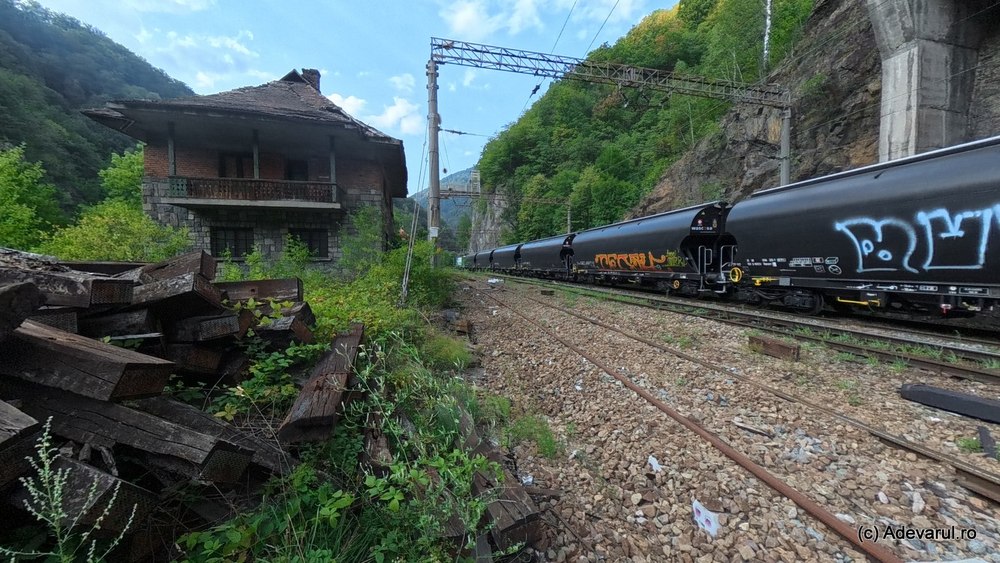
Jiu Gorges: Romania's wild landscape tamed by infrastructure
Translated from Romanian, summarized and contextualized by DistantNews.
At a glance
In-depth
Sources not specified
Context piece
- The Jiu Gorges, a spectacular route in Romania, has seen its National Road 66 modernized, with the railway also slated for upgrades.
- Historically, the gorges served as a border between the Kingdom of Romania and Austro-Hungarian Transylvania until 1918.
- The railway construction, begun in 1924, was completed in 1948, involving significant mobilization of young workers during the communist era.
The Jiu Gorges in Romania, a region known for its wild beauty, has been significantly shaped by human endeavor, particularly through the modernization of its transportation routes. The National Road 66, which winds through this spectacular landscape, has recently been upgraded, and plans are underway to modernize the railway line and its stations that also traverse the gorges.
This route, carved into the mountains, stretches over 30 kilometers, connecting the Jiu Valley to southern Romania. Historically, the pass, known as "Pasul Surduc," was a crucial link between Transylvania and Oltenia. Until 1918, the Jiu Gorges marked the frontier between the Kingdom of Romania and Transylvania, which was then part of the Austro-Hungarian Empire. Remnants of former border posts can still be observed along the roadside.
The Jiu Gorges are also home to one of Romania's most scenic railways, the Petroșani–Bumbești-Jiu line. Construction commenced in 1924 after decades of planning, facing numerous interruptions before its completion in 1948. During the final stages, the communist regime designated the Bumbești–Livezeni construction site as a "National Youth Construction Site" in the spring of 1948. Thousands of young volunteers, alongside railway workers and technicians, were mobilized to tackle the most challenging sections of the route.
Recollections from former volunteers, like Clement Negruț, paint a picture of the arduous conditions. Negruț, who was 22 at the time, described the work as highly organized, akin to military service, with workers toiling in shifts. He recalled the rudimentary tools, stating, "We couldn't even work with a wheelbarrow. We worked with handcarts. We supported the boulders with our hands. That was the equipment." The construction involved extensive rock excavation, with tunnels, viaducts, and retaining walls appearing in close succession, particularly in the Lainici area where six viaducts and two tunnels were engineered within a short span.
DistantNews Editorial
Originally published by Adevărul in Romanian. Translated, summarized, and contextualized by our editorial team with added local perspective. Read our editorial standards.
More Stories


From Our Blog

What Gets Lost (and Found) When News Is Translated

The Critical Role of Diaspora Media in Global News

What Travellers Should Know About Countries with Restricted Press

A Digital Nomad's Guide to Following Local News

How the Same Story Looks Different in Different Countries
