

Journalist murdered every three months during Duarte's government in Veracruz: NGO
Translated from Spanish, summarized and contextualized by DistantNews.
At a glance
News
Named sources
Context piece
- An NGO reported that a journalist was murdered every three months in Veracruz, Mexico, between 2010 and 2016.
- The organization Propuesta Cívica stated that former governor Javier Duarte, despite his conviction, has not been investigated for his alleged role in the attacks on the press.
- The report "Prohibido Investigar" highlights that the violence against journalists was systemic, stemming from state inaction, inefficiency, and collusion with organized crime.
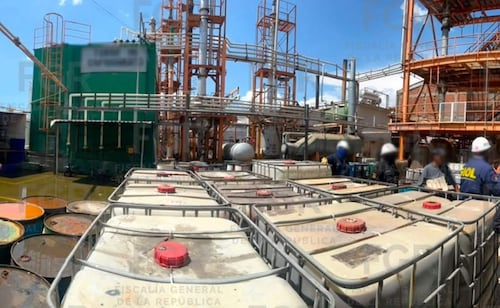
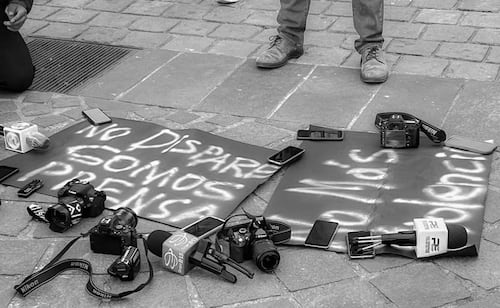
A chilling report reveals that a journalist was murdered every three months in Veracruz, Mexico, during the tenure of former governor Javier Duarte, between 2010 and 2016. The organization Propuesta Cívica has denounced that despite Duarte's arrest and conviction in 2017 and 2018 for illicit association and money laundering, he has not faced investigation for his alleged complicity or inaction in the attacks that led to the deaths of 18 journalists.
This report posits that impunity is sustained and reproduced from the state apparatus, in such a way that it has become a form of public administration.
The report, titled “Prohibido Investigar: la impunidad sostenida en crímenes contra periodistas en Veracruz” (Forbidden to Investigate: Sustained Impunity in Crimes Against Journalists in Veracruz), asserts that the violence against the press was not isolated but a direct consequence of state omission, inefficiency, and collusion with organized crime. Sara Lidia Mendiola, executive director of the Center for Research and Training of Propuesta Cívica, stated that impunity is perpetuated by the state apparatus, becoming a form of public administration where failures in investigating murdered journalists are structural, not exceptional.
While the report focuses on Veracruz, it presents a model applicable to the broader context of violence against the press in Mexico, where seven journalists have already been murdered this year. The report highlights that in a context of "macro-criminality and state capture," the absence of genuine investigations has operated as a mechanism for corruption and impunity. It analyzes specific cases, including the murders of Miguel Ángel López Velasco, his wife Agustina Solana Melo, and their son Misael López Solana, alongside crimes against other journalists in Veracruz between 2011 and 2012.
In a context of macro-criminality and state capture, the absence of real investigations operated as a further mechanism of corruption and impunity.
Omar Gómez Trejo, a research consultant, emphasized that the report's aim is not to identify the perpetrators but to expose the system. He pointed out that three separate investigations into journalist murders contained 14 identical flaws, indicating a repeated pattern of omissions by various authorities across different times and political contexts. This systemic failure, he argues, prevents a true understanding of why investigations faltered and the implications for state authorities.
This report documents that three investigations in part contain 14 identical flaws.
DistantNews Editorial
Originally published by El Universal in Spanish. Translated, summarized, and contextualized by our editorial team with added local perspective. Read our editorial standards.
More Stories

From Our Blog

What Press Freedom Means for the News You Read

What Gets Lost (and Found) When News Is Translated

The Critical Role of Diaspora Media in Global News

What Travellers Should Know About Countries with Restricted Press

A Digital Nomad's Guide to Following Local News
