

Journalists in Tajikistan react to proposal for president to support media
Translated from English, summarized and contextualized by DistantNews.
TLDR
- A proposal has been sent to Tajikistan's President Rahmon suggesting measures to support media workers and strengthen information security.
- The proposals include creating a Presidential Fund for Media Support, raising salaries, and offering preferential mortgages and tax benefits.
- While some support the initiative, others argue for a more comprehensive program that includes private media and expert involvement.
Dushanbe – A significant proposal aimed at bolstering the media landscape in Tajikistan has been put forth, originating from Zafar Sayedzoda, a respected historian and former presidential spokesman. In an open letter to President Emomali Rahmon, Sayedzoda outlined a series of measures designed to enhance information security and improve the working conditions and social protections for journalists.
For the state, for understandable reasons, state media cannot be a non-priority. But the Presidential Fund for Support should be created for all media, without exceptions.
The proposals are comprehensive, including the establishment of a Presidential Fund for Media Support, a substantial increase in journalists' salaries, the introduction of preferential mortgage programs, and the creation of a professional development center. Furthermore, Sayedzoda suggested the adoption of a law "On State Support for Media Workers" and the introduction of a prestigious title, “People’s Journalist of the Republic of Tajikistan,” alongside tax benefits for low-income state media employees. These ideas draw inspiration from the experiences of neighboring countries like Russia, Uzbekistan, and Kazakhstan.
The issue is currently under consideration.
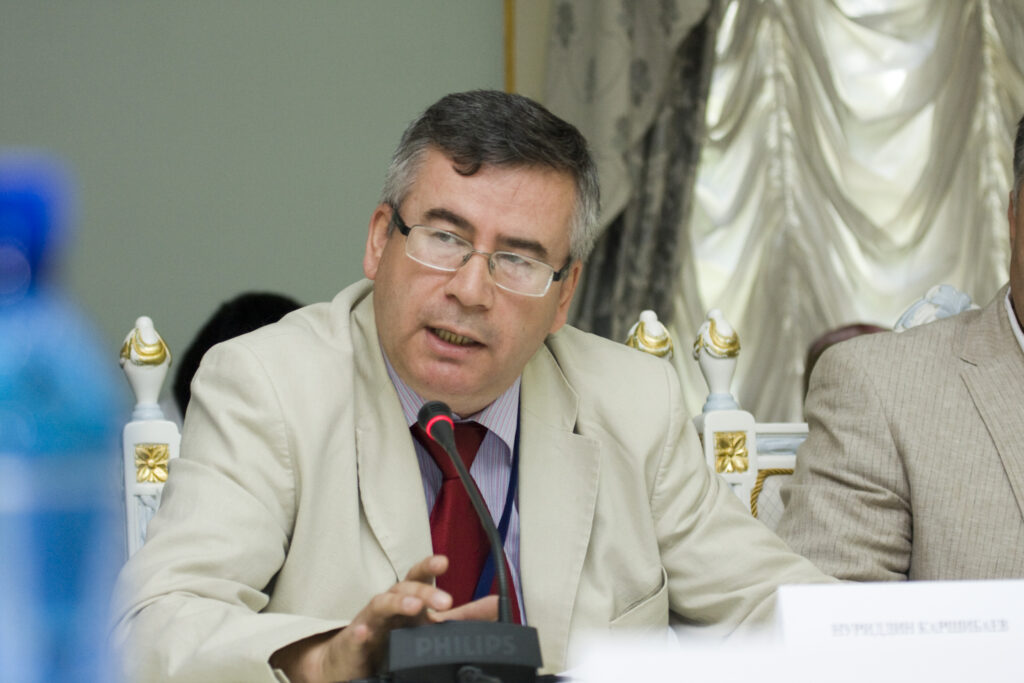
While the initiative has garnered some support, it also faces critical evaluation. Nouriddin Qarshiboyev, Chairman of the National Association of Independent Media (NANSMIT), views the core idea as positive but stresses the need for refinement. He emphasizes that any support program must be comprehensive, extending to private media and not solely focusing on state-run outlets. Qarshiboyev points to the UN Human Rights Council's Universal Periodic Review recommendations and a draft Media Development Strategy until 2030, suggesting that these initiatives should be integrated for a more effective and balanced approach.
The head of NANSMIT believes that the idea itself is “good, but some of its points need refinement.”
From our vantage point at Asia-Plus, we recognize the critical role of a free and well-supported press in a developing democracy. While international coverage might focus on the geopolitical implications of media in Central Asia, for us, the immediate concern is the practical well-being and professional growth of our colleagues. The debate over state versus private media support is crucial; a truly robust media environment requires nurturing talent and ensuring independence across all platforms, not just those aligned with the state. This proposal, while well-intentioned, must be carefully considered to avoid inadvertently strengthening state propaganda at the expense of balanced reporting and diverse voices.
I believe that all these initiatives should be considered together with the involvement of industry experts. This would be a more effective solution.
DistantNews Editorial
Originally published by Asia-Plus in English. Translated, summarized, and contextualized by our editorial team with added local perspective. Read our editorial standards.
More Stories


From Our Blog

What Gets Lost (and Found) When News Is Translated

The Critical Role of Diaspora Media in Global News

What Travellers Should Know About Countries with Restricted Press

A Digital Nomad's Guide to Following Local News

How the Same Story Looks Different in Different Countries
