


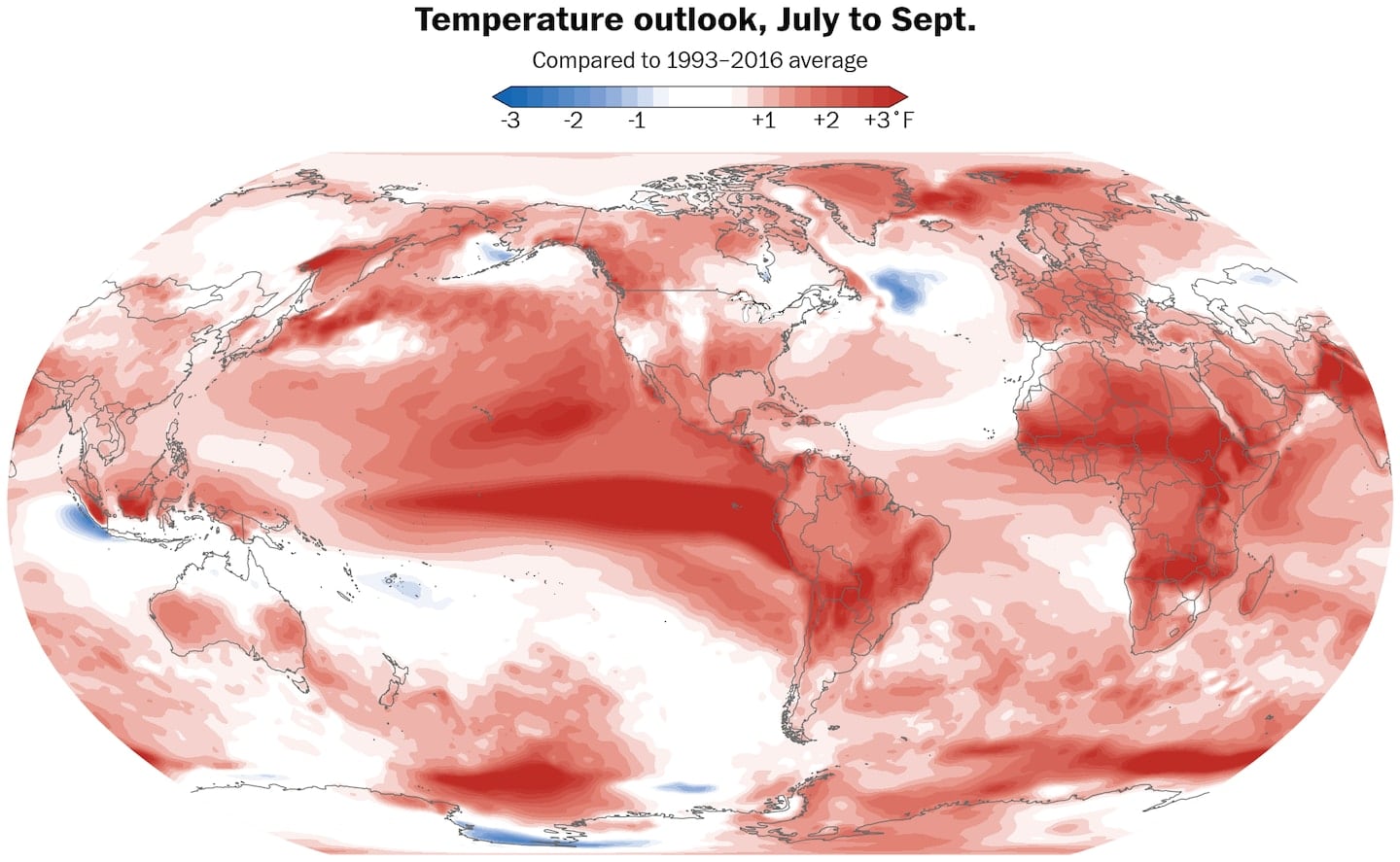
JP Morgan report analyzes the impact of the upcoming El Niño phenomenon on the country and is categorical
Translated from Spanish, summarized and contextualized by DistantNews.
TLDR
- JP Morgan predicts El Niño could strengthen in the latter half of 2026, impacting global climate patterns.
- The phenomenon is expected to increase rainfall in South America's Pampas region.
- This shift could significantly affect agricultural production and commodity exports, with varied impacts across the region.
A recent report from JP Morgan paints a significant picture for Argentina's economic outlook, focusing on the anticipated intensification of the El Niño weather phenomenon. The analysis suggests that El Niño, currently transitioning from neutral conditions, is likely to become the dominant climate state from May-July 2026 onwards, with probabilities escalating towards 88% for a strong event by late 2026 to early 2027. This climatic shift is poised to play a central role in the performance of Latin America's agricultural sector, a cornerstone of Argentina's economy.
The report highlights that El Niño typically brings increased precipitation to the Pampas region, a vital agricultural heartland for Argentina. Historically, this has translated into higher yields for key crops like soybeans, corn, and wheat. JP Morgan's analysis points to potential year-on-year harvest increases of up to 30% during intense El Niño events, referencing past occurrences in 1997/98 and 2014-2016. Given that agriculture and agro-industry contribute approximately 16% to Argentina's GDP and a substantial 58% of its goods exports, the influence of El Niño on crop yields is a critical factor for the nation's economic stability and growth.
While El Niño's effects are geographically diverse—bringing intense rains to the Pacific coast (like Peru and Ecuador) and potentially drier conditions elsewhere—Argentina's Pampas region often benefits from the increased rainfall. This nuanced regional impact underscores why such climate forecasts are closely watched within the country. For Argentinian economic analysts and policymakers, understanding the precise dynamics and potential intensity of El Niño is not merely an academic exercise; it is essential for strategic planning in a sector that is so fundamental to the nation's prosperity. La Nación, in reporting this, emphasizes the direct link between climate patterns and the economic well-being of the country.
DistantNews Editorial
Originally published by La Nación in Spanish. Translated, summarized, and contextualized by our editorial team with added local perspective. Read our editorial standards.
More Stories


From Our Blog

What Gets Lost (and Found) When News Is Translated

The Critical Role of Diaspora Media in Global News

What Travellers Should Know About Countries with Restricted Press

A Digital Nomad's Guide to Following Local News

How the Same Story Looks Different in Different Countries
