


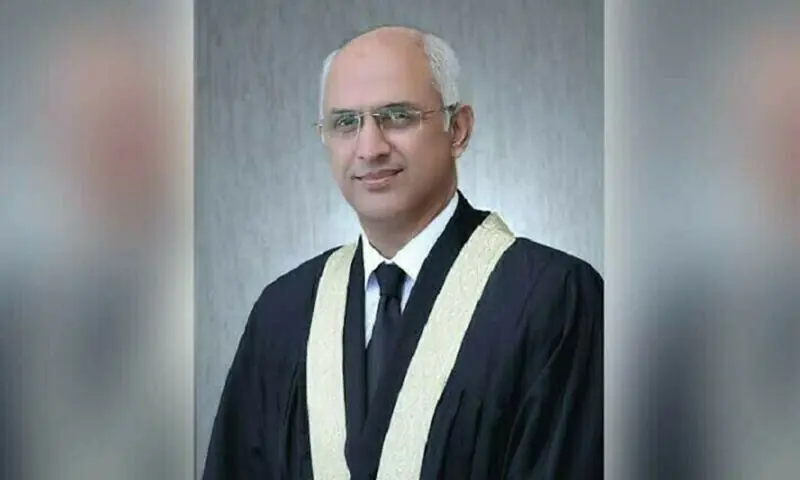
Justice Kayani Warns of Summoning PM on Last Day at IHC
Translated from English, summarized and contextualized by DistantNews.
TLDR
- A judge warned he would summon the Prime Minister if a key position in a tribunal was not filled by May 18.
- The Islamabad High Court judge issued the warning hours before his transfer from the court.
- The court also directed the cabinet and law secretaries to appear if the appointment is not made.
In a dramatic final act before his transfer, Justice Mohsin Akhtar Kayani of the Islamabad High Court issued a stern warning: Prime Minister Shehbaz Sharif would be summoned if the finance member of the PTA tribunal remained unappointed by May 18. This bold move, highlighted by Dawn, underscores the judiciary's frustration with governmental delays in filling crucial positions.
if the official was not appointed by May 18, the PM would be required to appear in person and explain the delay.
The court's written order detailed repeated adjournments sought by the federal government, emphasizing that this was the final opportunity. The directive for the cabinet and law secretaries to appear alongside the PM if the appointment faltered speaks volumes about the perceived obstruction and lack of urgency from the executive branch.
the federal government had been seeking repeated adjournments over the last four hearings regarding the appointment of the finance member.
Justice Kayani's critique of appointing retired judges to tribunals, noting their ineffectiveness, adds another layer to the judicial discontent. This situation, playing out just hours before his own transfer, paints a picture of a judiciary attempting to assert its authority against executive inaction, even as its own personnel changes occur.
failure to make the appointment by the next hearing would result in the PM being summoned in his personal capacity.
From Pakistan's perspective, this event is not just about a single appointment but reflects a broader struggle for accountability and efficient governance. The judiciary's willingness to directly challenge the Prime Minister's office, even under the shadow of a transfer, signals a deep-seated concern over the rule of law and the functioning of essential bodies like the Telecommunications Appellate Tribunal.
such practices had not been beneficial and that retired judges frequently seek positions in various tribunals.
DistantNews Editorial
Originally published by Dawn in English. Translated, summarized, and contextualized by our editorial team with added local perspective. Read our editorial standards.
More Stories



From Our Blog

What Gets Lost (and Found) When News Is Translated

The Critical Role of Diaspora Media in Global News

What Travellers Should Know About Countries with Restricted Press

A Digital Nomad's Guide to Following Local News

How the Same Story Looks Different in Different Countries
