


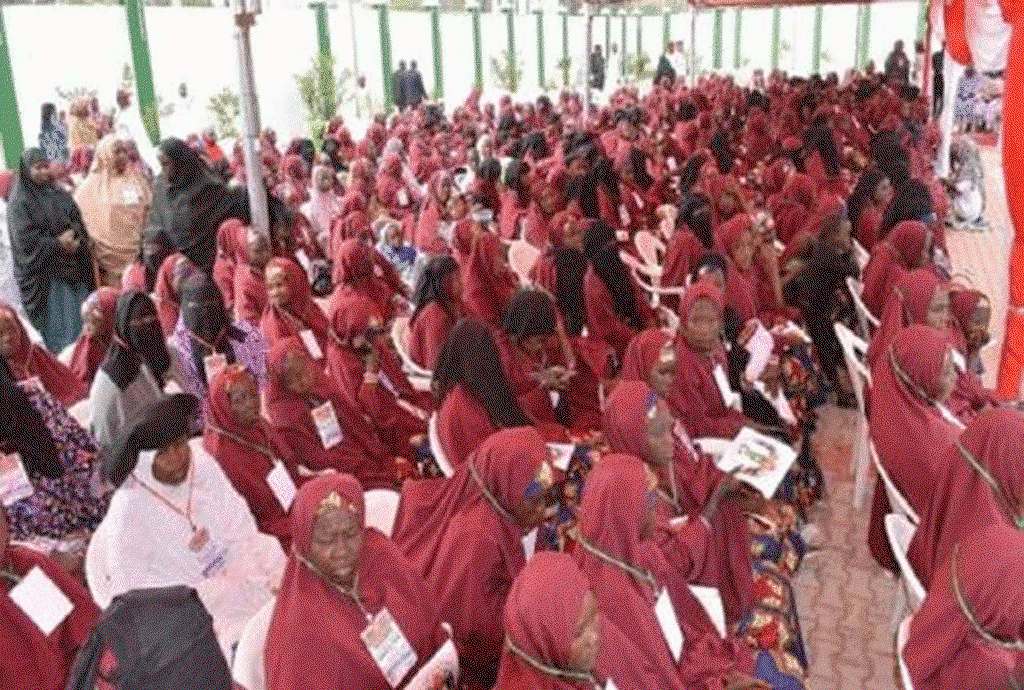
Kano mass wedding sparks debate on poverty, governance
Translated from English, summarized and contextualized by DistantNews.
At a glance
News
Sources not specified
Context piece
- Kano State Government sponsored a mass wedding for 1,500 couples, providing each bride with N100,000 dowry, N100,000 capital support, and household items.
- Critics question the program's effectiveness, arguing that it fails to address the underlying economic issues that make marriage difficult for disadvantaged individuals.
- The debate highlights concerns about poverty, governance, and government priorities, with questions raised about whether the N1.5 billion spent could have been better allocated to essential services like schools and hospitals.
Kano State Government's mass wedding initiative for 1,500 couples, which included dowry payments, capital grants, and household items, has sparked a debate about poverty and governance priorities. While the government aims to alleviate financial barriers to marriage for the economically disadvantaged, critics question the program's long-term impact.
It is funny but not funny. It is just that you have no choice but to laugh at some of these things. Is this development?
Broadcaster Ayo Mairo-Eese challenged the definition of development, suggesting that government interventions should be measured by outcomes rather than the distribution of goods. She argued that while items like beds and rice are useful, they do not provide sustainable income, create employment, or improve essential services like education and healthcare.
How do you measure success? These are the things developmental organizations will use as metrics to determine whether or not what they are doing is working.
Fellow panelist Dr. Ruben Abati echoed these concerns, questioning the N1.5 billion expenditure and suggesting it might represent misplaced priorities. He raised the issue of population growth and family planning, sarcastically noting the provision of rice to couples. Abati emphasized that the success of such programs should be evaluated by the sustainability of the marriages, not just the number of couples united, in the face of ongoing economic pressures.
The mass wedding, we were told, cost the state government about N1.5 billion. N100,000 given to each bride as dowry, another N100,000 given as a capital grant.
DistantNews Editorial
Originally published by Vanguard in English. Translated, summarized, and contextualized by our editorial team with added local perspective. Read our editorial standards.
More Stories


From Our Blog

How the Same Story Looks Different in Different Countries

What Gets Lost (and Found) When News Is Translated

The Critical Role of Diaspora Media in Global News

What Travellers Should Know About Countries with Restricted Press

A Digital Nomad's Guide to Following Local News
