

Karachi's Air Quality Reaches Alarming Levels, Experts Warn of Health Risks
Translated from English, summarized and contextualized by DistantNews.
At a glance
News
Named sources
Context piece
- Speakers at a Karachi conference warned that the city's air quality has reached alarming levels, posing serious health risks.
- Experts highlighted that the air quality index significantly exceeds World Health Organization limits.
- Concerns were raised about the continuous loss of trees for development projects and inadequate waste management, with daily solid waste generation at 16,000 tons.
Karachi's air quality has deteriorated to dangerous levels, prompting urgent warnings from experts at a conference held at Karachi University. Speakers at the "Climate Matters Conference" expressed grave concern over the environmental degradation plaguing the metropolis, emphasizing the severe threat to public health.
Karachi’s air quality index has reached alarming levels, far exceeding WHO limits, posing grave public health risks.
Dr. Farrakh Nawaz, Director of the Institute of Environmental Studies (IES), stated that Karachi's air quality index has surpassed World Health Organization limits. He lamented Pakistan's vulnerability to climate change, noting a stark lack of societal awareness and seriousness in addressing environmental issues. Dr. Nawaz described pollution and climate change as major national challenges requiring immediate action for human survival.
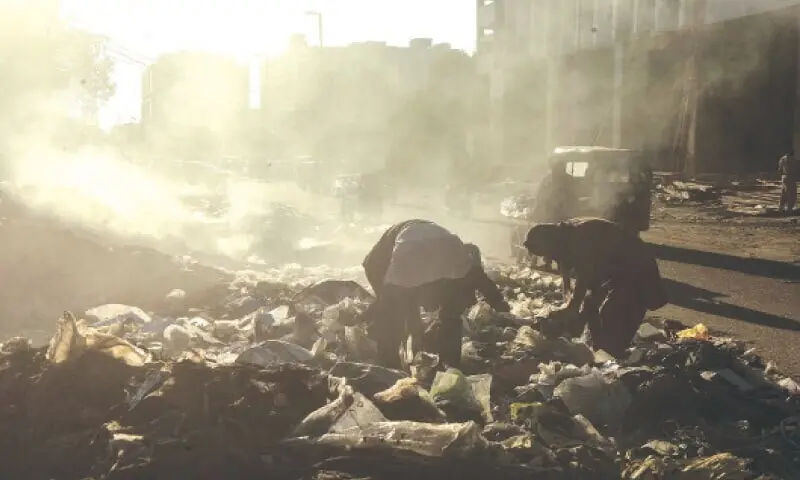
Further compounding the crisis, Karachi generates approximately 16,000 tons of solid waste daily, with 450-600 million gallons of untreated wastewater discharged into the sea. Dr. Nawaz stressed that positive change is impossible without responsible waste management and environmental protection.
Without responsible waste management and environmental protection, no positive change can be expected.
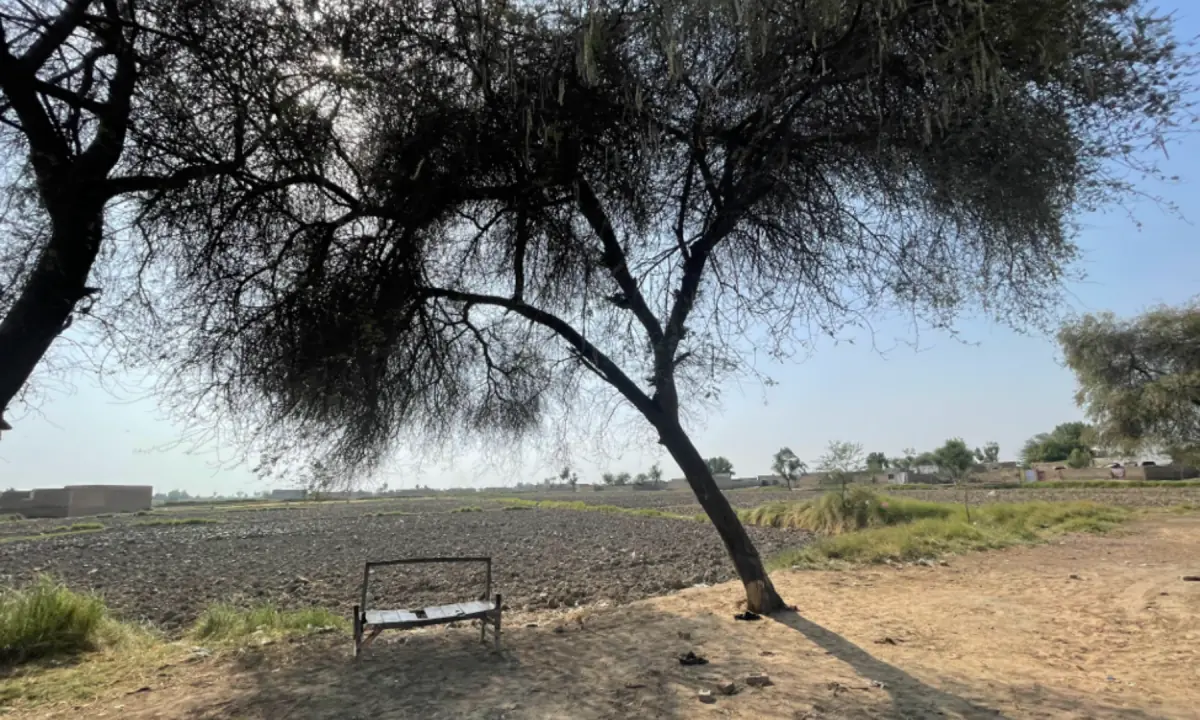
IES faculty member Dr. Amir Alamgir pointed out the disconnect between global and local research on climate change and the limited practical measures being implemented. He highlighted the ongoing felling of trees for development and housing projects, noting that trees are now primarily found only in graveyards. Dr. Alamgir called for a significant behavioral shift at both individual and collective levels to confront climate challenges.
While we are seeing a lot of global and local research on these subjects, practical measures remain inadequate.
Mahboob Alam Khan, Head of Sustainable Operations at Meezan Bank, revealed that Karachi's green cover has shrunk to a mere three percent, with rapid urban construction further endangering this limited vegetation. He urged policymakers to enact laws and strategies to halt tree cutting and promote widespread plantation. KU Vice Chancellor Dr. Khalid Mahmood Iraqi underscored that climate change is not just an environmental issue but a matter of human survival, calling on every individual to recognize and fulfill their responsibilities.
Today, trees are only protected in graveyards due to minimal human interference. We desperately need positive behavioural change at both individual and collective levels to address climate challenges.
DistantNews Editorial
Originally published by Dawn in English. Translated, summarized, and contextualized by our editorial team with added local perspective. Read our editorial standards.
More Stories
From Our Blog

What Gets Lost (and Found) When News Is Translated

The Critical Role of Diaspora Media in Global News

What Travellers Should Know About Countries with Restricted Press

A Digital Nomad's Guide to Following Local News

How the Same Story Looks Different in Different Countries
