


Kazakhstan's New Kurultai Leadership Reflects Diversity, Faces Legislative Demands
Translated from English and summarized by DistantNews. Read the original for the full story.
At a glance
News
Named sources
New plan
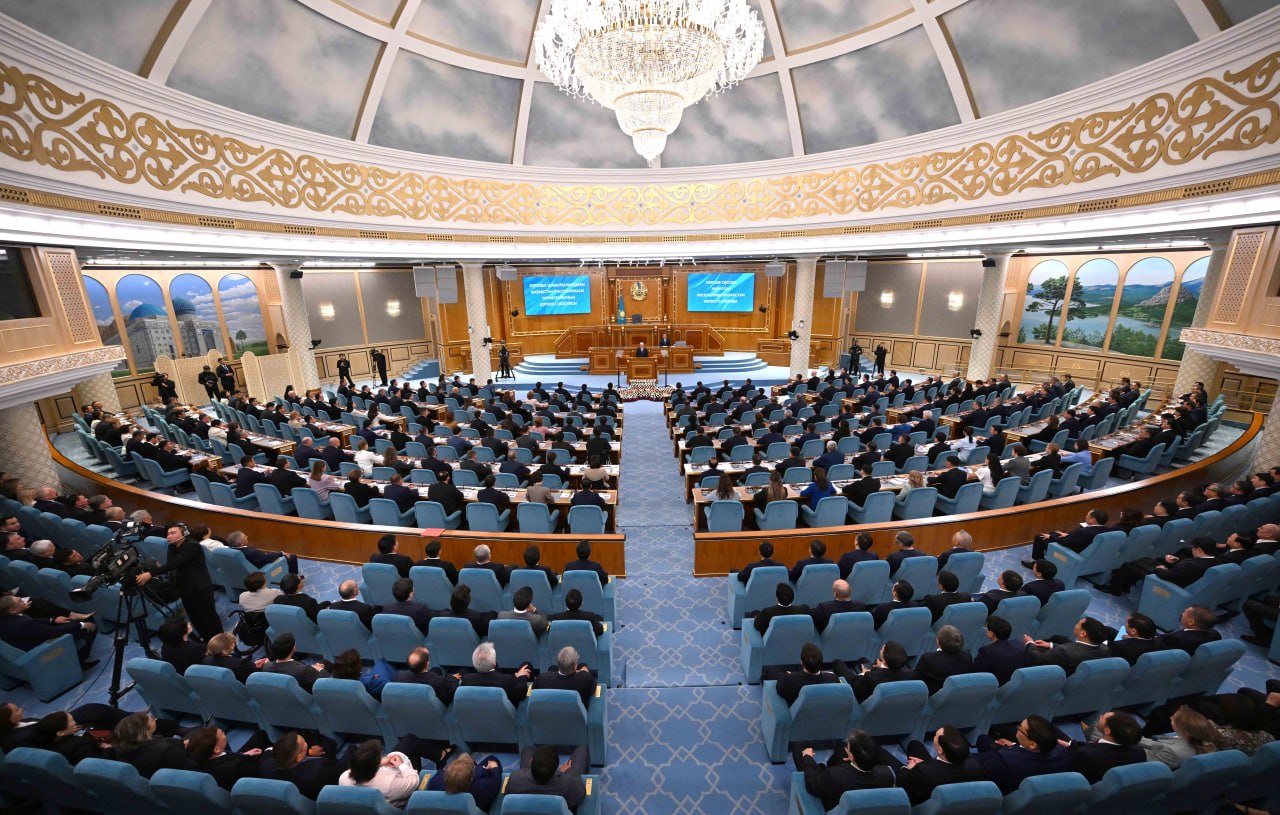
- Kazakhstan's new unicameral legislature, the Kurultai, elected its leadership and committee heads during its inaugural session on August 28.
- Experts note the leadership's composition reflects significant political and gender diversity.
- The Kurultai faces a substantial legislative agenda from its inception, inheriting unfinished work from the previous parliament.
Kazakhstan's newly formed unicameral legislature, the Kurultai, convened for its first session on August 28, electing its leadership and the heads of its eight standing committees. The composition of this new leadership has drawn attention from experts who highlight its reflection of both political and gender diversity.
In other words, the composition of the Kurultai’s leadership is diverse with respect to both party affiliation and gender.
Aibek Dadebai, chairman of the Adilet party and former head of the Presidential Administration, was elected as the Kurultai Chairman. He acknowledged the nomination by President Kassym-Jomart Tokayev and the support of his fellow deputies, describing the role as a "great honor and responsibility." The election also saw Adilet deputy Nurlan Beknazarov and Ak Zhol party chairwoman Daniya Yesspayeva appointed as Deputy Chairs. Former Commissioner for Children’s Rights Dinara Zakiyeva secured the third Deputy Chair position.
Political scientist Gaziz Abishev commented on the diverse makeup of the Kurultai's leadership, stating that it is varied with respect to party affiliation and gender. This diversity is seen as a positive reflection of the broader political landscape. Zhandos Aktayev, chairman of the Esti Bol Qory public foundation and a Doctor of Law, previously noted that the new legislature would be immediately confronted with a substantial workload.
Although the Kurultai is a new institution, it will inherit legislation left unfinished by the previous Parliament, giving deputies an immediate and substantial workload.
Aktayev explained that the Kurultai will inherit legislation left unfinished by the previous Parliament, ensuring deputies have a significant workload from the start. The eight standing committees, one more than in the former Mazhilis, will be crucial in reviewing draft legislation. Committee chairs were also elected, with representatives from various parties, including Serik Yegizbayev (Agrarian Affairs), Askhat Aimagambetov (Social and Cultural Development), Unzila Shapak (Constitutional Legislation), Olga Perepechina (Finance and Budget), Amirbek Ospanbekov (Regional and Infrastructure Development), Marat Kozhayev (International Relations), Darkhan Akhmediyev (Digitalization), and Natalia Godunova (Economic Policy). Seven of these eight committees are led by deputies from the majority Adilet party.
great honor and responsibility
About this summary
Originally published by The Astana Times in English. Translated, summarized, and contextualized automatically by DistantNews, with a note on how the source frames the story. Not individually reviewed before publishing. How this works.
More Stories

From Our Blog

What Gets Lost (and Found) When News Is Translated

The Critical Role of Diaspora Media in Global News

What Travellers Should Know About Countries with Restricted Press

A Digital Nomad's Guide to Following Local News

How the Same Story Looks Different in Different Countries
