


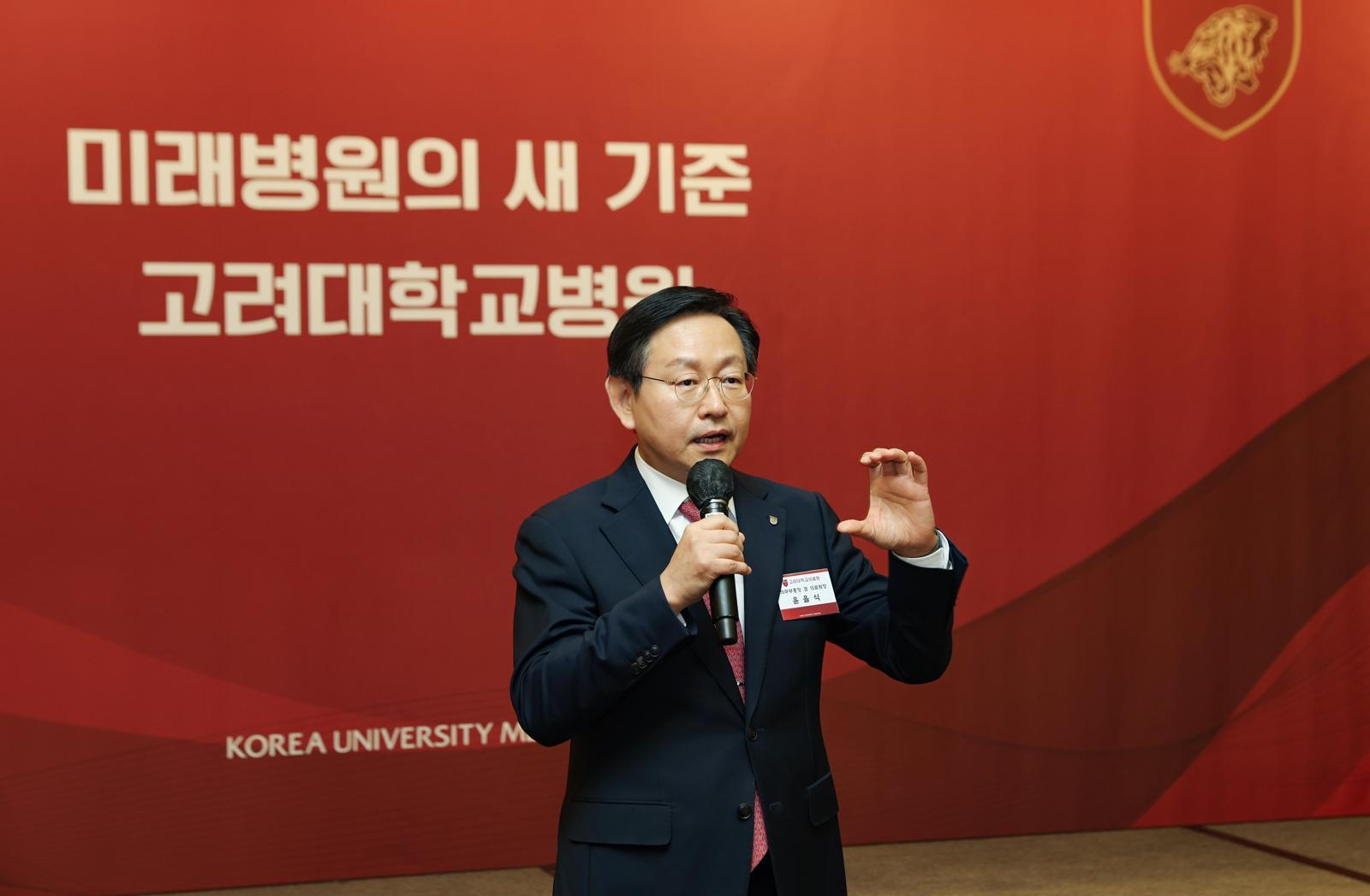
Korea University Medical Center Envisions 'AI Future Hospital' by 2035
Translated from Korean, summarized and contextualized by DistantNews.
TLDR
- Korea University Medical Center plans to build a 'smart hospital' by 2035, centered around the new Dongtan Hospital.
- The initiative aims to implement a big data-based 'Quad System' connecting its four hospitals to enhance patient care and clinical workflows using AI.
- Key features include an AI assistant for doctors, voice EMR, and a digital command center for optimized hospital operations.
Korea University Medical Center is charting a bold course toward the future of healthcare with its ambitious 'AI Future Hospital' vision. Set to materialize with the opening of its Dongtan Hospital in 2035, this initiative promises to revolutionize patient care by leveraging artificial intelligence to overcome the inherent limitations of current medical practices.
The core of this transformation lies in the concept of an 'AI assistant in the examination room.' Imagine a scenario where doctors, freed from the burden of extensive data input during consultations, can dedicate their full attention to patients. AI will meticulously summarize patient histories, cross-reference them with the latest clinical guidelines and national health insurance data, thereby reducing the risk of misdiagnosis and elevating the quality of care. This not only promises to improve patient outcomes but also ensures that patients receive the most up-to-date and appropriate treatments covered by health insurance.
If AI can review medical records, clinical guidelines, and health insurance drug costs all at once to assist with prescriptions, it can reduce doctor's errors and help prescribe the latest drugs covered by health insurance to patients.
Beyond the examination room, AI will permeate every facet of hospital operations. A 'Digital Command Center' will provide real-time analysis of bed availability, surgical room status, and patient flow, enabling optimal bed allocation and efficient team deployment. Interactive dashboards in patient rooms will empower individuals to track their own treatment progress, while voice-activated chatbots will handle routine inquiries, freeing up nursing staff for more critical tasks. This integrated approach, connecting not just Dongtan Hospital but also the existing Anam, Guro, and Ansan hospitals through a shared information system, signifies a leap forward in precision medicine and patient-centered care.
We will build the most sophisticated and stable smart healthcare system to realize personalized precision medicine and a high-quality medical experience for each and every patient at Dongtan Hospital and across the entire Korea University Medical Center.
DistantNews Editorial
Originally published by Dong-A Ilbo in Korean. Translated, summarized, and contextualized by our editorial team with added local perspective. Read our editorial standards.
More Stories


From Our Blog

What Gets Lost (and Found) When News Is Translated

The Critical Role of Diaspora Media in Global News

What Travellers Should Know About Countries with Restricted Press

A Digital Nomad's Guide to Following Local News

How the Same Story Looks Different in Different Countries
