


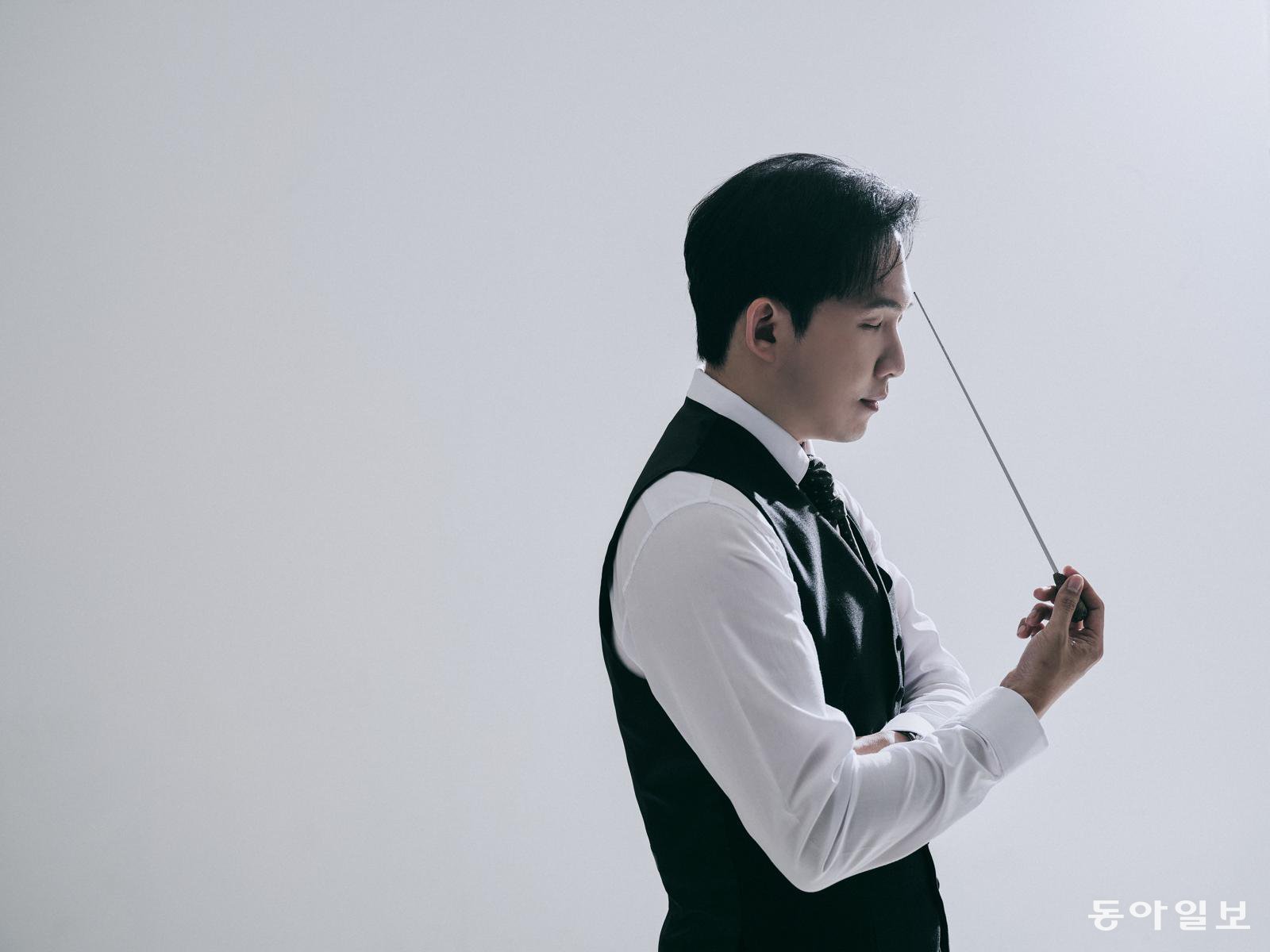
Korean Conductor Lee Seung-won to Lead National Symphony Orchestra in American Music Program
Translated from Korean, summarized and contextualized by DistantNews.
TLDR
- Conductor Lee Seung-won, the first Korean to win the Malko Competition, will lead the National Symphony Orchestra in a program of 20th-century American composers.
- The concert, held on the 17th at the Seoul Arts Center, features less common repertoire such as Ives' 'The Unanswered Question' and Gershwin's 'An American in Paris'.
- Lee aims to showcase the "unique expressiveness" of live classical music, emphasizing its irreplaceable human element in an era of advancing technology.
Maestro Lee Seung-won, a name now synonymous with triumph after his historic win at the prestigious Nicolai Malko International Conducting Competition in Denmark, is set to grace the stage with the National Symphony Orchestra. This marks a significant moment, not only for Lee but for Korean classical music, as he becomes the first Korean national to achieve this honor. His upcoming performance on the 17th at the Seoul Arts Center Concert Hall is more than just another concert; it's a platform where he will share the sophisticated musical sensibilities honed on the international stage with the domestic audience.
I am looking forward to what lies ahead even more.
As the sole Korean conductor featured in the National Symphony Orchestra's regular concert series this year, Lee expresses his profound honor in debuting with such a distinguished ensemble. The program itself is a bold statement, delving into the rich soundscapes of 20th-century American composers. Works like Charles Ives' 'The Unanswered Question,' Samuel Barber's Cello Concerto, Leonard Bernstein's 'Symphonic Dances' from 'West Side Story,' and George Gershwin's 'An American in Paris' are rarely featured in regular Korean concert series. This adventurous selection is deeply rooted in Lee's recent experience as Assistant and then Associate Conductor with the Cincinnati Symphony Orchestra in the United States, a period where he felt compelled to introduce the "vibrant American sound" to Korean audiences while it was still fresh in his memory.
It is an honor to debut at the National Symphony Orchestra's regular concert, which has become an international ensemble.
Lee's journey to the podium is as compelling as the music he conducts. Initially gaining recognition as a violist, he studied under the renowned Tabea Zimmermann in Germany and was a member of the acclaimed Novus String Quartet. This rich chamber music background has proven invaluable, equipping him with the ability to foster cohesive sound and precisely communicate musical ideas within limited rehearsal times – skills crucial for any conductor. He emphasizes that his approach prioritizes the composer's intent, striving to extract and convey the essence of their work to the audience.
I wanted to introduce this music to Korea while the 'hot American sound' was still lingering in my ears.
In an era increasingly dominated by discussions of artificial intelligence and robotic performers, Lee remains a staunch advocate for the enduring power of live music. He believes that the spontaneity and immediacy of a performance, where the same piece can yield different interpretations each time, are qualities that technology cannot replicate. "The uniqueness of expression that emerges only in this moment" is what he strives to instill in his orchestra. His ambition extends beyond mere performance; he aims to demonstrate, through his conducting, that music remains an essential human need, regardless of technological advancements.
The competition was necessary for a young conductor of Asian descent to enter the international stage.
DistantNews Editorial
Originally published by Dong-A Ilbo in Korean. Translated, summarized, and contextualized by our editorial team with added local perspective. Read our editorial standards.
More Stories


From Our Blog

What Gets Lost (and Found) When News Is Translated

The Critical Role of Diaspora Media in Global News

What Travellers Should Know About Countries with Restricted Press

A Digital Nomad's Guide to Following Local News

How the Same Story Looks Different in Different Countries
