


Kuwait grant to fund $3 million solar energy project in Lebanon
Translated from English, summarized and contextualized by DistantNews.
At a glance
News
Official statement
New plan
- Kuwait and the UN Development Programme signed a $3 million grant agreement to support a solar energy project in Lebanon.
- The project aims to improve electricity sustainability and reliability at public institutions by installing solar power systems.
- This initiative seeks to reduce reliance on diesel generators, lower costs, and enhance the continuity of essential services.
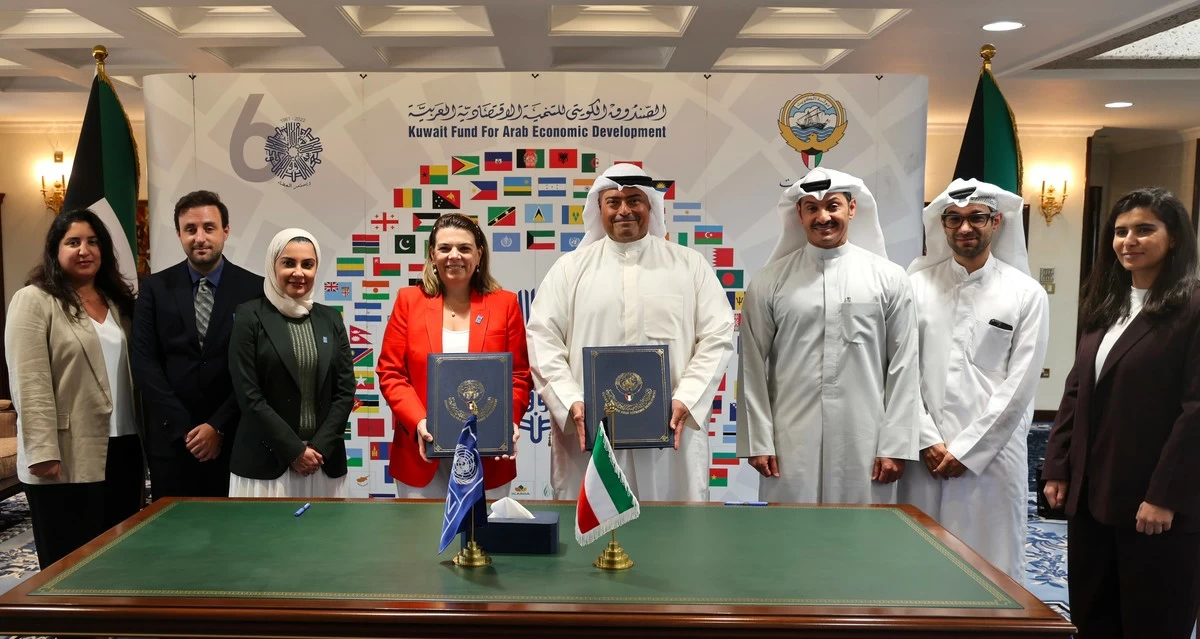
The Kuwait Fund for Arab Economic Development (KFAED) has signed a $3 million grant agreement with the United Nations Development Programme (UNDP) to bolster renewable energy solutions in Lebanon. The agreement, signed on Tuesday in Kuwait City, aims to address the country's persistent electricity challenges.
The project aims to improve the sustainability and reliability of electricity supplies at priority public institutions in Lebanon by installing photovoltaic solar energy systems and enhancing energy efficiency.
Rasheed Al-Bader, Acting Director General of KFAED, and Emma Morley, UNDP Resident Representative in Kuwait, signed the deal. Al-Bader stated that the project's primary goal is to enhance the sustainability and reliability of electricity supplies for key public institutions. This will be achieved through the installation of photovoltaic solar energy systems and the implementation of energy efficiency measures.
The initiative is expected to yield multiple benefits, including a reduced dependence on diesel generators, lower operating costs for public services, and improved continuity of essential functions. Furthermore, the project aims to cut emissions from conventional energy sources and promote the wider adoption of sustainable energy practices.
The grant reflects KFAED’s commitment to supporting sustainable development across Arab countries through projects that improve infrastructure, strengthen essential public services and enhance institutions in facing challenges.
Beyond the physical installations, the project will also focus on building the technical capabilities of personnel and relevant authorities in operating and maintaining the new systems, as well as in sustainable energy management. This capacity-building component is crucial for ensuring the long-term success and sustainability of the project.
Partnerships are essential to addressing global development challenges, adding that cooperation between the two sides will strengthen public institutions, support climate action and generate sustainable economic, social and environmental benefits.
Al-Bader emphasized that the grant underscores KFAED's commitment to supporting sustainable development across Arab nations, particularly in improving infrastructure and essential public services. Morley highlighted the importance of such partnerships in tackling global development challenges, strengthening public institutions, supporting climate action, and generating economic, social, and environmental benefits. This collaboration builds on a longstanding development partnership between KFAED and UNDP, which has already seen the fund contribute approximately $15 million to joint projects worldwide.
UNDP and KFAED have worked together for years to support sustainable development and build more resilient communities.
DistantNews Editorial
Originally published by Arab Times in English. Translated, summarized, and contextualized by our editorial team with added local perspective. Read our editorial standards.
More Stories

From Our Blog

What Gets Lost (and Found) When News Is Translated

The Critical Role of Diaspora Media in Global News

What Travellers Should Know About Countries with Restricted Press

A Digital Nomad's Guide to Following Local News

How the Same Story Looks Different in Different Countries
