


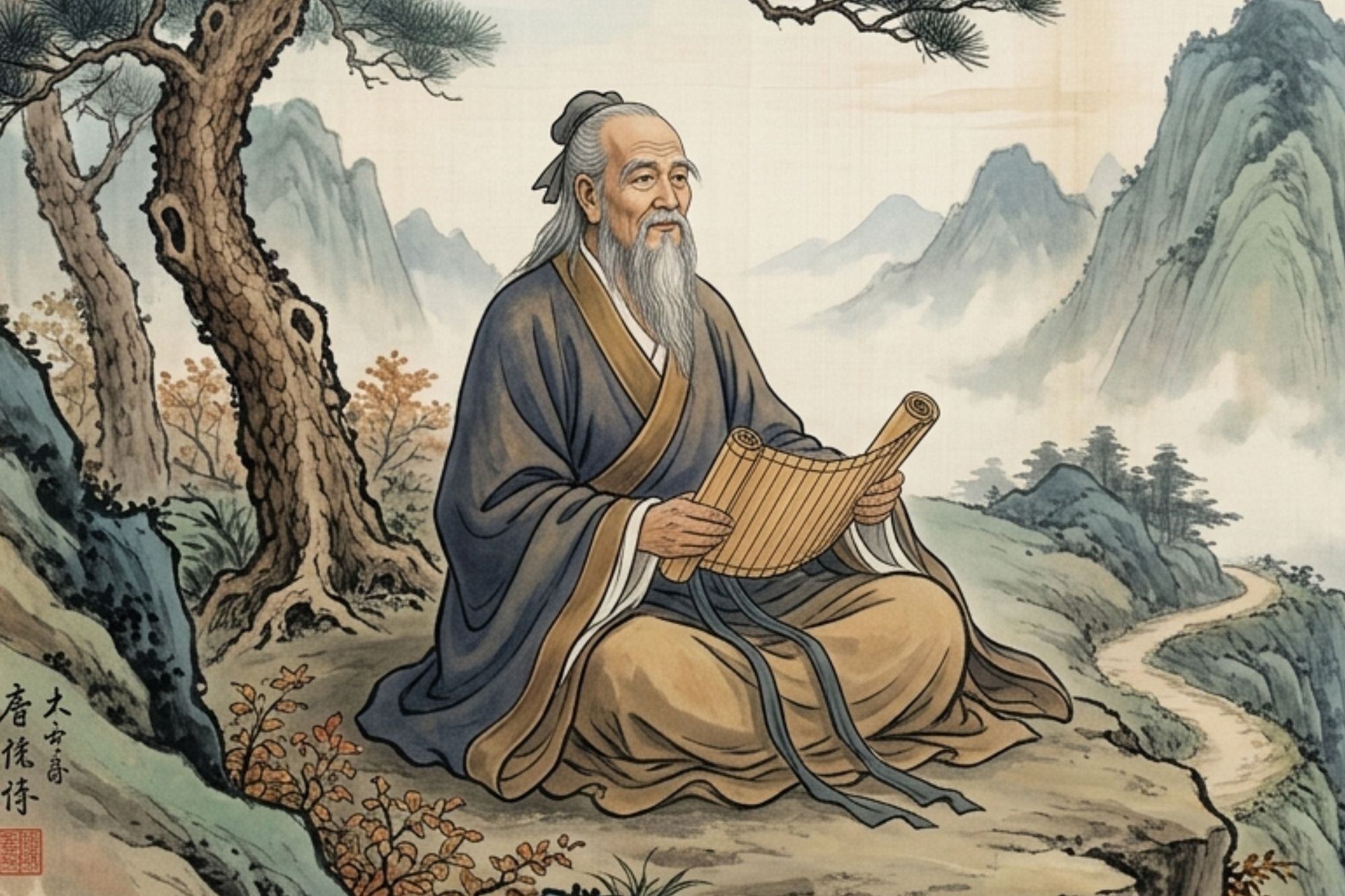
Lao Tzu: "He Who Knows, Does Not Speak; He Who Speaks, Does Not Know"
Translated from Spanish, summarized and contextualized by DistantNews.
TLDR
- Lao Tzu's famous quote, "The one who knows, does not speak; the one who speaks, does not know," from the Tao Te Ching, emphasizes the ineffable nature of ultimate truth.
- The saying suggests that true wisdom is intuitive and direct, while speech often reduces profound experiences to mere labels, risking fragmentation and loss of essence.
- In contemporary society, saturated with constant opinions and social media noise, this ancient wisdom serves as a call for intellectual humility and a reminder that authentic mastery doesn't require external validation.
The enduring wisdom of Lao Tzu, particularly his enigmatic statement "The one who knows, does not speak; the one who speaks, does not know," continues to resonate deeply, offering a profound counterpoint to our modern, hyper-verbalized world. This ancient Chinese philosophy, rooted in the Tao Te Ching, challenges the very foundation of how we perceive knowledge and communication.
The one who knows, does not speak; the one who speaks, does not know.
From our perspective at La Nación, this maxim is not a dismissal of discourse but a sophisticated critique of superficiality. It highlights that genuine understanding, the Tao itself, transcends the limitations of language. Attempting to capture ultimate truth in words, as Lao Tzu implies, is akin to trying to hold water in a sieve; the essence is lost in the process. True wisdom, therefore, is often an intuitive, silent comprehension, a state of being rather than a collection of pronouncements.
that the phrase does not seek to deny knowledge, but to highlight that authentic wisdom does not require external validation or the compulsion to prove one's worth through noise.
In an era dominated by social media, where the pressure to constantly voice opinions and project expertise is immense, Lao Tzu's teaching is a powerful call to humility. The article rightly points out that those who have truly experienced something profound often feel no compulsion to constantly broadcast it. Their authority stems from inner conviction, not from the need for external validation through endless chatter. This contrasts sharply with the modern tendency to mistake eloquence for knowledge, a phenomenon we observe frequently in public discourse.
those who have had a direct experience do not need words; they can speak if they wish, but they are not obligated to do so
Furthermore, the concept of "wu wei," or non-action, which flows from this philosophy, underscores that true effectiveness lies not in forceful intervention but in aligning with the natural flow of events. Lao Tzu's legacy, though historically debated, serves as a timeless reminder that genuine mastery is demonstrated through coherent action and inner peace, rather than through the mere accumulation of words. This perspective is particularly relevant in understanding leadership and societal progress, urging a move beyond rhetoric towards authentic, mindful engagement.
the best way to wisdom lies in avoiding forced intervention on events, by flowing with nature instead of trying to control it.
DistantNews Editorial
Originally published by La Nación in Spanish. Translated, summarized, and contextualized by our editorial team with added local perspective. Read our editorial standards.
More Stories



From Our Blog

What Gets Lost (and Found) When News Is Translated

The Critical Role of Diaspora Media in Global News

What Travellers Should Know About Countries with Restricted Press

A Digital Nomad's Guide to Following Local News

How the Same Story Looks Different in Different Countries
