


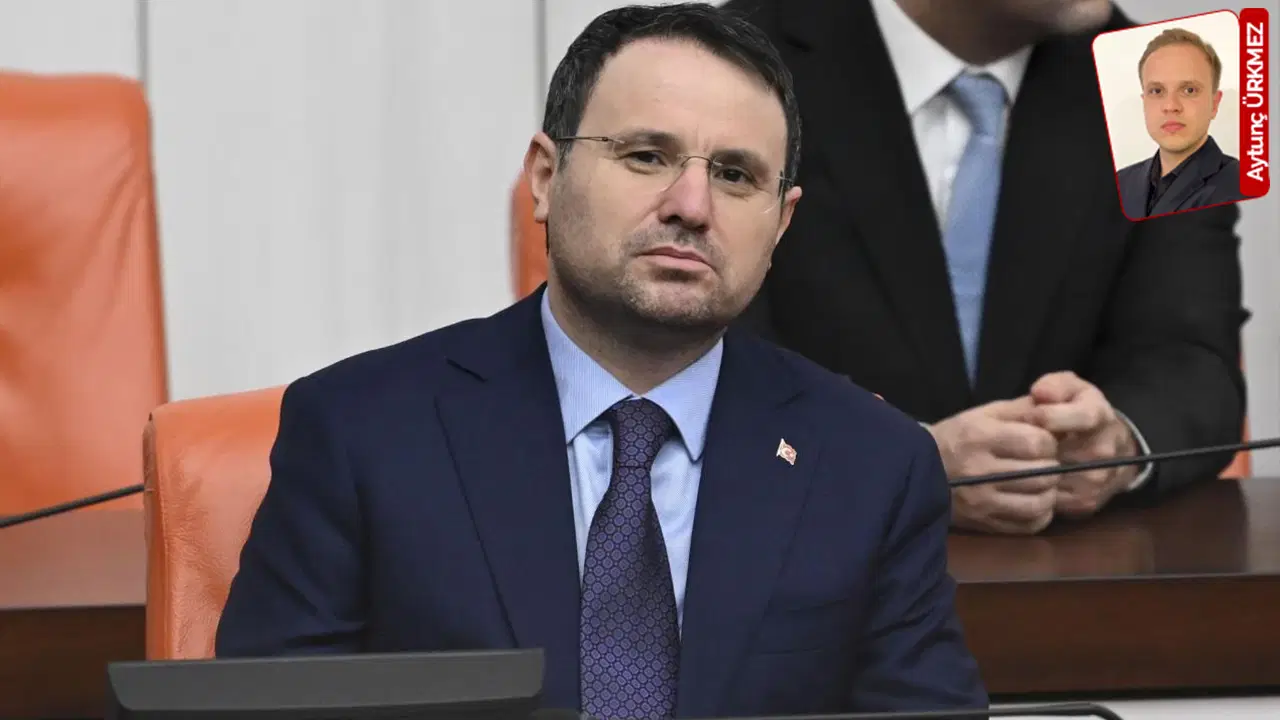
Lawsuit to be filed against appointment; decision from Council of State paves way for judicial review
Translated from Turkish, summarized and contextualized by DistantNews.
TLDR
- Lawyers have filed a lawsuit challenging the appointment of Akın Gürlek as Minister of Justice, arguing it violates judicial independence.
- The lawsuit claims Gürlek's appointment automatically ends his prosecutor role and violates Article 139 of the constitution, which protects judges and prosecutors from dismissal.
- The Council of State has ruled that the lawyers have standing to sue and will examine the case on its merits, though it rejected a request to suspend the appointment.
In a move that underscores the ongoing tension between the judiciary and the executive in Turkey, a group of Ankara-based lawyers has taken legal action against the recent appointment of Akın Gürlek as the Minister of Justice. This challenge, filed at the Council of State, centers on the argument that Gürlek's appointment inherently conflicts with his existing judicial duties and the constitutional protections afforded to judges and prosecutors.
The decision carries great importance for the appointment of ministers, as they no longer have executive powers and duties after the 2017 constitutional amendment, and for the transfer of these appointments to the judiciary.
The core of the lawyers' argument, as detailed in their petition, is that assuming a ministerial role automatically terminates one's position as a prosecutor. They contend that this contradicts Article 139 of the Turkish Constitution, which states that judges and prosecutors cannot be dismissed. The lawyers assert that such an appointment cannot be interpreted as voluntary resignation, thereby violating this fundamental constitutional safeguard. Furthermore, they highlighted that Gürlek, in his capacity as Minister of Justice and President of the Supreme Council of Judges and Prosecutors (HSK), would be involved in decisions affecting judicial independence and security, necessitating a review of his appointment before any such actions are taken.
The Ministry of Justice is being made the center of actions contrary to the rule of law and judicial independence.
The Council of State's 12th Chamber, in a divided decision, acknowledged the lawyers' standing to bring the case. While the request for a stay of execution was denied, the chamber decided to proceed with examining the case on its merits. This decision, according to lawyer Ömer Faruk Eminağaoğlu, is significant. He emphasized that following the 2017 constitutional amendments, ministers no longer hold executive powers, making appointments to such positions now subject to judicial review. Eminağaoğlu expressed concern that the Ministry of Justice is becoming a hub for actions contrary to the rule of law and judicial independence, potentially transforming into a state prosecutor's office within a party-state structure.
It is being transformed into a state prosecutor's office in a party state with a new structure.
DistantNews Editorial
Originally published by Cumhuriyet in Turkish. Translated, summarized, and contextualized by our editorial team with added local perspective. Read our editorial standards.
More Stories



From Our Blog

What Gets Lost (and Found) When News Is Translated

The Critical Role of Diaspora Media in Global News

What Travellers Should Know About Countries with Restricted Press

A Digital Nomad's Guide to Following Local News

How the Same Story Looks Different in Different Countries
