


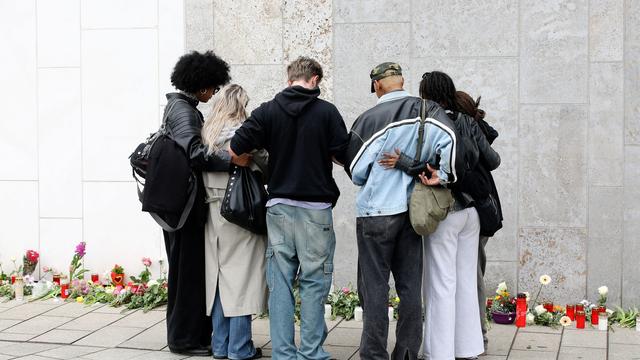
Leipzig Attack: Driver's Psychiatric History Under Scrutiny After Fatal Rampage
Translated from German, summarized and contextualized by DistantNews.
TLDR
- A man drove into a pedestrian zone in Leipzig, killing two people and injuring several others.
- The perpetrator had exhibited aggressive behavior and reportedly heard voices commanding him to commit violence.
- He had recently been admitted to and subsequently left a psychiatric clinic, raising questions about mental health assessments.
The shocking incident in Leipzig, where a man drove his car into a pedestrian zone, resulting in two fatalities and multiple injuries, has sent ripples of concern through Germany. The perpetrator's prior aggressive behavior and reported auditory hallucinations, which allegedly commanded him to enact violence, paint a disturbing picture of his mental state.
Adding a layer of complexity and concern, the man had voluntarily sought psychiatric help shortly before the attack, being admitted to a clinic. However, his departure from the facility raises critical questions about the effectiveness of mental health assessments and interventions. How could professionals, despite having the individual under their care, not foresee the imminent danger he posed to the public?
This tragedy compels a deeper examination of the protocols surrounding psychiatric care and public safety. As Die Zeit, a publication committed to in-depth analysis, explores this event, the focus shifts to the difficult balance between individual privacy and the collective need for security. The question lingers: "One cannot look into the mind of a person," as stated by Euphrosyne Gouzoulis-Mayfrank, President of the German Society for Psychiatry and Psychotherapy, Psychosomatics and Nervous Disorders (DGPPN), highlighting the profound challenges in predicting and preventing such devastating acts.
»Man kann nicht hinter die Stirn eines Menschen schauen«
DistantNews Editorial
Originally published by Die Zeit in German. Translated, summarized, and contextualized by our editorial team with added local perspective. Read our editorial standards.
More Stories



From Our Blog

What Gets Lost (and Found) When News Is Translated

How the Same Story Looks Different in Different Countries

The Critical Role of Diaspora Media in Global News

What Travellers Should Know About Countries with Restricted Press

A Digital Nomad's Guide to Following Local News
