

Maria Skłodowska's Parisian Struggle: The Price of a Dream
Translated from Polish and summarized by DistantNews. Read the original for the full story.
At a glance
In-depth
Named sources
Context piece
- Maria Skłodowska faced extreme poverty and hardship in Paris while pursuing her education, working as a governess to support her sister Bronisława's medical studies.
- Polish women were barred from higher education in Russian-occupied Poland and Prussia, making Paris and the Sorbonne the only viable option for advanced studies.
- Skłodowska's pact with her sister involved her working and sending money for Bronisława's studies first, with the promise that Bronisława would later support Maria's education.
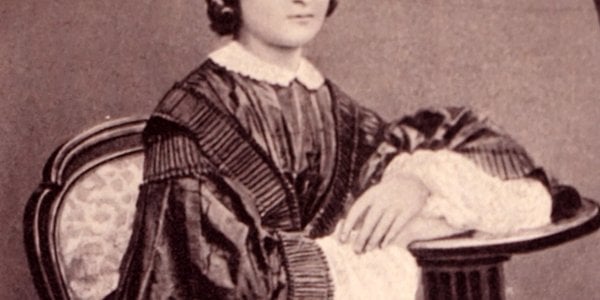
In a cold Parisian garret on rue Clapeyron, under a leaky roof, Maria Skłodowska endured freezing temperatures and gnawing hunger as she studied physics. Her meager resources were exhausted; even the water in her bucket had frozen. The room held a stove, but it was unlit due to a lack of coal. Maria layered all her available clothing, including a coat, to ward off the chill, yet a sudden stomach cramp forced her to collapse onto the bare wooden floor.
This stark reality was the price for a dream in 19th-century Poland, a nation under Russian rule where women were denied access to higher education. Opportunities were limited even in Prussian-held territories, with German polytechnics not admitting women. While universities in Galicia offered philosophy and medicine, and Warsaw had the clandestine "Flying University," these provided knowledge but not official diplomas. For Maria and her elder sister Bronisława, the only path to a recognized degree lay in Paris and its Sorbonne, a prospect financially out of reach for their father, Władysław Skłodowski, who had gone bankrupt.
Faced with this insurmountable barrier, Maria proposed a pact to Bronisława: Maria would work as a governess, sending every saved penny to fund Bronisława's medical studies in Paris. Once Bronisława became a doctor, she would then help Maria achieve her own academic aspirations. This was no ordinary family agreement; it was a profound sacrifice, a "pact signed in blood," as described, where Maria willingly entered years of "intellectual exile" and servitude.
As a governess, Maria found herself in Szczuki, a country estate nearly a hundred kilometers from Warsaw, belonging to the Żorawski family, wealthy sugar beet planters. In early 1886, the then 19-year-old Maria took up her post as a domestic tutor. Though a governess held a slightly higher status than a servant, her rights were far from equal to those of the employers' family. Yet, Maria, possessing exceptional intellectual capabilities and a gift for the sciences, embraced this role, driven by the singular goal of paving the way for her sister's education and, eventually, her own.
First I will go to work – decided eighteen-year-old Maria. – I will earn as a governess and send you every saved penny so that you can finish medicine in Paris. And when you become a doctor, you will pull me after you.
About this summary
Originally published by Rzeczpospolita in Polish. Translated, summarized, and contextualized automatically by DistantNews, with a note on how the source frames the story. Not individually reviewed before publishing. How this works.
More Stories

From Our Blog

What Gets Lost (and Found) When News Is Translated

The Critical Role of Diaspora Media in Global News

What Travellers Should Know About Countries with Restricted Press

A Digital Nomad's Guide to Following Local News

How the Same Story Looks Different in Different Countries
