


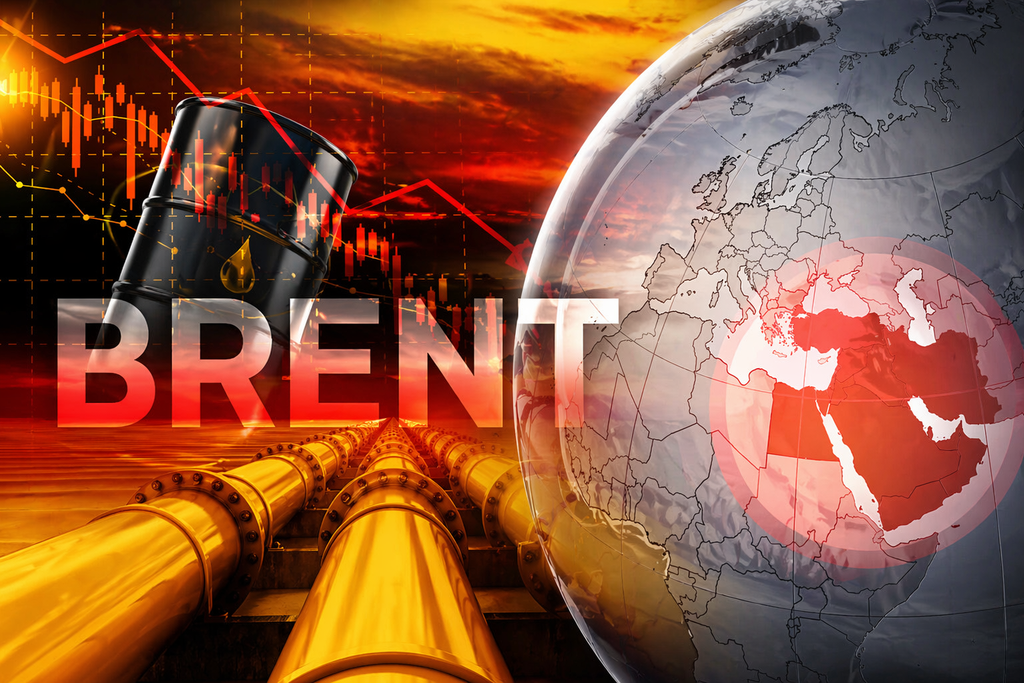
Markets: Middle East Crisis Manageable as Brent Crude Stays Below Yearly Highs
Translated from Greek, summarized and contextualized by DistantNews.
At a glance
News
Sources not specified
Context piece
- Despite renewed military tensions between the United States and Iran, international oil markets remain calm, with Brent crude below yearly highs.
- Analysts attribute this stability to the belief that the crisis is manageable and has not yet disrupted global energy supply significantly.
- Market focus is now on the duration of the conflict and its potential impact on energy transport through the Strait of Hormuz, a critical global oil and LNG route.
International oil markets are showing remarkable restraint despite escalating military tensions between the United States and Iran. Following a new wave of attacks and retaliations, analysts expected significant market disruption, but so far, the response has been muted.
U.S. strikes against Iranian targets, in response to Tehran's attacks on commercial vessels, initially caused Brent crude, a global benchmark, to surge over 5% on Wednesday. However, the market's reaction appears controlled, with investors assessing the crisis as manageable and not yet a threat to global supply.
Despite the tension, the market reaction seems controlled so far, with investors estimating that the crisis has not yet escaped the bounds of management.
Brent crude is currently trading around $78.80 per barrel, up about 1% in recent trading. While this marks a multi-week high, it remains significantly below the nearly $120 per barrel reached in April during peak energy security concerns. The price is only slightly higher than levels seen in late February, before the current escalation began.
This is one of the most important energy arteries of the planet, as about 20% of global oil and liquefied natural gas (LNG) trade passes through this sea lane.
Investor attention is now shifting to the potential duration of the military confrontation and its impact on energy shipments through the Strait of Hormuz. This vital waterway accounts for approximately 20% of the world's oil and liquefied natural gas (LNG) trade. Any serious interruption to shipping in this region could trigger severe energy market volatility and drive up global fuel prices.
For now, markets seem to believe the situation is containable, not anticipating a prolonged disruption to global oil supplies. However, the immediate future of energy prices will depend on the next moves by Washington and Tehran, as well as developments in the Strait of Hormuz.
For now, markets estimate that the situation remains manageable, without anticipating a prolonged disruption to global oil supply.
DistantNews Editorial
Originally published by Ta Nea in Greek. Translated, summarized, and contextualized by our editorial team with added local perspective. Read our editorial standards.
More Stories



From Our Blog

What Gets Lost (and Found) When News Is Translated

The Critical Role of Diaspora Media in Global News

What Travellers Should Know About Countries with Restricted Press

A Digital Nomad's Guide to Following Local News

How the Same Story Looks Different in Different Countries
