


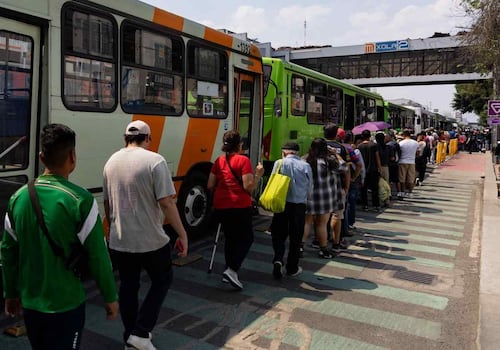
Metro Line 2 Closures Spark Commuter Frustration, Long Queues for Replacement Buses
Translated from Spanish, summarized and contextualized by DistantNews.
TLDR
- Several stations on Line 2 of the Mexico City Metro are closed from May 1-3 for renovation, causing service disruptions.
- The affected stations include Nativitas, Portales, San Antonio Abad, Chabacano, and Viaducto.
- Service on Line 2 is currently operating only between Tasqueña-Xola and Cuatro Caminos-Pino Suárez, with 60 RTP units deployed to support affected passengers, leading to long queues.
Mexico City commuters faced significant disruptions on Friday, May 1st, due to the closure of multiple stations on the Metro's Line 2 for essential renovation work. The temporary shutdown, affecting stations like Nativitas and Portales in addition to previously closed ones such as San Antonio Abad, Chabacano, and Viaducto, has severely limited service to two main segments: Tasqueña-Xola and Cuatro Caminos-Pino Suárez.
This situation has inevitably led to widespread inconvenience, with passengers reporting considerable delays. To mitigate the impact, the Metropolitan Transit System (STC) Metro has deployed 60 RTP (Red de Transporte Público) units to serve as an alternative. However, the increased demand on these support services has resulted in lengthy queues, particularly at the Xola station, where commuters were seen waiting under the sun for extended periods.
The closure, scheduled to last through May 3rd, highlights the ongoing efforts to modernize the city's aging public transportation infrastructure. While such renovations are crucial for long-term service improvement and safety, the short-term consequences for daily commuters are substantial. The scenes at stations like Xola serve as a stark reminder of the challenges faced by millions who rely on the Metro for their daily commute and the significant impact that service interruptions can have on their lives.
DistantNews Editorial
Originally published by El Universal in Spanish. Translated, summarized, and contextualized by our editorial team with added local perspective. Read our editorial standards.
More Stories


From Our Blog

What Press Freedom Means for the News You Read

What Gets Lost (and Found) When News Is Translated

The Critical Role of Diaspora Media in Global News

What Travellers Should Know About Countries with Restricted Press

A Digital Nomad's Guide to Following Local News
