


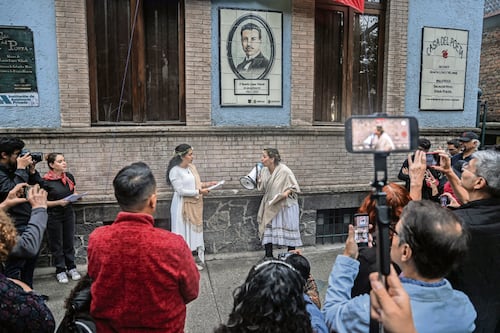
Mexico City Culture Secretary Insists on Transforming Poet's House into 'Generating Center'
Translated from Spanish, summarized and contextualized by DistantNews.
At a glance
News
Sources not specified
Context piece
- Mexico City's Secretary of Culture, Ana Francis Mor, insists on transforming the Casa del Poeta into a "generating center."
- This initiative aims to make the cultural venue plural, inclusive, and open to diverse voices, contrary to demands from preservation groups.
- Mor clarified that the venue will be sustained by fiscal resources, not commercial activities, with any self-generated income being supplementary.
Mexico City's Secretary of Culture, Ana Francis Mor, is pushing to redefine the Casa del Poeta Ramón López Velarde as a "generating center," aiming for a more dynamic and inclusive cultural space. During the venue's first working meeting, Mor outlined government plans to make the Roma neighborhood site "plural and inclusive and open to the diversity of voices and generations."
This vision contrasts with demands from various groups advocating for the Casa del Poeta's preservation in its current form. Mor addressed concerns about commercialization, stating that the intention is not to charge for activities or rely on self-generated funds for the venue's subsistence. She explained that while permits for activities like selling coffee or books might be sought, the revenue generated would be minimal and supplementary.
"The Casa del Poeta will be sustained with fiscal resources, 95 or 98 percent," Mor stated, emphasizing that any income from self-generated activities would be welcome but not essential for the venue's operation. She clarified that these permits are solely for enabling the sale of items like coffee or books, not for renting out spaces or commercializing the property in any significant way.
Mor reiterated the government's commitment to cultural spaces being free of charge, aligning with the broader cultural policy of the current administration. The focus remains on fostering an environment that supports a wide range of artistic expression and engagement, rather than pursuing commercial ventures within the historic Casa del Poeta.
DistantNews Editorial
Originally published by El Universal in Spanish. Translated, summarized, and contextualized by our editorial team with added local perspective. Read our editorial standards.
More Stories

From Our Blog

What Press Freedom Means for the News You Read

What Gets Lost (and Found) When News Is Translated

The Critical Role of Diaspora Media in Global News

What Travellers Should Know About Countries with Restricted Press

A Digital Nomad's Guide to Following Local News
