

Mexico Inaugurates Seri Aqueduct, Bringing Vital Water to Indigenous Community
Translated from Spanish, summarized and contextualized by DistantNews.
TLDR
- Mexican President Claudia Sheinbaum inaugurated the Seri Aqueduct in Sonora, a 78-kilometer underground project costing 208 million pesos.
- The aqueduct is part of a broader justice plan for the Seri-Comca'ac people, aiming to provide essential water resources and promote sustainable development.
- The government also committed to developing sustainable tourism, improving infrastructure, and ensuring direct economic benefits reach the indigenous community.
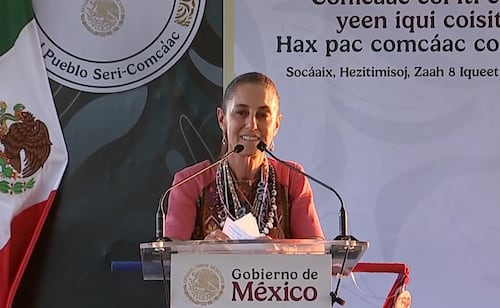
President Claudia Sheinbaum Pardo has marked a significant milestone for the indigenous Seri-Comca'ac people of Sonora by inaugurating the new Seri Aqueduct. This 78-kilometer underground pipeline, representing an investment of 208 million pesos, is a cornerstone of the "Plan de Justicia del Pueblo Seri-Comca'ac." Its completion addresses a centuries-old deficit of reliable water access, a fundamental need that has long been neglected.
The Seri community, like all original peoples of Mexico, has suffered abandonment, suffered repression, and endured the alienation of institutions for centuries… there is still much to do, but working hand in hand with Governor Félix Segovia, working hand in hand with the community, I am sure we can continue building solutions.
Speaking from the Seri ceremonial center in Punta Chueca, Sheinbaum pledged further government support. Within 15 days, a dedicated team will arrive to spearhead initiatives in sustainable tourism, road development, and economic activities tailored to the community's needs. This comprehensive approach signals a commitment beyond mere infrastructure, aiming to foster self-sufficiency and cultural preservation. Authorities from various secretariats, including Energy and Tourism, will collaborate to ensure that training and resources are channeled directly to the community, bypassing intermediaries and empowering the Seri-Comca'ac people.
Governor Alfonso Durazo Montaño acknowledged the historical injustices faced by the Seri people, describing them as "the most hospitable" yet long-suffering. He lamented the centuries of abandonment and repression they have endured, emphasizing that while much remains to be done, collaborative efforts with traditional governor Alfredo Félix Segovia are paving the way for solutions. The aqueduct, though modest in its budget, is deemed "extremely relevant" for the community's well-being, providing access to potable water, a basic human right.
This work is 'small' in budgetary terms (208 million pesos) but extremely relevant in terms of the satisfaction it represents for the community regarding one of the fundamental services, which is drinking water.
This project is a powerful symbol of Mexico's commitment to rectifying historical wrongs against its indigenous populations. The Seri-Comca'ac people, like many other original peoples of Mexico, have faced systemic marginalization. The successful implementation of this aqueduct, coupled with the government's plans for economic and social development, represents a tangible step towards achieving social justice and ensuring that these communities are not left behind. It highlights a national perspective that recognizes the inherent rights and cultural richness of indigenous peoples, striving to integrate them fully into the nation's progress.
That they have all the training, the formation, so that the resource comes directly to the community.
DistantNews Editorial
Originally published by El Universal in Spanish. Translated, summarized, and contextualized by our editorial team with added local perspective. Read our editorial standards.
More Stories

From Our Blog

What Press Freedom Means for the News You Read

What Gets Lost (and Found) When News Is Translated

The Critical Role of Diaspora Media in Global News

What Travellers Should Know About Countries with Restricted Press

A Digital Nomad's Guide to Following Local News
