


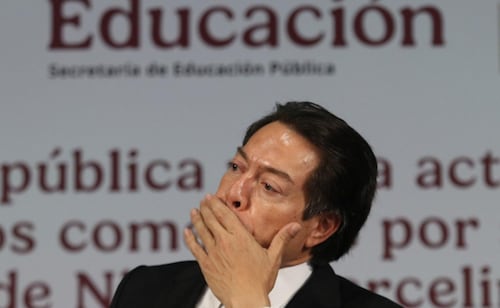
Mexico's education chief denies bribing teachers' union to end protest
Translated from Spanish, summarized and contextualized by DistantNews.
At a glance
News
Named sources
Context piece
- Mexico's Education Secretary Mario Delgado denied claims that the federal government bribed the CNTE teachers' union in Oaxaca to end their protest.
- Delgado stated that funds allocated to the CNTE are for addressing educational backlogs, particularly in areas like telesecundarias, primary, and preschools.
- He clarified that these resources, sourced from the education budget, are used for teacher recruitment, creating positions, and extending work hours, based on diagnostic needs, and do not pass through union hands.
Mexico's Secretary of Public Education, Mario Delgado Carrillo, has refuted allegations that the federal government offered a "bribe" to the CNTE teachers' union in Oaxaca to end their protest in Mexico City. Delgado asserted that the funds provided are designated for addressing educational deficiencies, not for negotiating the cessation of the strike.
No, no, that is not the first time that happens, a serious diagnostic work is done with them, and based on the need it is by educational levels. For example, they are resources that go to telesecundarias, to primaries, to preschool, depending on the need.
Speaking to the press, Delgado explained that the allocation of resources is based on a serious diagnostic of needs across different educational levels, such as telesecundarias, primary, and preschools. He emphasized that these funds are part of a three-year consecutive budget aimed at tackling educational backlog, particularly in states like Chiapas, Oaxaca, and Guerrero. The resources facilitate recategorizations, permanent positions, and the hiring of new teachers.
No, no, it is a negotiation that is done based on the needs of the service in the states. And it is not only done with Oaxaca, it is done with all the official representations of the union. A diagnosis is made state by state and they are attended to, there are always many needs.
Delgado reiterated that the funds are not a payment to lift the protest against demands to repeal the ISSSTE Law of 2007 and reinstate the solidarity pension system. Instead, he described the process as a negotiation based on the service needs within states, conducted with all official union representations. He stressed that the SEP conducts occupational diagnostics to identify where teachers and schools are lacking, and resources are allocated accordingly. Furthermore, he clarified that these funds are disbursed directly from the Secretariat of Education's budget and do not pass through the hands of the CNTE or the SNTE.
It comes from the education budget. That is what it is for, this is the third consecutive year where resources are allocated, and that allows for recategorizations, permanent positions, hiring of new teachers, and it is done based on the diagnosis of where teachers are missing, where schools are missing. That is what is done, it is educational backlog.
DistantNews Editorial
Originally published by El Universal in Spanish. Translated, summarized, and contextualized by our editorial team with added local perspective. Read our editorial standards.
More Stories

From Our Blog

What Press Freedom Means for the News You Read

What Gets Lost (and Found) When News Is Translated

The Critical Role of Diaspora Media in Global News

What Travellers Should Know About Countries with Restricted Press

A Digital Nomad's Guide to Following Local News
