

Mexico: Senator Noroña temporarily avoids sanction over political violence claims
Translated from Spanish, summarized and contextualized by DistantNews.
At a glance
News
Sources not specified
In the courts
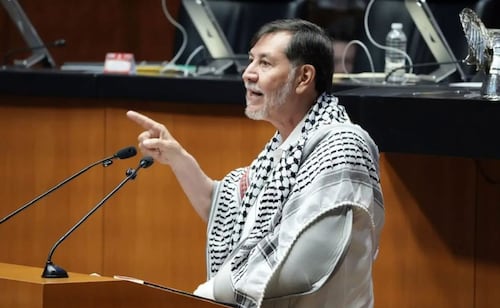
- Senator Gerardo Fernández Noroña has temporarily avoided a sanction for political violence against a municipal president.
- The Electoral Tribunal of the Federation's Judicial Power revoked a prior sentence, citing insufficient analysis of Noroña's parliamentary immunity.
- The case will be re-evaluated, with a focus on whether Noroña's statements were linked to his legislative duties.
Senator Gerardo Fernández Noroña has temporarily escaped a sanction for alleged political violence against Grecia Quiroz, the municipal president of Uruapan. The state's Electoral Tribunal had initially found Noroña guilty of gender-based political violence for repeatedly labeling Quiroz "fascist" and of "far-right" leanings.
However, the Toluca Regional Chamber of the Electoral Tribunal of the Federation's Judicial Power (TEPJF) overturned the state tribunal's decision. The federal tribunal argued that the state court did not adequately justify its analysis regarding Fernández Noroña's parliamentary immunity. According to the TEPJF ruling, the responsible authority failed to comprehensively examine the arguments presented by the accused senator and the legal precedents set by the Supreme Court of Justice of the Nation.
Justice limps but arrives.
The TEPJF mandated that the Michoacán Electoral Tribunal issue a new, properly reasoned decision. This new ruling must specifically address the arguments concerning parliamentary inviolability, determining whether the statements made by Noroña bear a functional connection to his legislative role. The local magistrates are also required to clarify the constitutional framework used in their assessment.
Fernández Noroña celebrated the decision on social media, stating, "Justice limps but arrives." Meanwhile, Karla María Estrella, a citizen previously compelled to apologize for alleged political violence against a legislator, criticized the ruling. She argued that legislators, who should face greater scrutiny, are able to get sentences revoked to examine their immunity, questioning the application of such protections.
The legislators, who should be subjected to greater rigor and scrutiny, manage to get their minuscule sentence revoked to study if they are protected by their immunity.
DistantNews Editorial
Originally published by El Universal in Spanish. Translated, summarized, and contextualized by our editorial team with added local perspective. Read our editorial standards.
More Stories
From Our Blog

What Press Freedom Means for the News You Read

What Gets Lost (and Found) When News Is Translated

The Critical Role of Diaspora Media in Global News

What Travellers Should Know About Countries with Restricted Press

A Digital Nomad's Guide to Following Local News
