


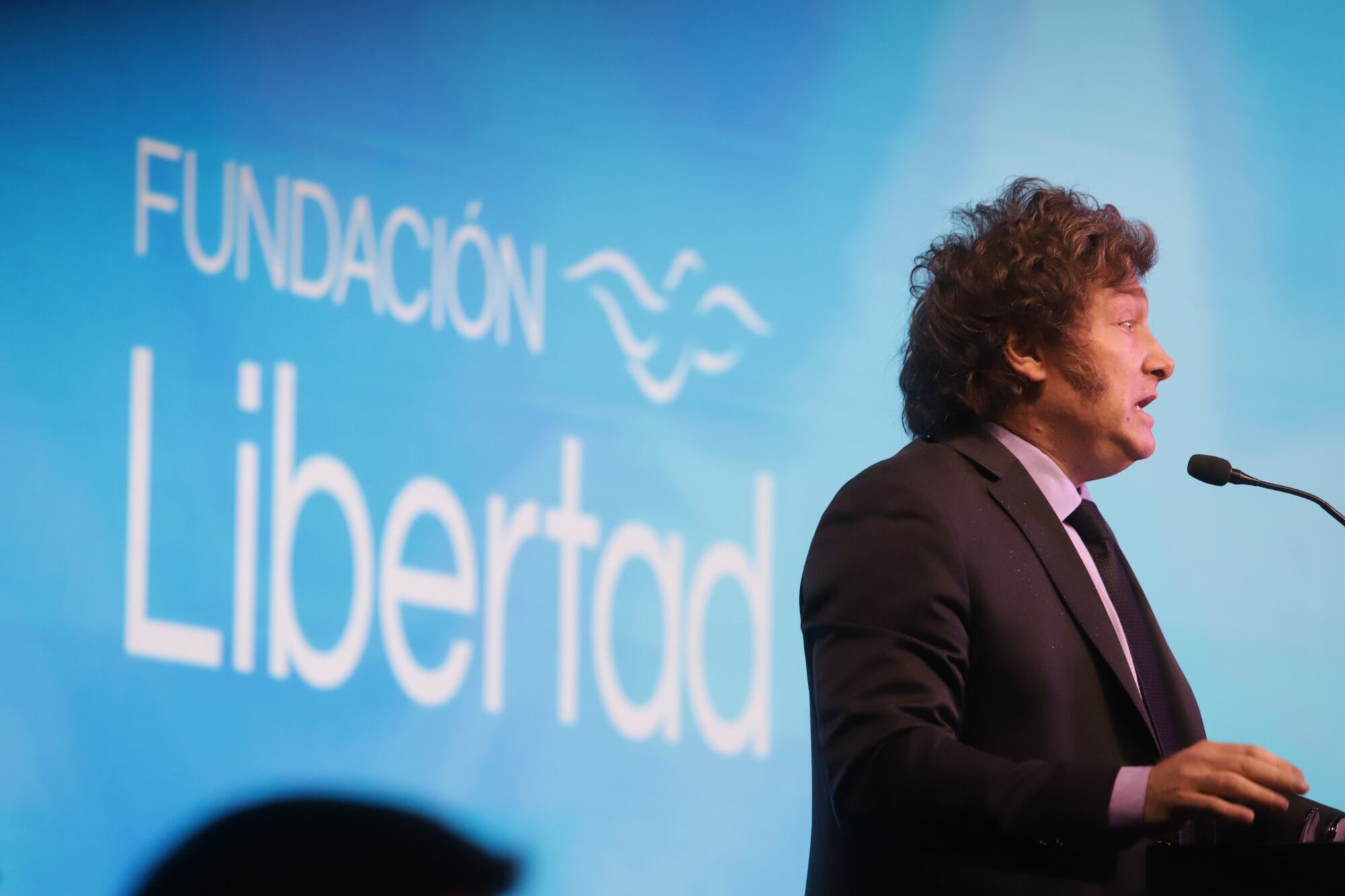
Milei Attacks "Marxism" at Libertad Foundation Dinner
Translated from Spanish, summarized and contextualized by DistantNews.
TLDR
- Argentine President Javier Milei condemned political violence and expressed solidarity with US President Trump following an assassination attempt.
- Milei criticized the resurgence of "Marxism" and "cultural battles" since the fall of the Berlin Wall, arguing that liberals erred in believing the fight was over.
- He highlighted his administration's economic adjustments, including significant public sector cuts and a reduction in public debt, contrasting them with past administrations.
In a powerful address at the annual dinner of the Libertad Foundation, President Javier Milei forcefully articulated his vision for Argentina and the global struggle against ideologies he deems detrimental to freedom. His words resonated deeply within a nation grappling with economic challenges and seeking a clear ideological direction. Milei's condemnation of the assassination attempt on US President Trump was not merely a statement of solidarity but a stark warning about the escalating political violence targeting the "free world."
Quiero expresar mi más enérgico repudio al intento de asesinato a Trump. Estamos ante un nuevo auge de la violencia política contra el mundo libre. Debe ser detenido en sus inicios. Hay muchos que no toleran perder la batalla en las urnas. Esas personas no son compatibles con la democracia. Debe ser castigado con todo el peso de la ley.
His central thesis revolved around the perceived resurgence of "Marxism" and its insidious "cultural battles" that have, in his view, infiltrated society since the fall of the Berlin Wall. Milei argued that the liberal movement made a critical error by assuming the ideological war was won with the collapse of communism. He posited that these forces have adapted, shifting their focus to different societal debates and ultimately seeking to undermine democratic values and institutions. This perspective, deeply rooted in his libertarian ideology, frames the current political landscape as an ongoing, existential struggle for freedom.
Nosotros los liberales cometimos un gran error tras la caída del muro de Berlín, de creer que con la sola caída alcanzaba. La realidad demostró que no. De hecho, lo que hizo el marxismo fue reconstruirse y dar la batalla cultural en otros aspectos. Trasladó la lucha de clases a otro tipo de debates de la sociedad. Terminaron tomando la escena. Y no tienen ningún problema en matarnos si les es necesario
From the standpoint of La Nación, a publication that has historically championed liberal and conservative viewpoints in Argentina, Milei's speech represents a bold reaffirmation of his core principles. His administration's commitment to drastic economic adjustments, including substantial cuts to public spending and a reduction in the national debt, is presented not just as policy but as a necessary ideological battle. He directly challenged past administrations, particularly those of the Kirchners, accusing them of reckless populism and unsustainable debt accumulation. This narrative positions Milei's government as a force for fiscal responsibility and a bulwark against what he perceives as a dangerous ideological drift.
Hoy escucho a muchos que se llenan la boca con cosas que no les parecen correctas, pero al momento que tenían que hacer las cosas... Nosotros a nivel nacional no solo que hicimos el ajuste más grande en la historia de la Argentina si no que le devolvimos plata a los argentinos
What makes this story particularly significant from an Argentine perspective is the president's willingness to engage in such direct and confrontational ideological rhetoric. While international coverage might focus on the economic reforms or the political theatrics, for Argentines, Milei's discourse speaks to a fundamental debate about the nation's identity and its place in the world. His framing of the struggle against "Marxism" and his emphasis on the "ideas of freedom" are central to his political project and resonate with a segment of the population weary of perceived state overreach and economic instability. This is not just about policy; it's about a worldview that La Nación, and many of its readers, find compelling in the current global and national context.
Redujimos el tamaño del sector público nacional, que ronda los 15 puntos del PBI. Si quisiéramos compararlo con otras épocas, deberíamos corregir por el acto de populismo salvaje de la presidiaria [Cristina Kirchner], cuando empezó a dar jubilaciones sin aportes. Eso hizo que fuera más alto del peso del sector público para respetar el derecho adquirido por parte de los jubilados
DistantNews Editorial
Originally published by La Nación in Spanish. Translated, summarized, and contextualized by our editorial team with added local perspective. Read our editorial standards.
More Stories

From Our Blog

What Gets Lost (and Found) When News Is Translated

The Critical Role of Diaspora Media in Global News

What Travellers Should Know About Countries with Restricted Press

A Digital Nomad's Guide to Following Local News

How the Same Story Looks Different in Different Countries
