


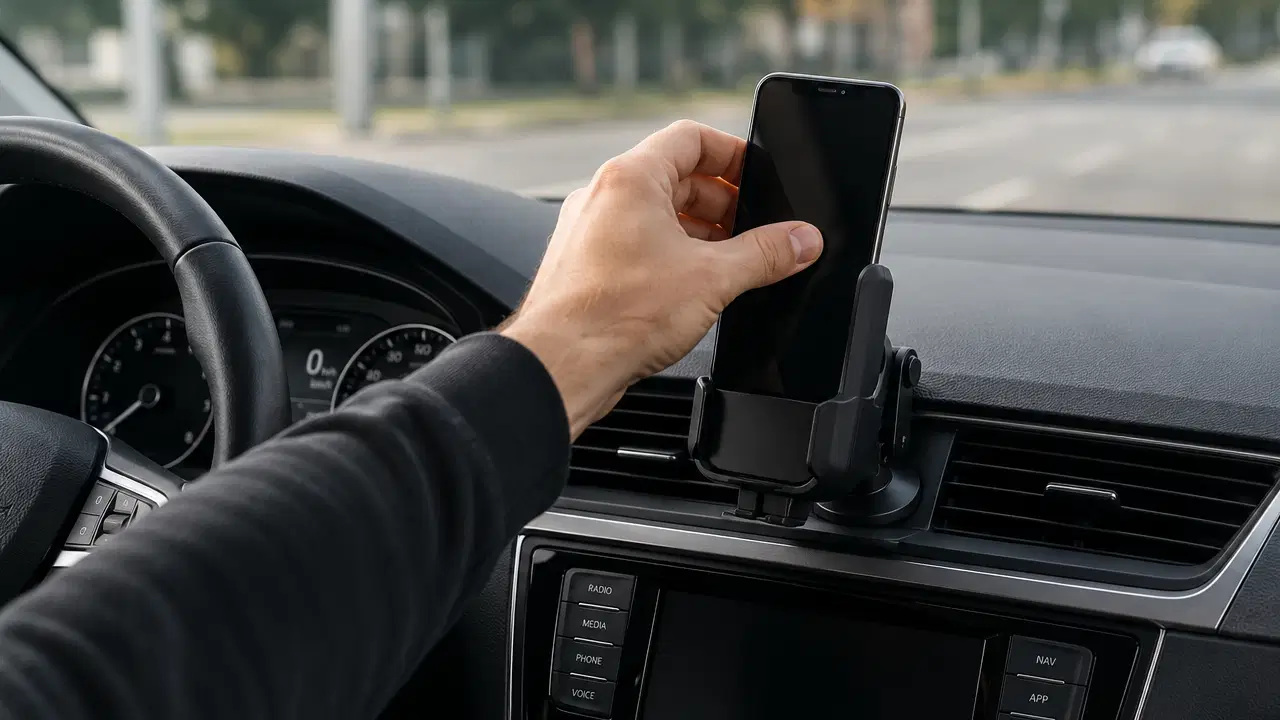
Millions of Drivers Affected: Traffic Regulations Finalized, Decision Made on 'Screens'
Translated from Turkish, summarized and contextualized by DistantNews.
At a glance
News
Sources not specified
New plan
- Turkey has finalized new traffic regulations, easing restrictions on in-car screens and phone holders.
- Previously banned accessories like air fresheners hanging from mirrors are now regulated by objective measurements.
- New rules permit specific subwoofer and amplifier setups in car trunks and clarify conditions for issuing noise violation fines.
Turkey has completed its updated traffic law regulations, bringing clarity and legal certainty to various driver-related issues, including the use of in-car screens and accessories. The new rules officially permit phone holders mounted on the windshield, ending previous debates and offering a practical solution for drivers.
The regulations specify that devices like car cameras and phone holders are permissible if they do not exceed a certain height above the steering wheel or dashboard. This clarification also extends to navigation systems, confirming that their use is not prohibited as long as they do not obstruct the driver's view. Similarly, accessories such as air fresheners that were previously hung from rearview mirrors are now subject to objective measurement guidelines, bringing them under legal purview.
Furthermore, the new legislation addresses audio systems in vehicles. Drivers are now permitted to have one subwoofer with a maximum frequency of 45 Hz and one amplifier with a maximum of 300 watts in their car trunks. This aims to enhance the audio experience for drivers. However, fines for noise violations will only be issued if the sound 'spills out of the vehicle and disturbs public peace,' and this disturbance must be concretely recorded.
The updated regulations also clearly define the purpose of in-car digital screens. Screens used for driving, parking, navigation, or monitoring internal/external cameras are now fully permitted. This comprehensive update aims to support driver safety and convenience while establishing clear legal boundaries for vehicle modifications and accessory usage.
DistantNews Editorial
Originally published by Cumhuriyet in Turkish. Translated, summarized, and contextualized by our editorial team with added local perspective. Read our editorial standards.
More Stories



From Our Blog

What Gets Lost (and Found) When News Is Translated

The Critical Role of Diaspora Media in Global News

What Travellers Should Know About Countries with Restricted Press

A Digital Nomad's Guide to Following Local News

How the Same Story Looks Different in Different Countries
