


Morocco accused of easing border controls during migrant surge into Ceuta
Translated from English, summarized and contextualized by DistantNews.
At a glance
News
Named sources
Context piece
- Morocco is accused of easing border controls, contributing to a mass influx of migrants into Spain's Ceuta enclave.
- Thousands of people, mostly from Morocco, swam or crossed the border into Ceuta, with at least 72 deaths reported.
- Experts suggest Rabat may have had strategic interests in allowing the crossings, though Moroccan officials deny any deliberate relaxation of controls.
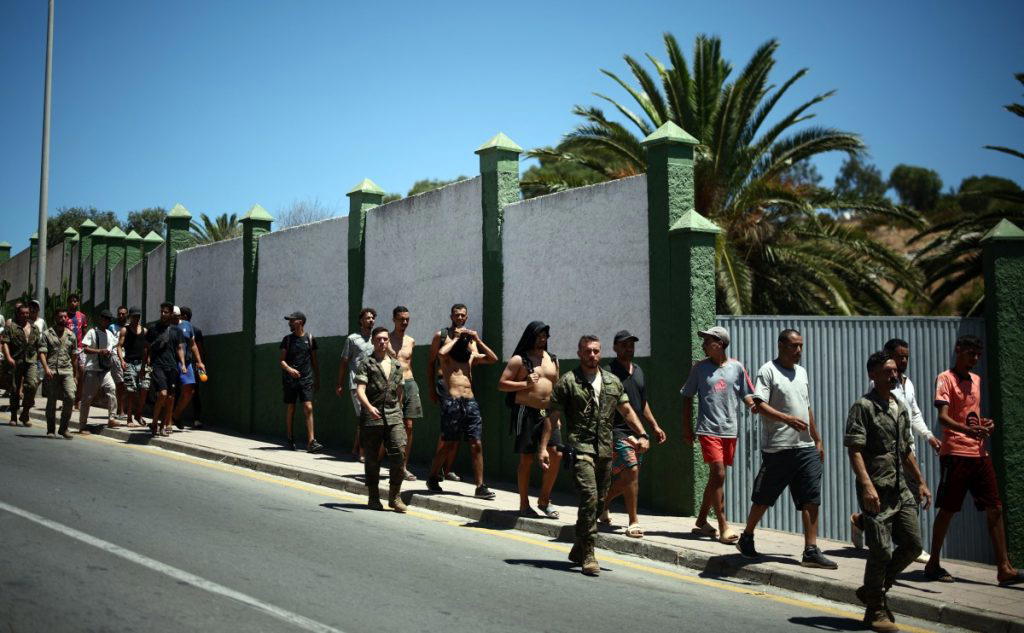
Morocco faces accusations of deliberately easing border controls, which allegedly facilitated a massive influx of migrants into Spain's North African enclave of Ceuta. This surge, which saw tens of thousands of people, primarily from Morocco, cross into the Spanish territory, resulted in at least 72 reported deaths.
There were ordinary gendarmerie checkpoints on the roads, but not an exceptional deployment.
Witnesses and analysts suggest that Moroccan authorities did not adequately stop the flow of people towards the border town of Fnideq. "There were ordinary gendarmerie checkpoints on the roads, but not an exceptional deployment," a source close to the removal operations told AFP. North Africa analyst Pierre Vermeren argued that Moroccan police, known for their effectiveness, "could have blocked the roads" if they had intended to prevent the crossings.
Morocco's police were 'very effective, very organised and very well-informed', and argued that they 'could have blocked the roads' had they wanted to stop those headed for the border.
Mohamed Benaissa, head of the Northern Observatory for Human Rights, observed a reduction in security measures in Fnideq. He noted that police reinforcements only arrived after hundreds of migrants had already entered Ceuta. While no direct evidence of a decision from the highest levels of the Moroccan state has surfaced, Riccardo Fabiani of the International Crisis Group stated there are "enough elements to suggest that Rabat was involved." He cited testimonies from migrants and videos showing passive security forces.
We observed that the security measures had been reduced.
Haizam Amirah Fernandez, director of the Center for Contemporary Arab Studies in Madrid, commented that "knowing how the Moroccan state functions, it’s difficult to believe that the authorities… were not aware of what was happening or even facilitated such a massive movement of people." Moroccan officials have denied any "relaxation" at the border, blaming the surge on "malicious exploitation" of social media and the "spread of misleading information." The timing of the surge during Morocco's Throne Day celebrations has also drawn attention, a period when the kingdom typically emphasizes its stability.
By now we have enough elements to suggest that Rabat was involved in this crisis.
DistantNews Editorial
Originally published by Vanguard in English. Translated, summarized, and contextualized by our editorial team with added local perspective. Read our editorial standards.
More Stories


From Our Blog

How the Same Story Looks Different in Different Countries

What Gets Lost (and Found) When News Is Translated

The Critical Role of Diaspora Media in Global News

What Travellers Should Know About Countries with Restricted Press

A Digital Nomad's Guide to Following Local News
